Every Ramadan, parents ask the same question: is my child old enough to fast? The short answer is that fasting is not obligatory on children until they reach puberty — but many Muslim families start preparing kids years earlier.
At what age can kids fast in Ramadan depends less on a fixed number and more on the child’s physical ability, understanding, and health. This article walks through what Islamic scholarship says, how to introduce fasting gradually, and what to watch for at each stage.
What You’ll Learn in This Article
The Islamic ruling on fasting for children and when it becomes obligatory
What scholars say about the right age to start training kids to fast
A practical age-by-age approach to introducing fasting
Common mistakes parents make when it comes to ramadan fasting for kids
How to fill a fasting child’s day meaningfully during Ramadan
Is Fasting Obligatory on Young Children?
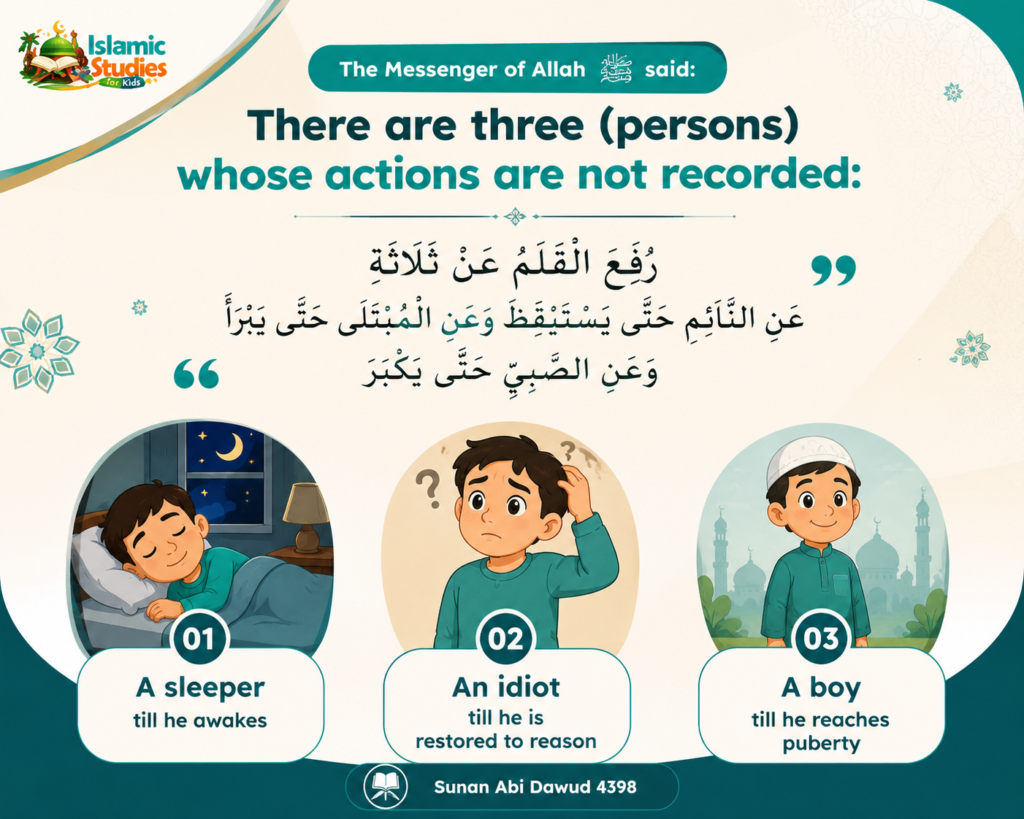
Fasting is not a religious obligation on a child until they reach puberty. This is based on a hadith of the Prophet Muhammad (peace be upon him):
“The pen has been lifted from three: the sleeper until he wakes, the child until he reaches puberty, and the insane person until he regains reason” (Sunan Abi Dawud 4398).
Puberty in this context is a physical marker, not a birthday; it happens at different ages for different children, commonly between 12 and 15.
Before that point, a child who fasts earns reward for it, but a child who doesn’t fast carries no sin. This is precisely why so many parents ask can kids fast at all, and the answer is yes — voluntarily, and with real spiritual benefit, well before it becomes required.
When Should Parents Start Teaching Kids to Fast?
A bridge point worth understanding before looking at specific ages: scholars agree the goal isn’t to wait until obligation kicks in. It’s to build the habit early, the same way children are taught to pray years before prayer becomes obligatory on them.
The classical Hanbali reference Al-Mughni, citing Al-Kharaqi, states that once a boy reaches ten years old and is physically capable of fasting, he should be made to do so — trained and even disciplined for skipping it, the same way he would be for skipping prayer.
Imam Al-Nawawi, writing in Al-Majmu, recorded an even earlier benchmark: a guardian should start commanding a discerning child to fast from age seven, and enforce it more firmly by age ten.
Other scholars, including Al-Awza’i, tied readiness to the child’s stamina rather than a fixed age — a child who could complete three consecutive fasting days without weakness was considered ready.
1. What Determines Readiness — Age or Ability?
There isn’t a single correct age — ability is the deciding factor, and it varies by child. Sheikh Ibn Uthaymin explained that fasting should be compared to prayer because both are physical acts of worship, but fasting is more physically demanding, so parents need to watch more carefully for signs a child genuinely can’t manage it. A seven-year-old who is unusually strong may cope better than a ten-year-old with a health condition.
2. What the Companions Did With Their Children
Yes, the practice goes back to the earliest generation of Muslims. Historical reports describe the Companions instructing children who could manage it to fast, and if a child cried from hunger partway through the day, giving them a toy to distract them rather than immediately ending the fast.
This detail matters for modern parents: the approach was gradual encouragement paired with distraction techniques, not rigid enforcement regardless of distress.
Experience a Real Classroom
Curious about how we teach? This video offers a glimpse into a real class, showcasing our interactive approach, qualified teachers, and child-friendly learning experience.
Fun & Engaging Islamic Classes for Kids
Start your child’s journey today with interactive lessons designed to make learning Islam loved and easy.
A Practical Age-by-Age Approach to Fasting for Kids
Because “when can children start fasting” doesn’t have one universal answer, it helps to think in stages rather than a single cutoff. This is the kind of gradual framework we use when discussing Ramadan preparation with families at Islamic Studies For Kids Academy:
Age range
What to expect
How to introduce fasting
5–7 years
Curiosity about Ramadan, limited stamina
“Half-day fasting” — a few hours or until noon, purely to introduce the concept
8–10 years
Growing understanding and physical capacity
Extend to fasting until mid-afternoon (Asr), without forcing completion
11+ years
Generally able to complete a full day
Full-day fasting becomes realistic, with close attention to health and a proper pre-dawn meal (suhoor)
A child who skips lunch or breaks their fast early during this training period hasn’t technically “fasted” in the strict Islamic sense — fasting requires abstaining from food and drink from dawn to sunset.
But because fasting isn’t obligatory on them yet, there’s no harm in a child eating partway through and continuing, or stopping when tired. That flexibility is the entire point of training years: build the habit without the pressure of an obligation.
If your child is starting to grasp what fasting means and why it matters, a structured Fiqh course for kids can turn that curiosity into real understanding — covering not just fasting but the reasoning behind Islamic worship at an age-appropriate level.
What Should Parents Avoid When Introducing Fasting To Children?
The most frequent mistake isn’t pushing kids too hard — it’s the opposite. Sheikh Ibn Uthaymin specifically warned against parents who avoid asking their children to fast at all, mistaking that avoidance for mercy.
Genuine mercy, he explained, is training a child in the pillars of Islam early so the practice feels natural by the time it becomes obligatory, not shielding them from any effort.
A parent who never asks a healthy, capable child to try fasting isn’t being kind — they’re delaying a habit that gets harder to build the later it starts.
The second common mistake is the reverse: forcing a child to complete a full fast when they’re clearly struggling from weakness or illness. If fasting is harming a child’s health, scholars are clear that it should be stopped for that day — training should never come at the cost of a child’s physical wellbeing.
Fasting hours can feel long for a child, especially the first few times. Filling that time with meaningful activity makes a real difference — daily Quran memorization in small portions, age-appropriate Islamic reading, and short educational content all help.
A short daily habit of Quran recitation practice gives a child something structured to look forward to each day of Ramadan, and pairs naturally with the fasting routine itself. Our Quran Recitation Course for kids is built around exactly this kind of short, consistent daily session.
Encouragement also matters more than most parents expect. Small daily rewards, friendly competition with siblings or peers, praise, and the occasional outing tied to completing a fasting milestone all reinforce the habit far better than pressure alone.
Watch a Sample Lesson from Our Academy Get a firsthand look at how our students learn Islamic values, Quran, and essential knowledge through engaging and interactive online classes. See why families trust Islamic Studies for Kids Academy.
Fun & Engaging Islamic Classes for Kids
Start your child’s journey today with interactive lessons designed to make learning Islam loved and easy.
Give Your Child a Real Foundation in Islamic Practice
Understanding when kids can fast is just the starting point. What actually makes fasting meaningful to a child is knowing why it matters — and that comes from real learning, not just following instructions.
Islamic Studies For Kids Academy offers structured, age-appropriate online courses that give kids exactly that foundation, taught by qualified instructors who know how to teach young learners without overwhelming them.
Two courses pair especially well with this stage of a child’s journey:
Fiqh Course for Kids: helps children understand the rulings behind fasting, prayer, and other acts of worship in simple, age-appropriate terms, so obedience turns into genuine understanding.
Hadith Course for Kids: introduces children to the sayings of the Prophet Muhammad (peace be upon him), including the very hadiths that explain why fasting works the way it does for young Muslims.
Enroll your child today and give them a head start on the habits that will carry them through a lifetime of worship — from their first practice fast to their first full Ramadan.
Conclusion
There’s no single fixed age at which kids must start fasting — obligation only begins at puberty, generally between 12 and 15.
But the training window opens much earlier, with many scholars pointing to age seven for introducing the concept and age ten for firmer encouragement, always adjusted to each child’s physical ability.
The goal isn’t to rush a young child into a full 29-day fast; it’s to build familiarity gradually — a few hours at five or six, a half-day by eight or nine, a full day by early adolescence — so that by the time fasting becomes obligatory, it already feels like a normal part of who they are.
Islamic Studies For Kids Academy works with this same gradual philosophy across all its courses, treating every act of worship as something to be learned in age-appropriate stages rather than imposed all at once.
Frequently Asked Questions
Below are quick answers to the questions parents most often ask about fasting for kids in Islam.
1. Can kids fast in Ramadan before puberty?
Yes, kids can fast in Ramadan before puberty, and it’s encouraged as training rather than required. A child who fasts voluntarily before puberty earns reward for it, with no obligation and no sin if they don’t complete it.
2. At what age can kids fast a full day?
Most children can manage a full day of fasting from around age eleven, though this depends on individual health and stamina. Some scholars set the training benchmark for firm encouragement at age ten, provided the child shows no signs of physical strain.
3. What if my child wants to fast but I’m worried about their health?
If a child is capable of fasting without hardship, parents should encourage it, but fasting should stop immediately if it’s clearly harming the child’s health. Scholars are explicit that training should never come at the cost of a child’s physical wellbeing — a partial fast or a delayed start is always the safer choice.
4. Is it wrong to let young kids stop their fast partway through?
No, it isn’t wrong, because fasting isn’t religiously obligatory on a child before puberty. A child can eat partway through a training fast and there is no sin in it, since the entire purpose at this stage is building the habit, not fulfilling a legal requirement.
5. How can I help my child cope with hunger while fasting?
Distraction and encouragement work better than strict enforcement when a child struggles with hunger. Historical accounts describe parents giving children toys to distract them during difficult moments of a training fast — a practical approach that still works today alongside praise and small rewards.
 For Parents









Leave a Reply