 Islamic Studies
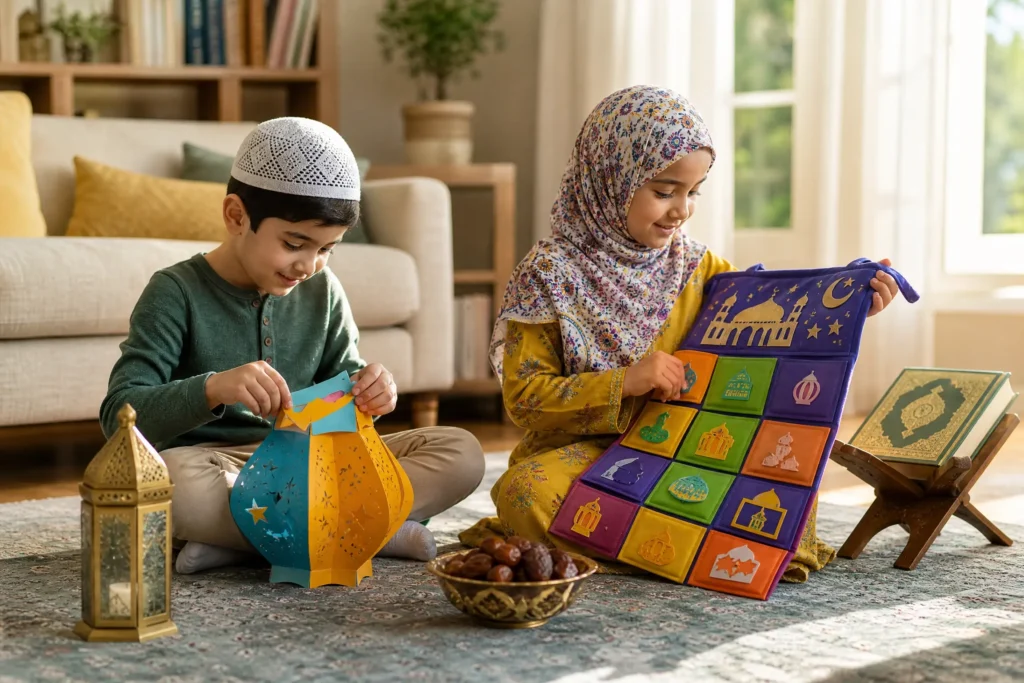
Every Ramadan, parents across the world ask the same question: how do I help my child actually feel this month? Not just witness it from the sidelines — but belong to it.
Knowing what to do in Ramadan for kids makes the difference between children who see Ramadan as a set of restrictions adults follow, and children who grow up carrying a genuine love for this blessed month.
This guide walks you through age-appropriate activities, Ramadan explanations, fasting guidance, and daily ideas that turn every week of the month into something meaningful.
What you’ll learn in this article?
- How to explain Ramadan to children at different ages in a way that sticks.
- The best Ramadan activities for kids — spiritual, creative, and family-based.
- Whether kids can fast and how to introduce it gently.
- How to make Ramadan for children feel exciting, not restrictive.
- Practical daily ideas that take 10–20 minutes and create lasting memories.
What to Do in Ramadan for Kids?
Before activities, children need understanding. A child who knows why Ramadan is special will engage with it entirely differently than one who just sees mom and dad skipping breakfast.
Ramadan is the ninth month of the Islamic calendar, observed by approximately 1.8 billion Muslims worldwide. It is the month the Quran was revealed to Prophet Muhammad ﷺ, one of Islam’s Five Pillars, and the month that contains Laylatul Qadr — the Night of Power, considered the most sacred night of the year.
The key is matching your explanation to the child’s age:
- A four-year-old needs to feel Ramadan through sensory experiences — the lanterns, the family gathered at Iftar, the special foods.
- A twelve-year-old can understand that fasting teaches empathy for people who go hungry every day, which is precisely why Ramadan includes so much charity.
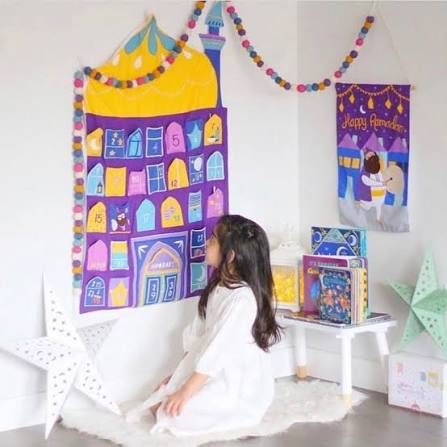
How to Explain Ramadan to Kids Ages 4–7?
Young children are concrete thinkers. Skip the theology and lead with the experience: “Ramadan is our special month where we try extra hard to be close to Allah.
We light lanterns, we eat together as a family, and we help people who need it.” Add one short story from a prophet’s life each evening and you have covered more ground than any lecture would.
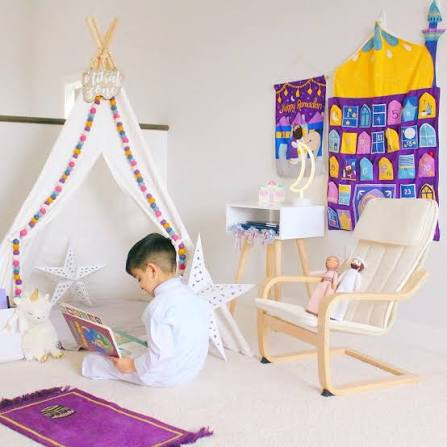
How to Explain Ramadan to Kids Ages 8–12?
Children this age understand fairness and empathy. Try: “When we fast, we feel what it’s like to be hungry — and that’s why Allah asks us to give so much charity this month. Fasting and giving go together.” This framing transforms fasting from a rule into a value they actually understand.
How to Explain Ramadan to Teenagers?
Teenagers respond to depth and respect. Discuss:
- Why Ramadan was ordained.
- The revelation of the Quran.
- The meaning of Laylatul Qadr.
- The personal discipline fasting builds.
Treat them as young adults capable of engaging with layered concepts, and most will rise to the occasion.
Experience a Real Classroom
Curious about how we teach? This video offers a glimpse into a real class, showcasing our interactive approach, qualified teachers, and child-friendly learning experience.
Fun & Engaging Islamic Classes for Kids
Start your child’s journey today with interactive lessons designed to make learning Islam loved and easy.
Get Your Child a Free TrialThe Identity vs Enrichment Framework for Ramadan Activities for Kids
Here is something most Ramadan activity lists miss: not all activities serve the same purpose. Before choosing what to do, it helps to sort activities into two categories:
- Spiritual anchor activities build Islamic identity — they create habits children carry into adulthood (daily dua, Quran reading, charity).
- Creative enrichment activities make Ramadan feel joyful and memorable (lantern making, decorating, cooking).
Both matter, but spiritual anchors should anchor every week, with creative activities woven around them — not the other way around.
The practical rule: aim for one spiritual anchor activity and one creative enrichment activity per day. That balance keeps Ramadan from feeling like either a religious obligation or an arts-and-crafts month.
Spiritual Anchor Activities for Ramadan
These are the activities that do the real work. Spiritual anchor activities build habits children carry into adulthood — a daily dua, a consistent Quran routine, a reflex of generosity.
The five ideas below are simple enough to do on any weeknight and meaningful enough to shape how your child relates to Islam for the rest of their life.
1. The Ramadan Goals Board
At the start of the month, sit with your child and write three personal goals on a poster:
- One for Quran (e.g., memorize Surah Al-Ikhlas).
- One for prayer (e.g., pray Fajr with the family all 30 days).
- One for character (e.g., no complaining for a week).
Review it each Friday, Children who set their own goals are far more motivated than children given someone else’s targets.
2. The Daily Dua Card
Print or write one short dua per day on a card — the dua before Iftar, dua for parents, dua before sleep. Place it on the child’s plate at Iftar.
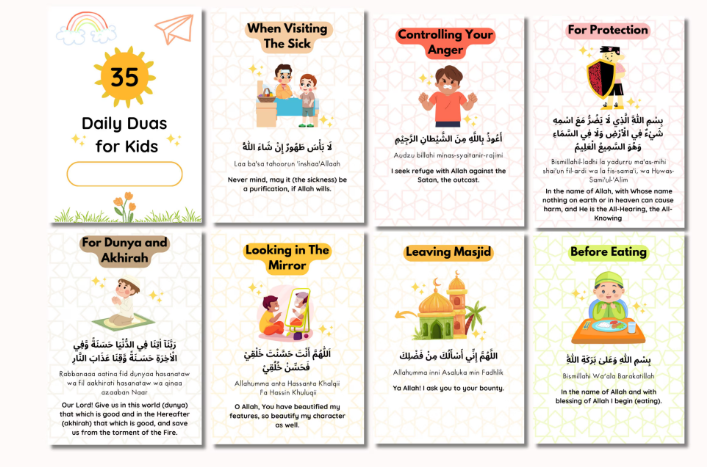
This is one of the most effective Ramadan activities for kids because it builds a habit of conscious supplication without feeling like a chore.
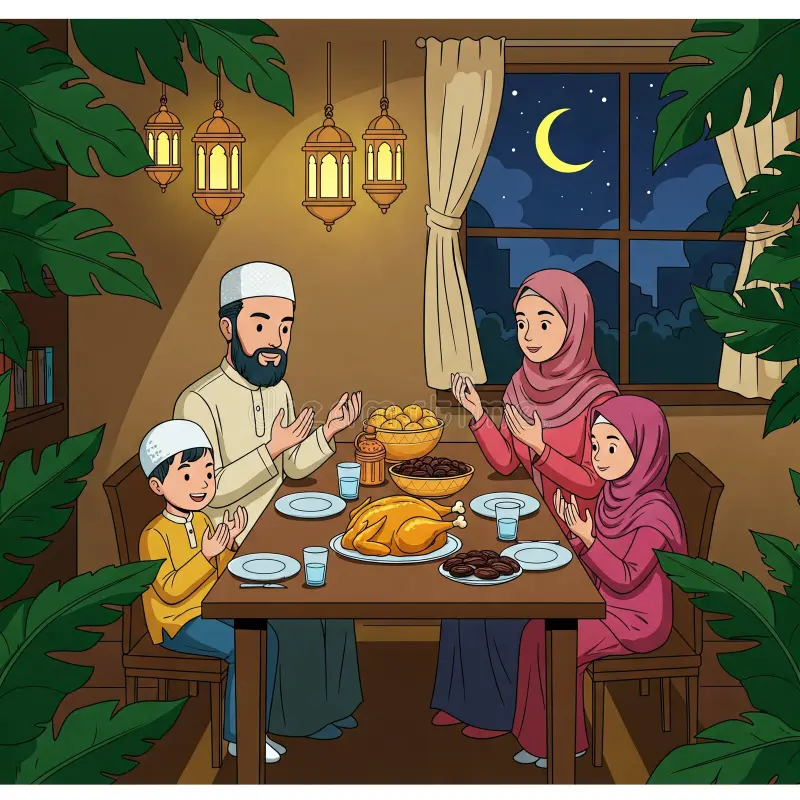
3. Prophet Stories at Night
Dedicate 10 minutes after Iftar to one story from the Seerah or a prophet’s life. Ask two questions afterward:
- “What did this prophet do that was hard?”
- “What can you do this week that’s like that?”
This connects Islamic history to the child’s actual life.
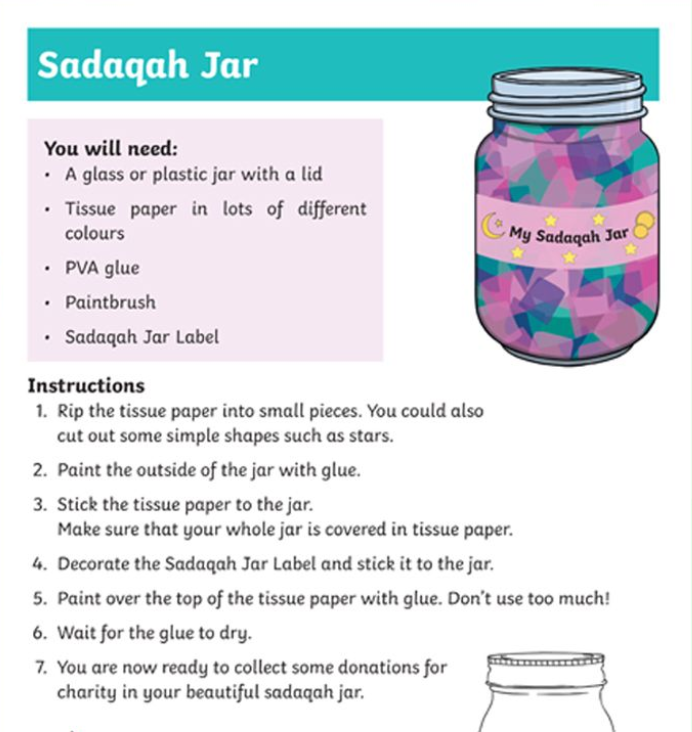
4. The Charity Jar
Place a visible jar in the living room. Each day, family members add coins or notes describing kind deeds. On Eid, donate whatever was collected together as a family decision.
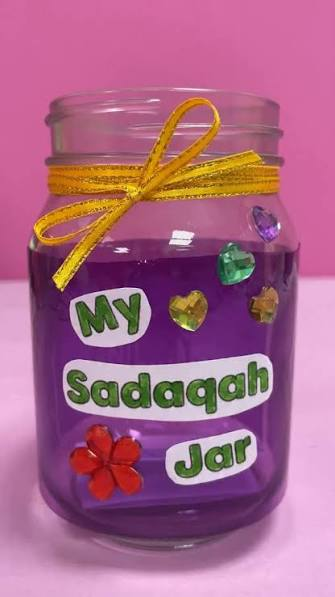
Teaching kids about Ramadan giving works best when the child physically chooses and participates in the act of giving, not when parents handle it behind the scenes.
5. Quran Reading by Age
Ramadan and Quran are inseparable. Even 10 minutes of focused, joyful Quran reading after Iftar builds a habit children carry long after the month ends.
| Age Group | Daily Quran Goal | Suggested Focus |
| Ages 4–7 | 5–10 minutes | Review memorized surahs with enthusiasm |
| Ages 8–12 | 15–20 minutes | New memorization + reading practice |
| Ages 13–15 | 20–30 minutes | Independent recitation + meaning exploration |
Consistency matters far more than duration. Five focused, joyful minutes daily beats thirty reluctant ones.
Creative Enrichment Activities for Ramadan
Spiritual anchors give Ramadan its depth. What gives it its warmth — the part children remember years later — is almost always something they made, cooked, or laughed over with their family.
The activities below connect a child’s hands and imagination to this month in a way that stays.
1. Ramadan Lantern Making
Use cardboard rolls, colored paper, or small glass jars with tissue paper to make lanterns. Lantern-making works as a creative enrichment activity precisely because it ties physical memory to the month — a child who made a lantern with their hands will remember Ramadan through that lantern for years. Hang them at the entrance to mark the start of the month.
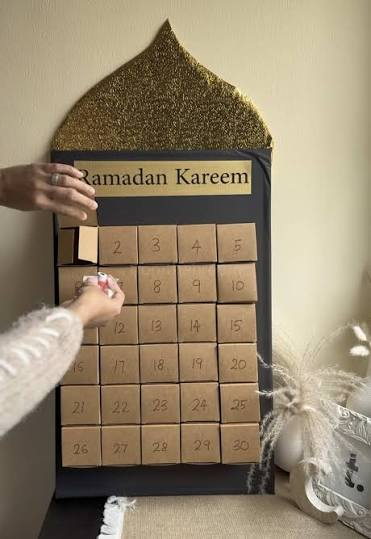
2. DIY Ramadan Countdown Calendar
Create a 30-box grid together. Each box hides:
- A small activity
- A Ramadan fact
- A short dua
Children open one box per day after Fajr or before Iftar. The anticipation alone keeps children engaged with the month’s rhythm daily.
3. Ramadan Decorating
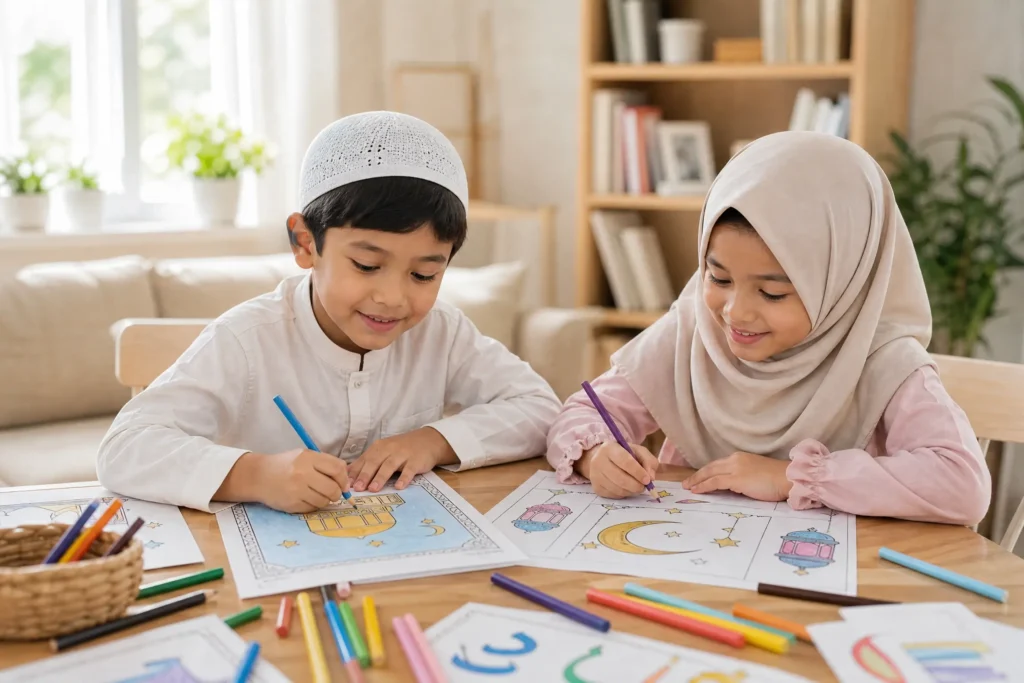
Involve children in decorating the house — paper stars, crescents, bunting, and greeting cards they design themselves to give to grandparents and neighbors.
The act of giving cards they made themselves teaches generosity more effectively than being told to be generous.

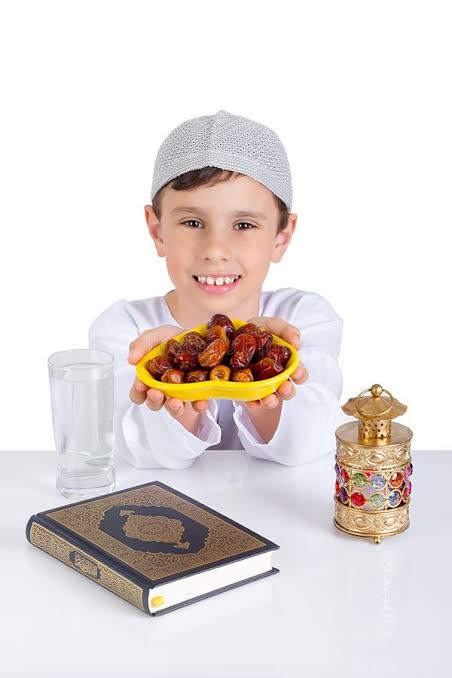
4. Helping with Iftar
Even a five-year-old can:
- Wash dates
- Arrange fruit on a plate
- Pour juice
Older children can help with simple cooking. Being part of the Iftar preparation gives children ownership of one of Ramadan’s most beloved rituals.
As a practical note: assign a specific, simple task each day so participation feels structured rather than parents improvising while cooking.
5. Ramadan Journal
For children aged 10 and above, a simple nightly journal works powerfully. One page per night, three questions:
- “What am I grateful for today?”
- “What dua did I make?”
- “How did I help someone?”
By day 30, the journal becomes a tangible record of 30 days of growth — something many children keep for years.
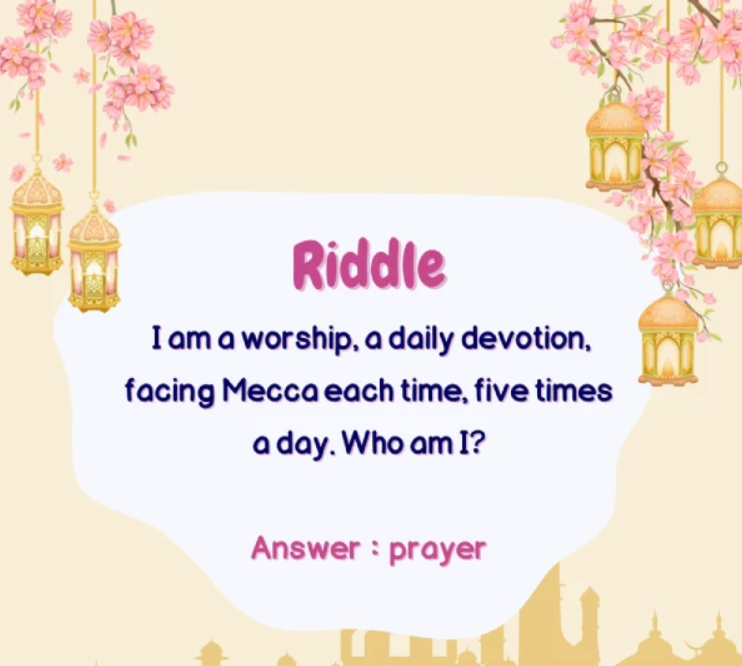
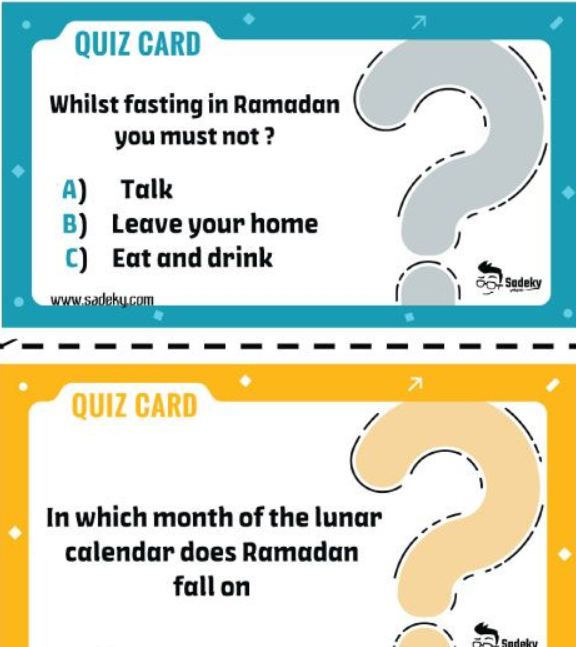
6. Ramadan Quizzes and Riddles
After Iftar, when energy returns, run short family quizzes about:
- Prophets
- Islamic history
- Ramadan facts
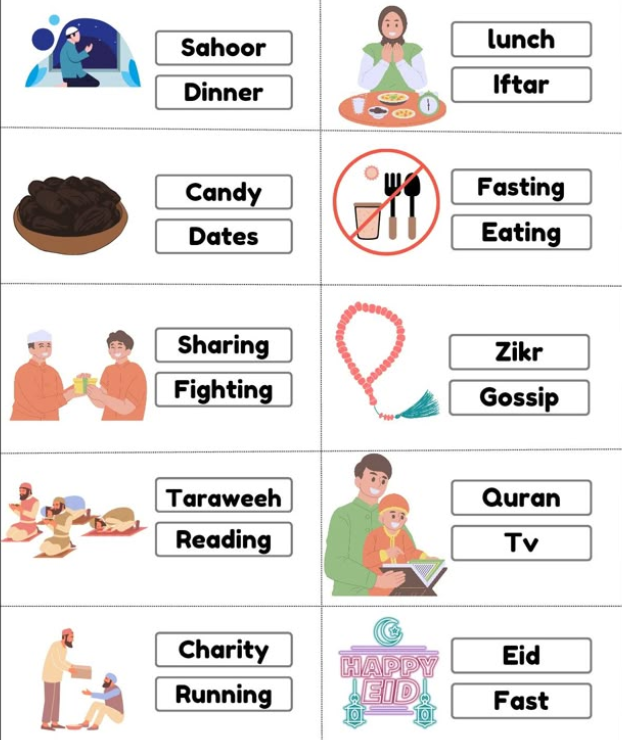
Keep them light and competitive with small prizes (a book, a sticker, choosing what to eat for Suhoor). Ramadan explanation for kids lands best when it comes through play, not instruction.
Read Also: Islamic Civilization and the Golden Age for Kids
Can Kids Fast in Ramadan?
Yes — but fasting is not obligatory for children until puberty. Islamic scholars are unanimous on this point. Before puberty, children are not accountable for missed fasts, and parents are not at fault for letting them rest.
That said, gradually introducing children to fasting before puberty is a well-established practice. The Companions of the Prophet ﷺ encouraged their children to fast and gave them toys to distract them from hunger. The goal was always preparation and love for the practice, not obligation.
Age-by-Age Fasting Guide
Every child is different, and fasting readiness depends on:
- Physical health
- Temperament
- Spiritual awareness — not age alone
The table below offers a practical starting point, not a rigid rule. Use it as a guide and adjust based on what you observe in your own child each day.
| Age Group | Fasting Expectation | Recommended Approach |
| Ages 4–7 | No fasting required | Participate in Ramadan spirit; join Suhoor if they wake |
| Ages 8–10 | Optional half-day fasting | Fast from Fajr to Dhuhr if the child wishes |
| Ages 11–12 | Gradual full-day practice | Occasional full fasts with flexibility to stop if needed |
| Ages 13–15 | Obligatory upon puberty | Full fasting with parental support and hydration monitoring |
Watch a Sample Lesson from Our Academy
Get a firsthand look at how our students learn Islamic values, Quran, and essential knowledge through engaging and interactive online classes. See why families trust Islamic Studies for Kids Academy.
Fun & Engaging Islamic Classes for Kids
Start your child’s journey today with interactive lessons designed to make learning Islam loved and easy.
Get Your Child a Free TrialRead Also: Can Kids Fast in Ramadan?
The Language That Makes the Difference
One of the most overlooked parenting details: the words you use around fasting shape a child’s entire relationship with it.
- Replace “you have to fast today” with “do you want to try fasting today?”
- This single shift gives children a sense of agency.
- Many children, when given the choice, will choose to participate — especially if older siblings or parents are fasting and the month feels celebratory.
If a child fasts until 2pm and then needs to eat, celebrate what they did: “Masha’Allah, you fasted for hours — that’s something to be proud of.”
A child who breaks their fast early and receives genuine praise will try again tomorrow. A child who breaks their fast and senses disappointment associates fasting with failure.
Practical Fasting Tips for Kids
- Never skip Suhoor for younger children even if waking them feels difficult.
- A simple five-minute Suhoor — dates, water, and a banana — makes a measurable difference in a child’s ability to manage the day.
- A child who skips Suhoor and struggles to fast is not weak; they are undernourished.
- Keep water accessible for children who are not yet fasting full days.
- Avoid scheduling heavy outdoor activity during the hottest hours.
Read Also: How to Teach Kids to Pray in Islam?
This Ramadan, Give Your Child More Than Decorations and Lanterns
Lanterns fade. The Quran stays. Every Ramadan, families invest in decorations, special foods, and countdown calendars — and all of that matters.
But the families whose children carry Ramadan into adulthood are the ones who also invested in understanding — structured, guided, age-appropriate Islamic learning that makes the month mean something beyond the atmosphere.

Islamic Studies for Kids Academy is where that learning happens.
The Courses Your Child Can Start This Ramadan
Three courses connect directly to everything this month is about:
- 5 Pillars of Islam for Kids Course Online
Ramadan is the fourth pillar — and a child who understands all five experiences Ramadan completely differently.
This course covers Shahada, Salah, Zakat, Sawm, and Hajj for children ages 4 to 15, taught in English by Al-Azhar certified tutors who specialize in children from Western, non-Arabic speaking households.
Sawm is no longer just “not eating.” It becomes an act of worship your child genuinely understands.
- Islamic Studies for Kids Course Online
For families who want the complete foundation — Aqeedah, Fiqh, Seerah, and Islamic manners — in one structured, progressive curriculum. Private 1-on-1 sessions. English instruction. Al-Azhar certified tutors. No prior Arabic required. Ages 4 to 15.
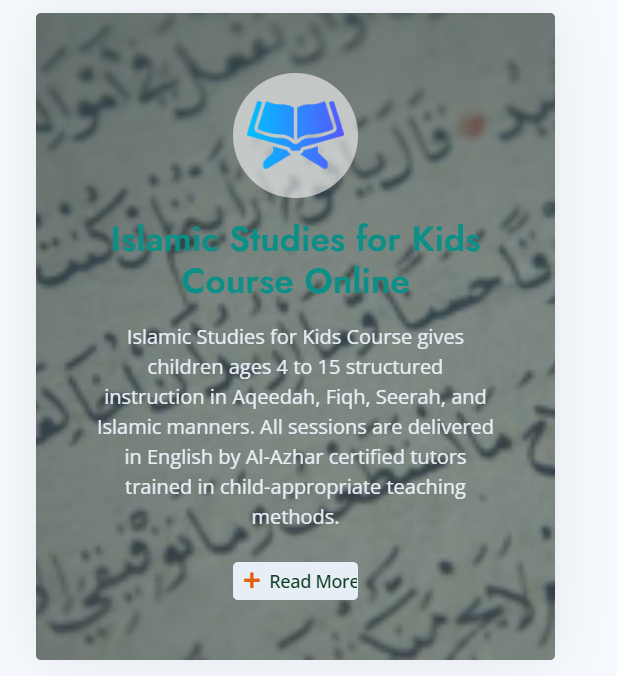
Why Families Choose Islamic Studies for Kids Academy
Not every online Islamic course is the same. Here is what makes families stay — and keep enrolling every semester:
- Al-Azhar University certification + traditional Ijazah — every tutor, no exceptions.
- Private 1-on-1 sessions always — your child is never lost in a group.
- Written progress reports at each completed level — Aqeedah, Fiqh, Seerah, and Adab documented per child.
- Full English instruction — Arabic terms introduced in context, no prior knowledge needed.
- Female tutors available for girls upon request, same curriculum and certification.
- Flexible scheduling — sessions fit around Suhoor, Iftar, and school timetables.
Ramadan lasts 30 days. The foundation your child builds this month lasts a lifetime.
Book Your Child’s Free Trial Class Today
Our Islamic Studies Courses Include:
- Islamic Studies for Kids
- Islam Basics for Kids (Beginners)
- 5 Pillars of Islam for Kids
- 6 Pillars of Iman (Faith) for Kids
- Salah (Prayer) for Kids
- Wudu for Kids
- Dua for Kids
- Ramadan for Kids
- Zakat & Sadaqah for Kids
- Hajj for Kids
- Aqeedah (Islamic Belief) for Kids
- Islamic Manners & Akhlaq for Kids
- Good Deeds for Kids
- Cleanliness (Taharah) in Islam for Kids
- Angels in Islam for Kids
- Islamic History for Kids
- Seerah (Prophet’s Life) for Kids
- Prophets Stories for Kids
- Islamic Stories & Morals for Kids
- Fiqh for Kids (Islamic Jurisprudence Basics)
- Hadith for Kids
- Quran Tafseer Course for Kids
- Islamic Holidays & Events for Kids
- Islamic Identity for Kids
- Intensive Islamic Course for Kids
Enroll today and give your child the knowledge, values, and confidence to grow as a practicing Muslim with a strong connection to Allah and His teachings.
Fun & Engaging Islamic Classes for Kids
Start your child’s journey today with interactive lessons designed to make learning Islam loved and easy.
Get Your Child a Free TrialConclusion
Knowing what to do in Ramadan for kids is not about filling every hour with activity — it is about choosing the right moments and making them count. A child who:
- Makes a lantern with their hands.
- Says the Iftar dua for the first time on their own.
- Drops coins in a charity jar.
- Hears one prophet’s story before bed.
…has experienced a Ramadan that will stay with them for life.
The month works best when it feels like a celebration children belong to, not a set of adult rules they observe from a distance. Start with one activity from each category — spiritual anchor and creative enrichment — and build from there. Small, consistent, joyful efforts are what create the love for Ramadan that children carry into adulthood.
Frequently Asked Questions
What is Ramadan for kids in simple words?
Ramadan is a special month when Muslims fast from dawn to sunset to get closer to Allah, practice gratitude, and help people in need. For children, it is also a time of family, lanterns, Iftar meals together, and learning about Islam in a joyful and memorable way.
When is the right time to introduce fasting to children during Ramadan?
Fasting becomes obligatory only at puberty. Before that, children can try half-day fasting from around age 7–8 if they wish.
The Islamic scholarly consensus is that gradual, willing participation builds a far healthier relationship with fasting than early enforcement.
Can kids fast in Ramadan without any health risks?
Healthy children who fast with parental supervision, eat a proper Suhoor, stay hydrated between Maghrib and Fajr, and avoid intense physical activity during the day can fast safely.
Children with medical conditions such as diabetes or anemia should consult a doctor before any fasting.
Which fun and meaningful Ramadan activities can children enjoy at home?
The most effective combination is:
One spiritual anchor activity (daily dua card, Quran reading, charity jar, prophet story)
One creative enrichment activity (lantern making, Ramadan calendar, Iftar preparation, decorating)
This balance keeps the month both meaningful and enjoyable.
How do I explain Ramadan to a young child?
Lead with experience, not theology. For younger children, you might say: “Ramadan is our month of kindness, prayer, and sharing, where we come closer to Allah and help others whenever we can.”
Sensory elements — lanterns, special meals, family gatherings — make the explanation real for children under 7.
How do I encourage my child to fast without pressure?
Use inviting language (“do you want to try fasting today?”)
Celebrate every effort rather than every completion
Never compare siblings
Half-day fasts are a legitimate and encouraged stepping stone
A child who fasts happily for half a day gains more than one who completes a full fast under duress.


Leave a Reply