Follow Us:
Course Summary

Zakat & Sadaqah for Kids Course

Your child can learn what Zakat and Sadaqah mean in Islam, why Allah commanded generosity, and how to practice giving as an act of worship — not just a rule to memorize. Islamic Studies for Kids Academy‘s Zakat & Sadaqah for Kids course is part of our full Islamic Studies curriculum, designed for children aged 4–15. Enroll in this topic alone or as part of the complete program.

More Details Pricing Testimonials

What Does the Zakat & Sadaqah for Kids Course Teach Children?


Most children first encounter Zakat and Sadaqah as abstract obligations — percentages and boxes to tick. Islamic Studies for Kids Academy teaches these concepts differently. We ground every lesson in the ‘why’ before the ‘how’, building genuine love for giving before children are ever asked to calculate a single amount.

This Zakat & Sadaqah for Kids course follows a structured, age-adapted path. Younger children (ages 4–7) learn through stories, activities, and the simple idea that giving makes Allah happy. Older children (ages 8–15) progress into the pillars of Zakat, the types of Sadaqah, and the profound difference between an obligation and a gift given from the heart.

Each lesson is 20–30 minutes long — matched to children’s natural attention spans — and delivered by qualified, child-specialist Islamic Studies tutors. Parents receive clear progress updates so you always know what your child has understood and practiced.

What Your Child Will Learn in the Zakat & Sadaqah for Kids Course


Our Zakat & Sadaqah curriculum for kids covers every dimension of Islamic giving — from foundational beliefs to practical application — in a sequence that builds genuine understanding at every age.

1. What Is Zakat? The Third Pillar of Islam, Explained for Kids

Children learn that Zakat is the Third Pillar of Islam — an act of worship, not simply a tax. Lessons explain why Allah made giving obligatory: to purify wealth, to remind us that everything belongs to Allah, and to build a community where no Muslim is left in need. Children are introduced to the Arabic root (زكا — Zaka), meaning “to purify” and “to grow” — an expert-level detail that reshapes how children understand Zakat for the rest of their lives.

For older students, the course introduces the concept of Nisab — the minimum threshold of wealth that makes Zakat obligatory — and explains that Zakat is calculated at 2.5% of savings held for one lunar year. This is taught as context for understanding the obligation, not as a math exercise disconnected from its spiritual meaning.

2. What Is Sadaqah? Voluntary Giving in Islam for Kids

Unlike Zakat, Sadaqah has no minimum, no deadline, and no calculation. This makes it the perfect entry point for young children. Islamic Studies for Kids Academy teaches children that Sadaqah covers acts as small as a smile, a kind word, or helping a sibling — not only money.

The Prophet ﷺ said: “Every act of goodness is Sadaqah.” (Muslim). This hadith becomes an anchor for the lesson, showing children that generosity is a way of living, not an event. Older students explore Sadaqah Jariyah — ongoing charity — and why the Prophet ﷺ described it as one of three deeds that continue after death.

3. Who Receives Zakat? The Eight Categories in Islam, Simplified for Kids

The Quran specifies eight categories of Zakat recipients (Surah At-Tawbah: 60). Children learn who qualifies to receive Zakat and why — building empathy alongside knowledge. Lessons use relatable examples: a family in need of food, a student who cannot afford school, a traveler who has lost their funds. Abstract categories become real people.

This section includes a practitioner-level observation parents and teachers often overlook: children who understand why a recipient qualifies — not just who qualifies — retain the knowledge far better and develop a genuine desire to help, rather than simply learning a list.

4. Charity in Islam for Kids: How Giving Is an Act of Worship

A common mistake in teaching Islamic charity to children is presenting it as obligation without joy. Islamic Studies for Kids Academy corrects this by connecting every act of giving to Allah’s love and the rewards of the Akhirah. Children learn that giving Sadaqah does not decrease wealth — the Prophet ﷺ confirmed this — and that generosity is one of the most beloved qualities a Muslim can build.

Lessons include age-appropriate activities: younger children practice choosing an amount from their own pocket money to give; older children research a cause together and decide how to contribute. These exercises make Islamic charity for children a lived experience, not a classroom concept.
Outcomes


What Are the Outcomes of the Zakat & Sadaqah for Kids Course?

By the end of this course, your child will not simply know the definition of Zakat and Sadaqah. They will understand, value, and practice Islamic giving as an authentic part of their Muslim identity.

Your Child Explains Zakat Clearly and Correctly

Graduates can articulate what Zakat is, why Allah made it obligatory, and who receives it — in their own words, without prompting. They understand the difference between Zakat as purification and Sadaqah as voluntary giving.

Your Child Sees Sadaqah as a Daily Habit, Not an Event

Children leave the course with the understanding that Islamic charity includes smiles, kind words, and helpful actions — not only money. This reframes generosity as a character trait they practice every day.

Your Child Connects Giving to Tawakkul (Trust in Allah)

Students understand the prophetic teaching that Sadaqah does not reduce wealth. This builds Tawakkul — genuine trust in Allah's provision — which is one of the most protective beliefs a child can internalize early.

Your Child Develops Empathy for Those in Need

Through learning who receives Zakat and why, children build real empathy — not sympathy from a distance. They understand the dignity of those in need and the responsibility of those who have been given more.

Your Child Understands Sadaqah Jariyah and Legacy

Older students grasp the concept of ongoing charity — deeds that continue after death. This gives children a meaningful framework for thinking about how they want to live and what mark they want to leave.

Your Child Asks to Give — You Don't Have to Ask Them

The most observable outcome parents report: their child begins initiating acts of generosity. When Islamic charity for children is taught with understanding and love, giving becomes intrinsically motivated, not parent-prompted.

Enroll Your Child in the Zakat & Sadaqah Course Today Start your Free Trial Now

Why Choose us?


Why Choose Islamic Studies for Kids Academy for the Zakat & Sadaqah Course?

Islamic Studies for Kids Academy is built around a single conviction: children who understand their Deen from a young age carry it for life. Our Zakat & Sadaqah course is not a one-lesson explainer — it is a structured learning journey with qualified teachers, clear milestones, and direct parental involvement.

Child-Specialist Islamic Tutors

Every teacher in our program is trained in both Islamic sciences and child pedagogy — they know how to hold a seven-year-old's attention and how to challenge a twelve-year-old without overwhelming them.

Age-Adapted Curriculum (Ages 4–15)

Lessons are tailored for three age bands: 4–7, 8–12, and 13–15. The same concept — Zakat — is taught with different depth, language, and examples at each stage, ensuring the right challenge at every age.

Stories, Activities, and Real Practice

Younger children learn through Islamic stories about generosity. Older children engage in structured activities — calculating Nisab examples, researching charities, and making real giving decisions with small amounts of their own money.

Part of a Full Islamic Studies Curriculum

This Zakat & Sadaqah course is a standalone topic your child can take independently — or one module within our complete Islamic Studies for Kids program, which covers Aqeedah, Fiqh, Seerah, Akhlaq, and Quran.

Progress Reports Sent to Parents

You receive clear, plain-language feedback after each module. You will know exactly what your child has understood, what they need to revisit, and what observable behavior to look for at home.

Flexible Scheduling Around Your Family

Sessions are 20–30 minutes and scheduled around your household routine — school hours, extracurricular activities, and family time. Learning happens at your child's pace, not a fixed institutional timetable.

Start Your Child's Free Trial Lesson Start your Free Trial Now


Related Courses


Other Programmes Offered at Islamic Studies for Kids Academy

Programmes available include the full Islamic Studies for Kids curriculum, the 5 Pillars of Islam Course, the 6 Pillars of Iman Course, the Dua for Kids Programme, Noorani Qaida, Quran for Beginners, Tajweed, Hifz, and Arabic for Kids across all levels.

Wudu Course for Kids
Icon

Wudu Course for Kids

Your child is ready to pray — but do they know how to prepare for it? Islamic Studies for Kids Academy's Wudu course for kids teaches children the complete steps of Wudu with correct Islamic understanding, built for young learners from age 5 upward.

Read More
Seerah course for Kids Online
Icon

Seerah course for Kids Online

The Seerah (Prophet's Life) course for Kids at Islamic Studies for Kids Academy teaches children ages 4 to 15 the authenticated biography of Prophet Muhammad (SAW). Sessions cover his birth, prophethood, migrations, battles, and the lessons embedded in each phase. All instruction is delivered in English by Al-Azhar certified tutors.

Read More
Salah (Prayer) for Kids Course
Icon

Salah (Prayer) for Kids Course

Help your child learn Salah in a way that is simple, enjoyable, and easy to remember. Our Salah for Kids Course teaches children the foundations of Islamic prayer through step-by-step guidance, interactive lessons, and patient instruction designed specifically for young learners.

Read More
   

Give Your Child the Gift of Understanding, Not Just Rules

Enroll your child in the Zakat & Sadaqah course and watch generosity become part of who they are — not just something they were told to do.

Start your Free Trial Now            

Testimonials


Testimonials

Children enrolled in the Ramadan for Kids Course at Islamic Studies for Kids Academy approach the month with documented theological understanding, accurate Fiqh knowledge, and the ability to explain Ramadan to non-Muslim peers with clarity and confidence.

Join Islamic Studies for Kids Academy Now Start your Free Trial Now
       
Student Success Stories

Hear From Our Graduates

Real transformations from students who mastered the Quran with our courses

Hamza Osama
Hamza Osama

Hamza Osama

Arabic alphabet

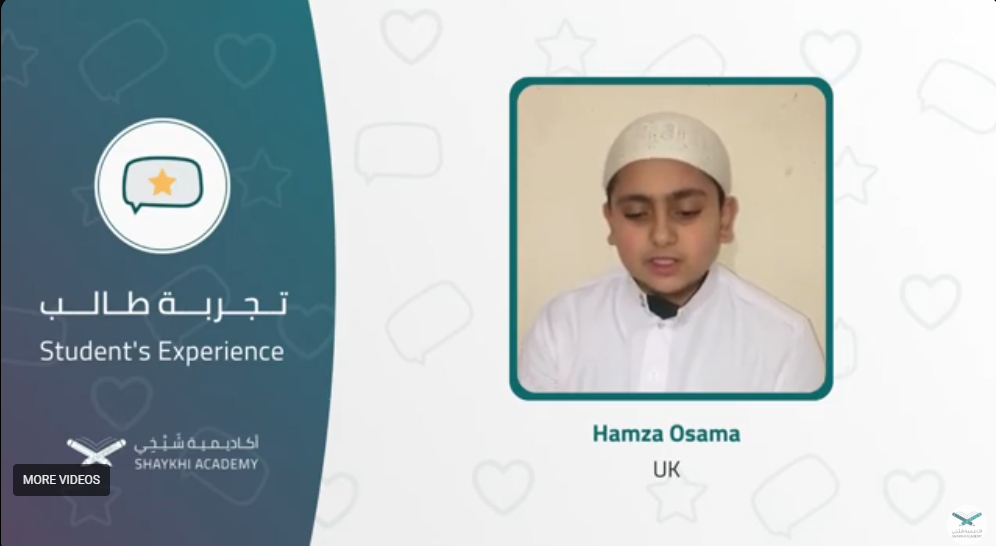
I took a course at Shaykhi Academy, and my name is Hamza Osama from England. During my time there, I learned the Arabic alphabet and Tajweed rules. I have also successfully memorized approximately two Juz of the Quran. My teacher was the best, and I feel I benefited a lot from him. I would advise anyone who wants to learn the Arabic language, Tajweed rules, or the Quran to join Shaykhi Academy.

6 months ago
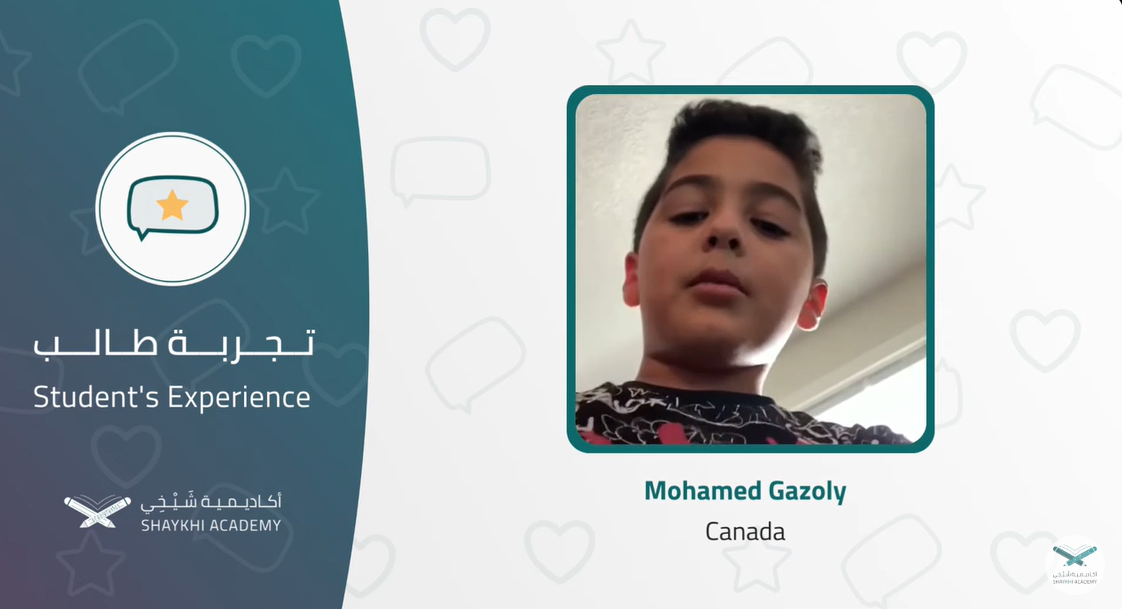
Mohamed Gazoly
Mohamed Gazoly

Mohamed Gazoly

Tajweed Mastery Course

I took a class at Shaykhi Academy with Mr. Luqman, and I had a lot of fun learning with him. I even got the chance to meet him in Egypt! I learned a lot from my time with him, including Tajweed, Tahweed, Arabic reading, and Quran. I've been learning with him for about a year now. Thank you for your time.

1 year
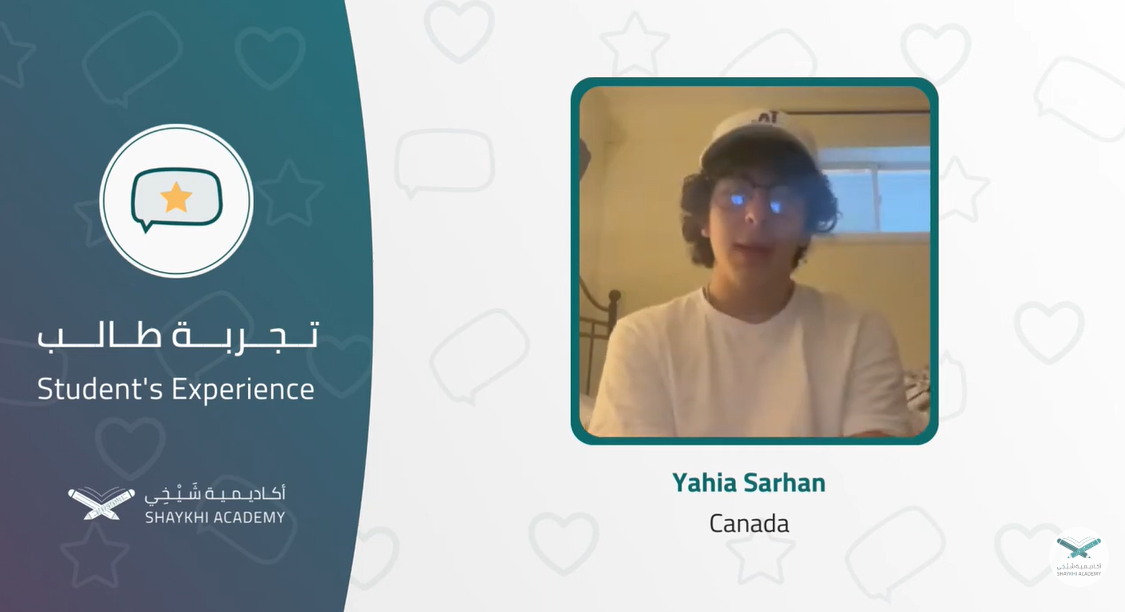
Yahia Sarhan
Yahia Sarhan

Yahia Sarhan

Islamic studies Course

I’m Yahia Sarhan, I’m 15 years old and I’m from Canada. I’ve been a student at Shaykhi Academy since 2019, so about three or four years now. It’s been a great learning opportunity for me and I’ve learned a lot about Islamic studies, the Quran, and Arabic reading. I’d definitely recommend it to anyone who’s trying to learn.

4 years
   

Teach Your Child the Joy of Giving and the Blessing of Zakat

Secure a free trial class at Islamic Studies for Kids Academy. A certified Azhari tutor will assess your child’s understanding of Islamic charity, introducing them to the beautiful concepts of Zakat and Sadaqah through engaging, age-appropriate lessons before your first paid session.

Start your Free Trial Now            
           

Frequently Asked Questions:

Here are the answers to the questions parents ask most before enrolling their child.

Islamic Studies for Kids Academy accepts students from age 4. The curriculum is divided into three age bands — 4–7, 8–12, and 13–15 — so every child receives content matched to their developmental stage and attention span.

Yes. This course is available as a standalone topic. You can enroll your child in the Zakat & Sadaqah module alone and add further Islamic Studies topics — Aqeedah, Fiqh, Seerah, Akhlaq, and Quran — whenever your family is ready.

Each lesson is 20–30 minutes, scheduled at a frequency that suits your family. Most families begin with two sessions per week. Flexible scheduling means lessons fit around school, activities, and family commitments — not the other way around.

Knowing Zakat is a pillar is very different from understanding its meaning, its recipients, the wisdom behind it, and how to practice it. This course builds the deeper understanding — the 'why' — that transforms obligation into genuine love for giving.

Yes, for children aged 8 and above. Sadaqah Jariyah — ongoing charity whose reward continues after death — is one of the most powerful concepts in Islamic generosity and an important part of building a child's long-term understanding of giving.

Islamic Studies for Kids Academy provides parents with regular progress updates after each module. These reports are written in plain language — not educational jargon — so you know exactly what your child has learned and what to reinforce at home.
Send Message Free Trial