The Islamic Identity course for Kids at Islamic Studies for Kids Academy addresses the specific challenge of raising Muslim kids in Western secular environments. Sessions cover islamic identity for kids across belief, conduct, community, and self-expression. All instruction is delivered in English by Al-Azhar certified tutors trained in child teaching methods.
Muslim kids identity in the West is tested daily by school culture, peer pressure, and media. How to keep islamic identity for kids requires deliberate structured teaching rather than the assumption that household exposure alone produces a child who identifies confidently as Muslim in non-Muslim environments.
More Details Pricing Testimonials
The Islamic Identity course for Kids at Islamic Studies for Kids Academy treats Muslim identity as a subject requiring structured instruction rather than passive cultural transmission. Raising children islamically in the West means actively equipping them with the beliefs, vocabulary, and confidence to identify as Muslim without confusion or social pressure eroding that identification over time.
Islamic values for kids in this programme are taught as a framework for navigating dual identity rather than a list of prohibitions. Children learn what is islamic value for kids through real scenarios, Prophetic examples, and structured reasoning that builds conviction rather than compliance.
The Islamic Identity course for Kids covers four modules organized around the pillars of Muslim identity formation. Each module is available within the full programme or as a standalone course based on which identity challenge the child is currently facing most directly.
The first module addresses how to teach little kids about islam as an identity rather than a religion they were born into without choosing. Children learn what it means to be Muslim, what that identity requires of them, and how Islam positions them in relation to the world around them. Available within the full Islamic Identity course for Kids or as a standalone Muslim identity foundations programme for children.
This module covers raising muslim kids to handle the social dynamics of a secular school environment. Children learn how to respond when classmates question their practices, how to explain fasting, prayer, and Islamic clothing without defensiveness, and how the Prophetic example of maintaining dignity under social pressure applies to their current situation. Enrollable within the full course or as a standalone peer pressure and identity programme for children.
Children learn the islamic way of raising a child means equipping them to make decisions by Islamic principles rather than social norms. This module covers how Muslim children evaluate choices about friendships, entertainment, speech, and conduct using a framework derived from the Quran and Sunnah rather than peer consensus. Available within the full programme or as a standalone values-based decision making course for children.
The fourth module addresses muslim identity for children through connection to the Muslim Ummah. Children learn what the concept of Muslim brotherhood means at a practical level, how the Masjid and Islamic community function as identity anchors, and how raising children islamically in a Western minority context requires building deliberate connections to Islamic community rather than relying on it to occur naturally. Enrollable within the full course or as a standalone community and belonging programme for children.
Outcomes
Graduates of the first module state what being Muslim means to them, explain what Islamic identity requires of a person, and describe how Islam positions their role in relation to Allah, other people, and the world they inhabit. A child who cannot articulate what their identity means is vulnerable to having it defined for them by their environment. Islamic Studies for Kids Academy targets that articulation ability as the foundational outcome before any other identity skill is addressed.
Children completing the peer pressure module explain their Islamic practices to classmates calmly and accurately, describe how the Prophet (SAW) maintained dignity when his message was rejected, and apply that Prophetic example to situations they personally face at school. Assessment presents each child with three school scenarios involving identity pressure and requires them to identify the applicable Islamic position and explain how they would respond. General answers without Islamic grounding are returned for further discussion before the module closes.
Children who complete the third module evaluate choices about friendships, media, and social participation using a framework they derive from Quranic principles and Prophetic examples rather than social norms from their peer group. Tutors present real Western household decision scenarios and require children to explain which Islamic value applies and why. Children who choose based on peer approval rather than Islamic principle are guided through the reasoning before the module advances.
Children who complete the community module explain what Muslim brotherhood requires of them practically, describe what the Masjid represents as a community institution, and identify specific ways to build and maintain Islamic community connection from within a Western minority context. Islamic Studies for Kids Academy treats community connection as a measurable identity outcome rather than an abstract aspiration. Assessment documents whether the child can identify two to three concrete community practices they commit to maintaining independently of parental instruction.
Children who complete the full Islamic Identity course for Kids maintain consistent Islamic identification across school, home, and community settings without switching identity expressions depending on who is present. Final assessment at Islamic Studies for Kids Academy evaluates this consistency across all four module areas. Written reports document which identity competencies the child demonstrated, where inconsistencies remain, and what continued engagement with the full Islamic Studies course for Kids would address beyond the identity programme itself.
Why Choose us?
Every session uses situations Muslim children face at Western schools. Tutors build each scenario from the child's actual daily environment rather than hypothetical or historically distant examples.
Tutors guide children to reason through Islamic positions rather than recite them. Children who understand why they hold a position maintain it under pressure far more reliably than children who hold it by instruction alone.
Female Al-Azhar certified tutors deliver this programme to girls whose parents request them. Gender-specific identity challenges facing Muslim girls in Western schools are addressed explicitly in the peer pressure and values modules.
Every tutor graduated from Al-Azhar University. Identity teaching is grounded in authenticated Islamic principles rather than psychological self-esteem frameworks that lack religious basis.
Each peer pressure scenario is addressed through a specific Prophetic example of maintaining conviction under social opposition. Children leave with a named reference rather than a general principle.
Written reports after each module document articulation ability, scenario response quality, value application, and community connection with specific tutor observations per child.
Related Courses
Programmes include the Islamic Holidays course for Kids, Quran Tafseer course for Kids, Hadith course for Kids, Fiqh course for Kids, Seerah course for Kids, Aqeedah course for Kids, Islamic Stories course for Kids, Prophets Stories course, Good Deeds course, Noorani Qaida, Tajweed, Hifz, and Arabic for Kids.
Islamic Studies for Kids Academy provides the best Islam Basics Course for Kids that introduces children ages 4 to 15 to Tawheed, the Five Pillars of Islam, Wudu and Salah steps, foundational Seerah, and daily Islamic manners. Every session is taught in English by Al-Azhar certified tutors who hold traditional Ijazah and train specifically in teaching children rather than adult learners.
Read More
The Islamic Manners and Akhlaq for Kids Course at Islamic Studies for Kids Academy teaches children ages 4 to 15 the Prophetic etiquettes governing speech, conduct, relationships, and daily routine. Every manner is tied to an authenticated Hadith source. Sessions are delivered in English by Al-Azhar certified tutors trained in child instruction.
Read More
The Good Deeds for Kids Course at Islamic Studies for Kids Academy teaches children ages 4 to 15 which actions carry reward in Islam, how to perform them correctly, and why doing good deeds in Islam for kids is an act of worship rather than simply being polite. All sessions are delivered in English by Al-Azhar certified tutors trained in child instruction.
Read MoreContact Islamic Studies for Kids Academy to arrange a free trial session. A certified Azhari tutor evaluates your child’s current identity confidence and places them at the correct entry level within the Islamic Identity course for Kids.
Testimonials
Children who complete the Islamic Identity course for Kids at Islamic Studies for Kids Academy demonstrate stable Muslim identification across school and home settings, documented ability to respond to peer pressure with Islamic reasoning, and parent-reported increases in unprompted Islamic practice.
All Praise to Allah SWT alone! What an ease of seeking knowledge from the comfort of our own homes. It is a satisfying and helpful Quran lessons online Alhamdulillah. The teachers are very sincere and hardworking. My kids are very happy and encouraged. Let’s improve our lives by studying the Holy Quran.
I have been taking Quran memorization class for a few years now with TarteeleQuran. The courses are of great quality. I hope to continue with them for as long as I can and to encourage others to learn Quran online and experience the ease of learning the book of Allah with the help of Allah Almighty.
Real transformations from students who mastered the Quran with our courses
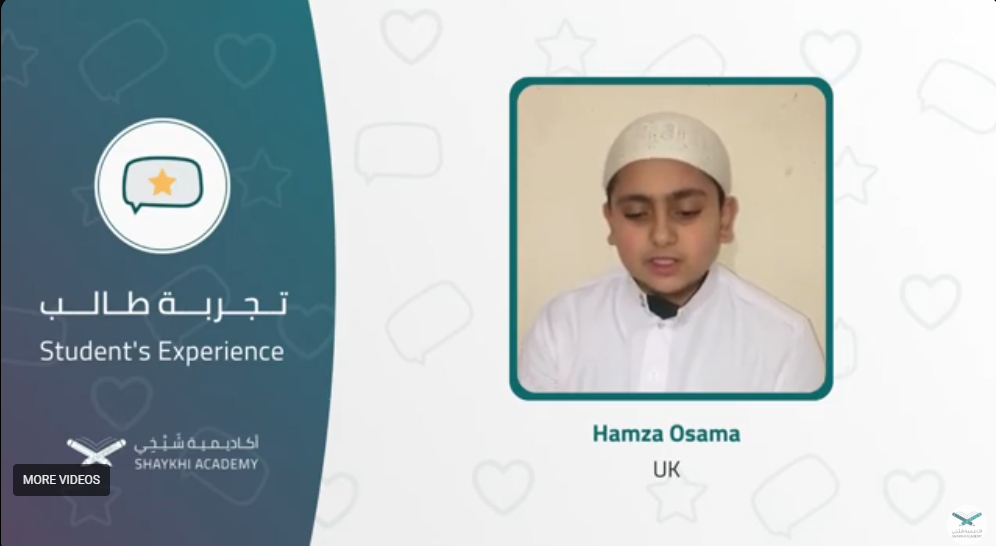
I took a course at Shaykhi Academy, and my name is Hamza Osama from England. During my time there, I learned the Arabic alphabet and Tajweed rules. I have also successfully memorized approximately two Juz of the Quran. My teacher was the best, and I feel I benefited a lot from him. I would advise anyone who wants to learn the Arabic language, Tajweed rules, or the Quran to join Shaykhi Academy.
I took a class at Shaykhi Academy with Mr. Luqman, and I had a lot of fun learning with him. I even got the chance to meet him in Egypt! I learned a lot from my time with him, including Tajweed, Tahweed, Arabic reading, and Quran. I've been learning with him for about a year now. Thank you for your time.
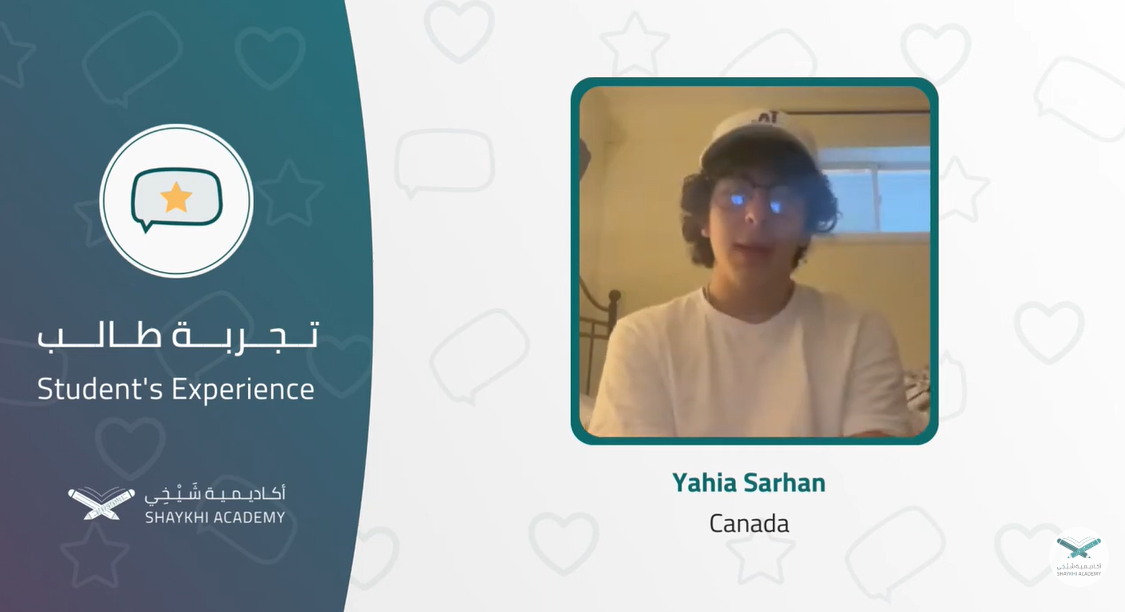
I’m Yahia Sarhan, I’m 15 years old and I’m from Canada. I’ve been a student at Shaykhi Academy since 2019, so about three or four years now. It’s been a great learning opportunity for me and I’ve learned a lot about Islamic studies, the Quran, and Arabic reading. I’d definitely recommend it to anyone who’s trying to learn.
Contact Islamic Studies for Kids Academy to arrange a free trial session. A certified Azhari tutor evaluates your child’s current identity confidence and assigns them to the correct entry level within the Islamic Identity course for Kids.
Common questions from parents enrolling children in the Islamic Identity course for Kids at Islamic Studies for Kids Academy.