 Islamic Studies
Why 5 pillars of Islam for kids? It is one of the first big questions children ask when they begin learning about their faith. The five pillars of Islam are the five main acts of worship that every Muslim believes in and practices, and each pillar exists for a clear purpose that children can understand.
Knowing the purpose of the 5 pillars for kids turns Islam from a list of rules to memorize into something meaningful. When a child understands why Muslims pray, give, fast, and travel to Makkah, worship becomes something they love rather than something they simply repeat.
In this guide from Islamic Studies for Kids, parents and teachers will find the meaning of the pillars of Islam for children, the reason behind each pillar, verified Quranic verses and hadith with sources, and simple ways to explain everything at home.
Key Takeaways: What You Will Learn
- The meaning of the word “pillar” (rukn) and why Prophet Muhammad ﷺ described Islam as a building with five pillars.
- Why each of the five pillars exists, explained in simple language that children can understand.
- What the Quran and the authentic Sunnah say about the Shahadah, Salah, Zakah, Sawm, and Hajj.
- The difference between zakah and voluntary charity, and why young children are not required to fast.
- Practical, age-friendly ways parents can teach the purpose of the pillars at home.
What Are the 5 Pillars of Islam for Kids?
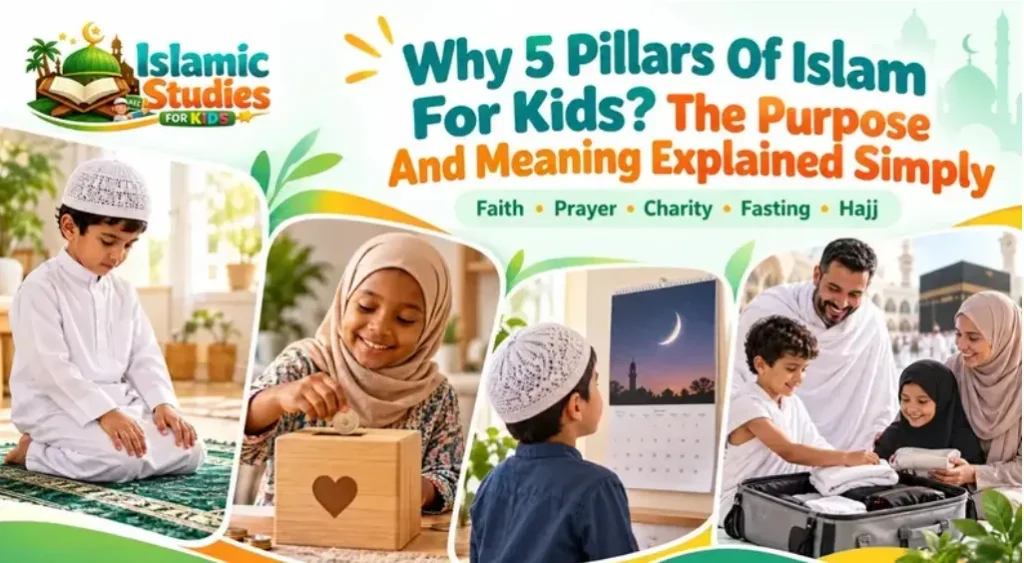
The Five Pillars of Islam (Arkan al-Islam) are the five fundamental acts of worship that form the foundation of a Muslim’s faith and daily life. They include the Shahadah (declaration of faith), Salah (prayer), Zakah (obligatory charity), Sawm (fasting during Ramadan), and Hajj (pilgrimage to Makkah).
Prophet Muhammad ﷺ explained these five pillars in an authentic hadith narrated by the Companion Abdullah ibn Umar (may Allah be pleased with him).
These pillars guide Muslims in their relationship with Allah and teach them important values such as faith, discipline, generosity, patience, and devotion.
What Does “Pillar” Mean in Islam?
A pillar, called a rukn in Arabic (plural: arkan), is a main support that a structure stands on. When children hear “the pillars of Islam,” they can picture a strong house or a big tent held up by five tall columns. If one column falls, the whole building becomes weak.
The building comparison for the pillars of Islam comes from Prophet Muhammad ﷺ himself, who said that Islam is “built upon five.” Scholars explain that he used this picture so people could easily understand how essential these five acts of worship are to a Muslim’s faith.
The Hadith of the Five Pillars of Islam
The five pillars of Islam are listed in a well-known hadith recorded in both Sahih al-Bukhari and Sahih Muslim, the two most trusted hadith collections. Below is the wording found in Sahih al-Bukhari, with its English translation.
بُنِيَ الإِسْلاَمُ عَلَى خَمْسٍ: شَهَادَةِ أَنْ لاَ إِلَهَ إِلاَّ اللَّهُ وَأَنَّ مُحَمَّدًا رَسُولُ اللَّهِ، وَإِقَامِ الصَّلاَةِ، وَإِيتَاءِ الزَّكَاةِ، وَالْحَجِّ، وَصَوْمِ رَمَضَانَ
“Islam is based on (the following) five (principles): To testify that none has the right to be worshipped but Allah and Muhammad is Allah’s Messenger; to offer the (compulsory congregational) prayers dutifully and perfectly; to pay Zakat (i.e. obligatory charity); to perform Hajj (i.e. Pilgrimage to Mecca); to observe fast during the month of Ramadan.”
Sahih al-Bukhari 8 (Book of Belief)
Some narrations of this hadith, including the one in Sahih Muslim, mention fasting Ramadan before Hajj. That is why most books teach the pillars as Shahadah, Salah, Zakah, Sawm, and Hajj. Parents can see this sequence explained in the 5 pillars of Islam in order for kids.
| Pillar | Arabic | Simple meaning for kids |
| Shahadah | الشهادة | Believing and declaring that there is no god but Allah, and Muhammad ﷺ is His Messenger |
| Salah | الصلاة | Praying to Allah five times every day |
| Zakah | الزكاة | Giving a set portion of wealth to people in need, when its conditions are met |
| Sawm | الصوم | Fasting from dawn to sunset during the month of Ramadan |
| Hajj | الحج | Visiting the House of Allah in Makkah once in a lifetime, for those who are able |
Experience a Real Classroom
Curious about how we teach? This video offers a glimpse into a real class, showcasing our interactive approach, qualified teachers, and child-friendly learning experience.
Fun & Engaging Islamic Classes for Kids
Start your child’s journey today with interactive lessons designed to make learning Islam loved and easy.
Get Your Child a Free TrialWhy Are the Pillars Important for Kids?
The Five Pillars of Islam are important for children because they form the foundation of a Muslim’s faith and daily life.
Learning about these pillars from an early age helps children understand who they worship, how they worship Allah, and how their faith influences their behavior and relationships with others.
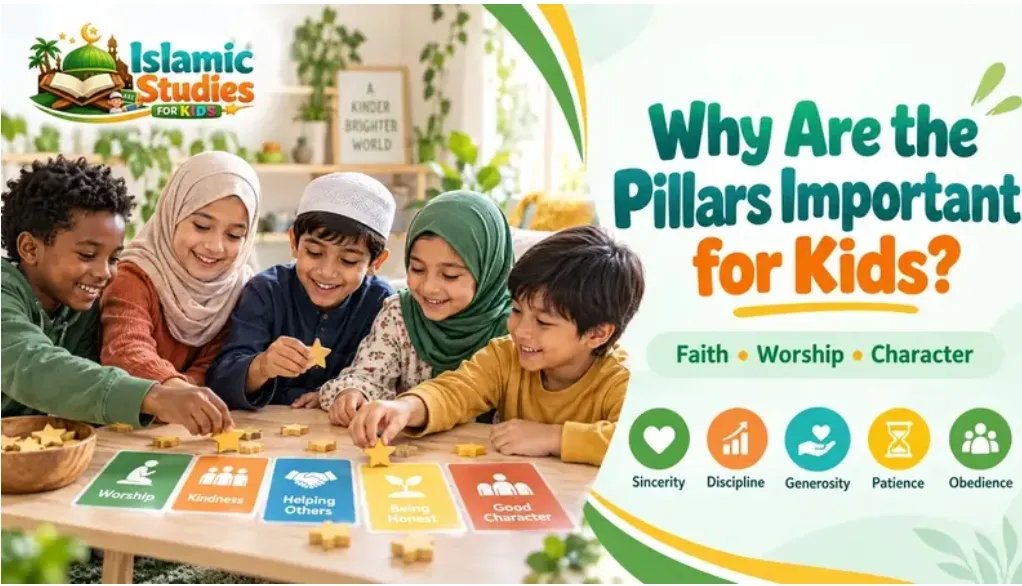
Each pillar teaches an important value, such as sincerity, discipline, generosity, patience, and obedience to Allah. Understanding these basic acts of worship also helps children build a strong Islamic identity and develop good habits as they grow.
1. The Pillars Give Children a Clear Muslim Identity
The Five Pillars help children develop a clear sense of their Muslim identity and understand what it means to practice Islam in everyday life.
When children learn the Shahadah, see their family members performing Salah, and participate in Ramadan activities, they begin to recognize that Islam is an essential part of their daily routine, not something limited to special occasions.
2. The Pillars Build Good Character
The five pillars of Islam shape a child’s character as well as their worship. Prayer builds discipline, zakah and charity build generosity, fasting builds patience and self-control, and Hajj teaches equality and unity among Muslims from every country.
The values behind the pillars show up in small daily actions such as sharing, helping, and speaking kindly. Children can connect each pillar to everyday kindness through lessons on good deeds in Islam for kids.

3. The Pillars Keep Children Connected to Allah All Year
The pillars of Islam keep children connected to Allah every day and every year. Five daily prayers fill each day, Ramadan returns every year, and the hope of performing Hajj one day reminds a child that worship is a lifelong journey.
Children often remember the pillars better when they discover interesting details, such as how many pilgrims gather for Hajj each year. Parents can share kid-friendly facts about the 5 pillars of Islam to spark curiosity and conversation.

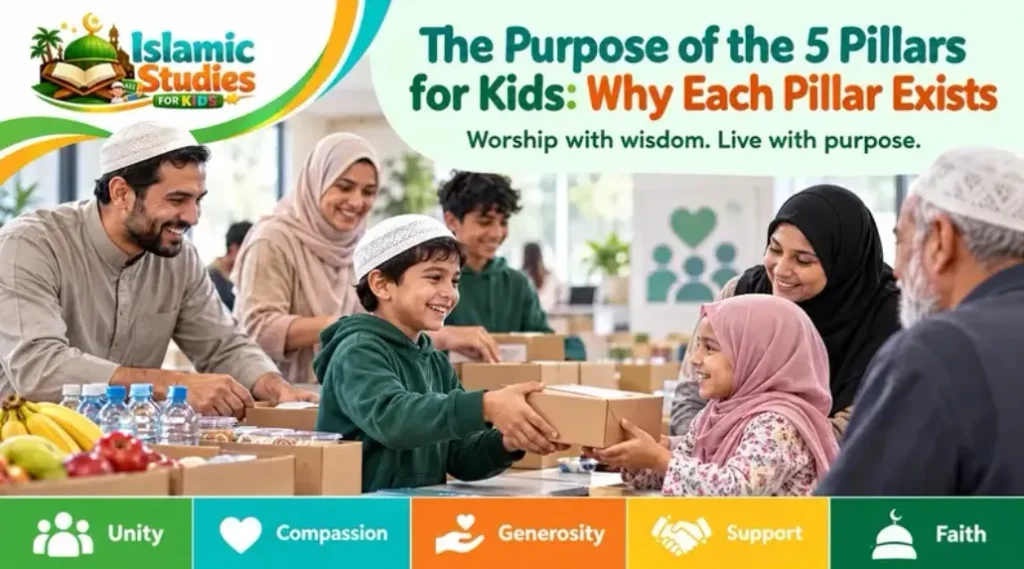
The Purpose of the 5 Pillars for Kids: Why Each Pillar Exists
Each of the Five Pillars of Islam has a special purpose and teaches Muslims an important lesson about their faith and daily lives. Explaining each pillar separately helps children understand that Allah has prescribed these acts of worship with wisdom and meaningful benefits.
Every pillar provides an opportunity to strengthen a Muslim’s relationship with Allah, develop good qualities, and become a better person.
It also shows children how practicing Islam benefits not only individuals but also families and the wider Muslim community through values such as unity, compassion, generosity, and mutual support.
1. Why the Shahadah Exists: Believing in Allah Alone
The Shahadah is the Islamic declaration of faith: bearing witness that there is no god worthy of worship except Allah, and that Muhammad ﷺ is His servant and Messenger. It is the first pillar of Islam and the key that brings a person into the religion.
The purpose of the Shahadah for kids is to plant love of Allah alone in their hearts, along with love for Prophet Muhammad ﷺ, who taught us how to worship Allah.
فَاعْلَمْ أَنَّهُ لَا إِلَٰهَ إِلَّا اللَّهُ
“So know, [O Muhammad], that there is no deity except Allah”
2. Why Salah Exists: Connecting With Allah Every Day
Salah is the five daily prayers that Muslims perform at set times: Fajr, Dhuhr, Asr, Maghrib, and Isha. It is the second pillar of Islam and the most frequent act of worship in a Muslim’s day, including recitation of the Quran, remembrance of Allah, and supplication.
Prayer teaches order and cleanliness, because Muslims perform wudu (ritual washing) before praying and organize their day around prayer times.
إِنَّ الصَّلَاةَ تَنْهَىٰ عَنِ الْفَحْشَاءِ وَالْمُنكَرِ
“Indeed, prayer prohibits immorality and wrongdoing”
3. Why Zakah Exists: Caring for People in Need
Zakah is an obligatory payment that a Muslim gives from certain types of wealth, usually once a year, when specific conditions are met. It goes to the categories of people Islam names as eligible. Zakah is the third pillar of Islam and is often paired with prayer in the Quran.
خُذْ مِنْ أَمْوَالِهِمْ صَدَقَةً تُطَهِّرُهُمْ وَتُزَكِّيهِم بِهَا
“Take, [O, Muhammad], from their wealth a charity by which you purify them and cause them increase”
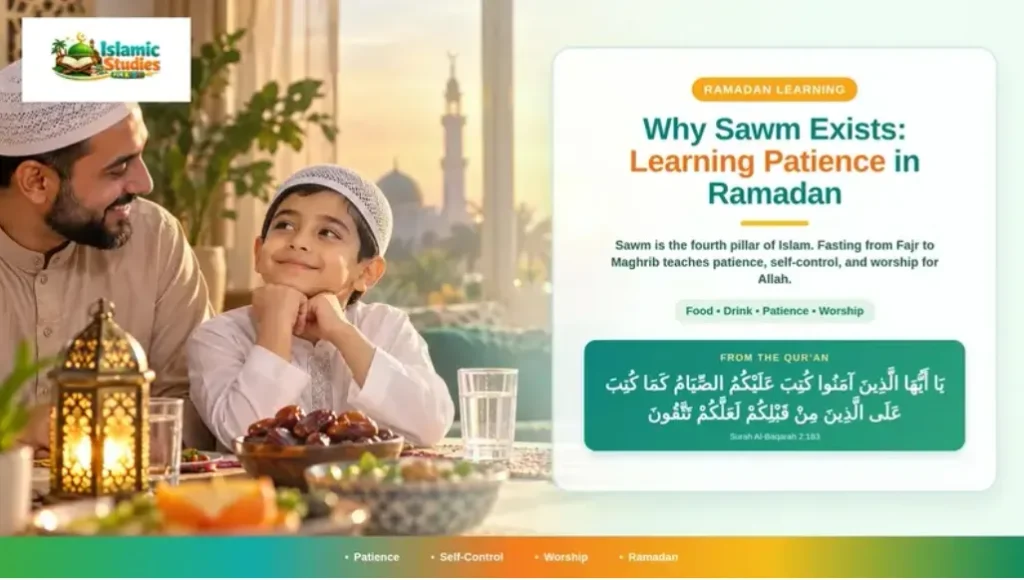
4. Why Sawm Exists: Learning Patience in Ramadan
Sawm is fasting during the month of Ramadan: avoiding food, drink, and everything else that breaks the fast from dawn (Fajr) until sunset (Maghrib), as an act of worship for Allah. Sawm in Ramadan is the fourth pillar of Islam.
يَا أَيُّهَا الَّذِينَ آمَنُوا كُتِبَ عَلَيْكُمُ الصِّيَامُ كَمَا كُتِبَ عَلَى الَّذِينَ مِن قَبْلِكُمْ لَعَلَّكُمْ تَتَّقُونَ
“O you who have believed, decreed upon you is fasting as it was decreed upon those before you that you may become righteous”
5. Why Hajj Exists: Uniting Muslims From Around the World
Hajj is the pilgrimage to the Sacred House, the Kaaba, in Makkah to perform specific rites during a set time of the year. It is the fifth pillar of Islam and is required once in a lifetime for every adult Muslim who is physically and financially able.
وَلِلَّهِ عَلَى النَّاسِ حِجُّ الْبَيْتِ مَنِ اسْتَطَاعَ إِلَيْهِ سَبِيلًا
“And [due] to Allah from the people is a pilgrimage to the House – for whoever is able to find thereto a way”
How to Explain the Meaning of the Pillars of Islam to Children
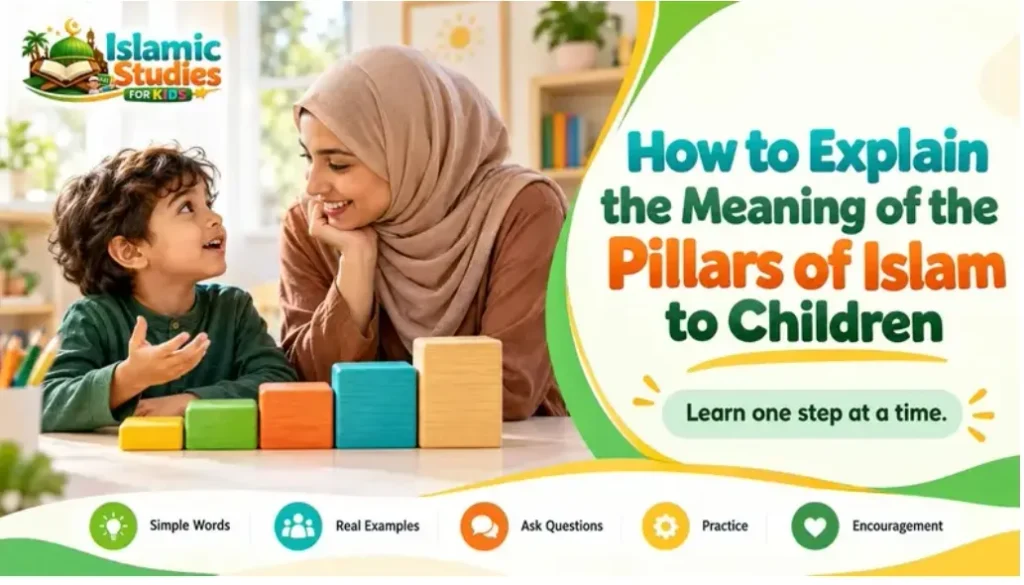
The best way to explain the Five Pillars of Islam to children is to introduce them one at a time using simple language, familiar examples, and positive encouragement.
Young learners may find it difficult to understand all five pillars and their purposes in a single lesson, so breaking the information into smaller parts makes learning easier and more enjoyable.
Parents should give children enough time to ask questions, practice what they learn, and gradually understand how each pillar fits into their lives.
1. Use a Simple Three-Step Method
A simple and effective way to teach each pillar of Islam is to follow three steps: explain its meaning clearly, provide an example from everyday life, and ask a question to check the child’s understanding.
For example, when introducing Salah, explain that Muslims pray five times a day to worship and remember Allah, then show the child how the family prepares for prayer.
2. Connect Each Pillar to Daily Life
Children understand Islamic teachings more easily when they can connect them to familiar situations and daily activities. When the Adhan is called, explain why Muslims perform Wudu and prepare for Salah.
When your family gives money or food to someone in need, introduce the idea of charity and explain how voluntary charity differs from obligatory Zakah. As Ramadan approaches, talk about Suhoor, Iftar, fasting, and the importance of patience and kind speech.
Watch a Sample Lesson from Our Academy
Get a firsthand look at how our students learn Islamic values, Quran, and essential knowledge through engaging and interactive online classes. See why families trust Islamic Studies for Kids Academy.
3. Match the Lesson to the Child’s Age
The teaching method should match the child’s age, language skills, and ability to understand abstract ideas. Younger children benefit from short sentences, colorful pictures, simple stories, and practical activities that introduce one idea at a time.
For learners aged seven to eleven, parents can also follow a structured guide to the 5 pillars of Islam for KS2 to make learning more organized and appropriate for their educational level.
4. Make Learning Fun and Positive
Games, coloring pages, prayer charts with stickers, and a small charity jar all make the five pillars memorable for kids. Praise effort rather than perfection, because a child who links worship with warmth and encouragement is more likely to love it for life.
Parents who want a complete starting point covering the pillars, wudu, prayer, and the essentials of faith can enroll their children in Islamic basics lessons for kids, taught live by qualified teachers.

Common Mistakes When Teaching Children the Five Pillars
The most common mistake when teaching the five pillars to kids is presenting them as a list to memorize without explaining why they exist. Children who only memorize names often forget them, while children who understand the purpose remember and practice them.
Another mistake when teaching the pillars of Islam is mixing up concepts, such as calling every donation “zakah” or giving the impression that Muslims worship the Kaaba. Clear, accurate definitions from the start prevent confusion later.
A third mistake is pressuring young children with adult obligations. Children who have not reached puberty are not required to fast, and gentle encouragement works far better than force when building a lasting love of prayer and worship.
Fun & Engaging Islamic Classes for Kids
Start your child’s journey today with interactive lessons designed to make learning Islam loved and easy.
Get Your Child a Free TrialGive Your Child a Strong Foundation in the Five Pillars of Islam
Teaching children about the Five Pillars of Islam at home is a great start, and expert guidance can make learning even easier and more enjoyable.
Islamic Studies for Kids offers live, interactive online classes where qualified teachers explain the pillars and other Islamic teachings through simple, engaging lessons tailored to children’s ages and learning levels.
Book a free trial class today and help your child develop a deeper understanding of Islam while building a strong foundation of faith!
Our Islamic Studies Courses Include:
- Islamic Studies Course for Kids
- Islam Basics Course for Kids
- 5 Pillars of Islam Course for Kids
- 6 Pillars of Iman (Faith) Course for Kids
- Salah (Prayer) Course for Kids
- Wudu Course for Kids
- Dua Course for Kids
- Ramadan Course for Kids
Enroll today and give your child the knowledge, values, and confidence to grow as a practicing Muslim with a strong connection to Allah and His teachings.

Conclusion
The Five Pillars of Islam are important for children because they form the foundation of a Muslim’s faith and daily life. Each pillar has a special purpose that children can understand: the Shahadah strengthens faith, Salah builds a daily connection with Allah, Zakah teaches generosity, Sawm develops patience and self-discipline, and Hajj teaches unity and equality among Muslims.
When parents explain the meaning of the Five Pillars one step at a time, using simple examples and loving encouragement, children learn more than just their names. They begin to understand their importance and how to practice these teachings in everyday life.
With patience and consistent guidance, parents can help their children grow up with a strong connection to Islam. May Allah make this journey easy and rewarding for every family!
Frequently Asked Questions About the 5 Pillars of Islam for Kids
Why are there five pillars of Islam?
There are five pillars because Prophet Muhammad ﷺ said Islam is built upon five, as reported in Sahih al-Bukhari and Sahih Muslim. Each pillar covers a different part of worship: belief, prayer, giving, fasting, and pilgrimage.
What is the most important pillar of Islam for kids to learn first?
The Shahadah is the most important pillar to learn first because it is the foundation of faith. Without belief in Allah alone and in Prophet Muhammad ﷺ as His Messenger, the other acts of worship have no meaning.
At what age should kids learn the five pillars of Islam?
Kids can start learning the names and simple meanings of the five pillars as soon as they understand short stories, often around ages three to five. Deeper explanations and evidence can be added as they grow.
Do children have to fast in Ramadan
No, fasting in Ramadan is not obligatory for children before puberty. Many families let children practice fasting for part of the day so they learn gradually and feel included in Ramadan.
Is sadaqah the same as zakah?
No, zakah is an obligatory payment with specific conditions and amounts, while sadaqah is voluntary charity that can be given at any time. A child’s small donation is sadaqah, not zakah.


Leave a Reply