 Islamic Studies
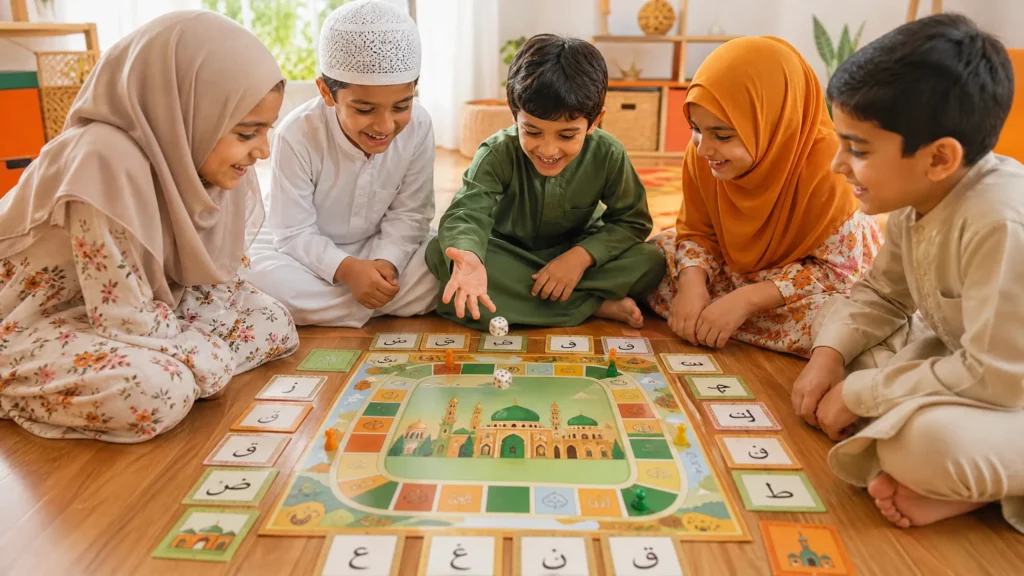
Islamic games for kids sit at the intersection of play and purpose — they let children laugh, compete, and create while quietly planting the seeds of a lifelong relationship with their faith.
A child who associates Islam with joy is far more likely to carry that connection into adulthood than one who only ever experienced it as a formal obligation.
What You’ll Learn in This Article?
- Which islamic games for kids work best for different age groups, and why.
- Islamic board games for kids, quran games for kids, and islamic quiz games for children — organized by format and age.
- Fun islamic games for children that require zero budget and minimal preparation.
- Online islamic games for kids and trusted apps most parents haven’t discovered yet.
- A simple weekly routine that turns one-off game sessions into a lasting Islamic learning habit.
Why Play Is the Most Underrated Islamic Teaching Tool for Islamic Games for Kids?
Before diving into specific games, it helps to understand why play-based learning works so well for Islamic education in particular.
Children do not separate “fun time” from “learning time” — their brains are designed to absorb information through experience, movement, and emotion. A child who acts out the story of Prophet Musa (AS) with puppets will remember far more than one who hears it read aloud once.
Here is what play-based Islamic education actually delivers:
| What It Develops | Why It Matters for Islamic Learning |
| Long-term memory | Revisiting concepts through games prevents forgetting |
| Emotional connection | Stories and role-play make faith personal, not abstract |
| Critical thinking | Problem-solving in games strengthens independent reasoning |
| Moral instincts | Ethical dilemmas in games build character naturally |
| Community and belonging | Playing together reinforces shared Muslim identity |
| Language skills | Arabic terms heard repeatedly in games become familiar |
Islamic Board Games for Kids
Among all formats of islamic board games for kids, the classic board game earns its place at the top for one simple reason: children can see themselves winning.
Progress is visible, tangible, and exciting — which makes losing feel temporary and trying again feel worthwhile.
How to Build Your Own Islamic Board Game at Home
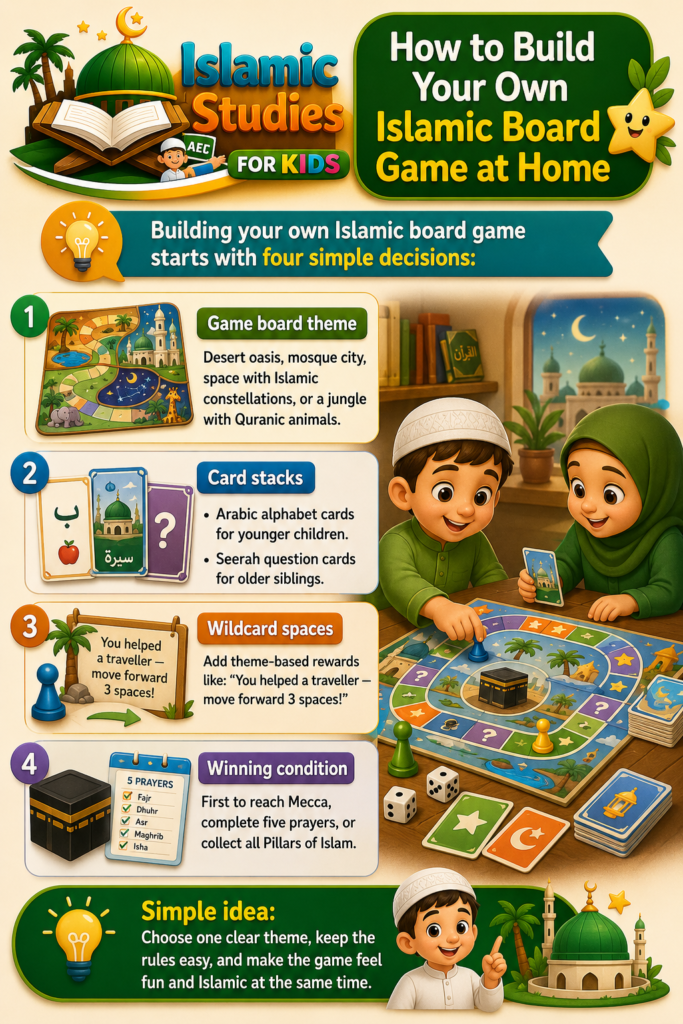
Building your own Islamic board game requires four decisions. Get these right and the rest designs itself:
| Element | Options to Consider |
|---|---|
| Game board theme | Desert oasis, mosque city, space with Islamic constellations, jungle with Quranic animals |
| Card stacks | Arabic alphabet cards for younger players; Seerah question cards for older siblings |
| Wildcard spaces | Theme-linked rewards (“You helped a traveller — move forward 3 spaces!”) |
| Winning condition | First to reach Mecca, complete five prayers, or collect all Pillars of Islam |
Recommended Ready-Made Islamic Board Games
For families who want the game without the preparation, these three options are worth knowing about:
- Islamic Prophets Board Game — dice-free format covering 20 Prophets from the Quran, with review questions at every level; consistently earns five-star reviews from Muslim families
- Mothers of the Believers Board Game — pairs with a dedicated review card pack on the noble wives of the Prophet (SAW)
- Africa and Islam Unit Study Game — traces the journey of the first Hijrah, combining geography and Islamic history in one session
Experience a Real Classroom
Curious about how we teach? This video offers a glimpse into a real class, showcasing our interactive approach, qualified teachers, and child-friendly learning experience.
Fun & Engaging Islamic Classes for Kids
Start your child’s journey today with interactive lessons designed to make learning Islam loved and easy.
Get Your Child a Free TrialIslamic Quiz Games for Children
A well-designed islamic quiz game for kids does something no worksheet can: it makes a child want to answer correctly. Competition — even friendly, low-stakes competition — activates motivation in a way passive revision never does.
Kaboom! — Fast-Paced and Impossible to Get Bored Of
Few games hold a child’s attention the way Kaboom! does — because no lead is ever safe. Here is how it runs:
| Phase | What Each Player Does |
| Setup | Write Islamic questions on cards; add 5–6 “Kaboom!” cards to the deck |
| Drawing a question card | Read it aloud and answer — correct answer means you keep the card |
| Drawing a Kaboom! card | Immediately return your entire collection to the bottom of the deck |
| Timer ends (7 minutes) | Count cards — the player with the highest stack wins |
Three things that make it work better:
- Write questions on lollipop sticks rather than paper — they last much longer.
- Build one shared deck across the school year, adding new topic cards as you study them.
- Run it every few weeks and watch children request it on their own.
Heads Up! — Islamic Edition
A game that needs no materials beyond cards and a timer:
- One child draws a card and holds it to their forehead without reading it.
- The rest of the group gives clues — describing the Prophet, Surah, or Islamic concept — without using the actual word.
- The card-holder guesses before the timer runs out.
- Rotate until every player has had a turn holding the card.
This format works exceptionally well for Prophets’ names, key Islamic terms, and names from the Seerah.
Taboo! — Islamic Edition
Each card contains a topic word plus a list of forbidden clue words. For example: describe Salih (AS) without using the words “camel,” “Thamud,” or “miracle.” The restriction forces children to think more deeply about what they actually know — which is exactly the point.
Memory and Matching Formats for an Islamic Quiz Game for Kids
Memory match is a zero-pressure entry point into islamic quiz games for children — no timers, no elimination, just the quiet satisfaction of finding a pair. It suits ages four and up and requires nothing more than printed or handwritten cards.
Pairing Combinations That Work Well
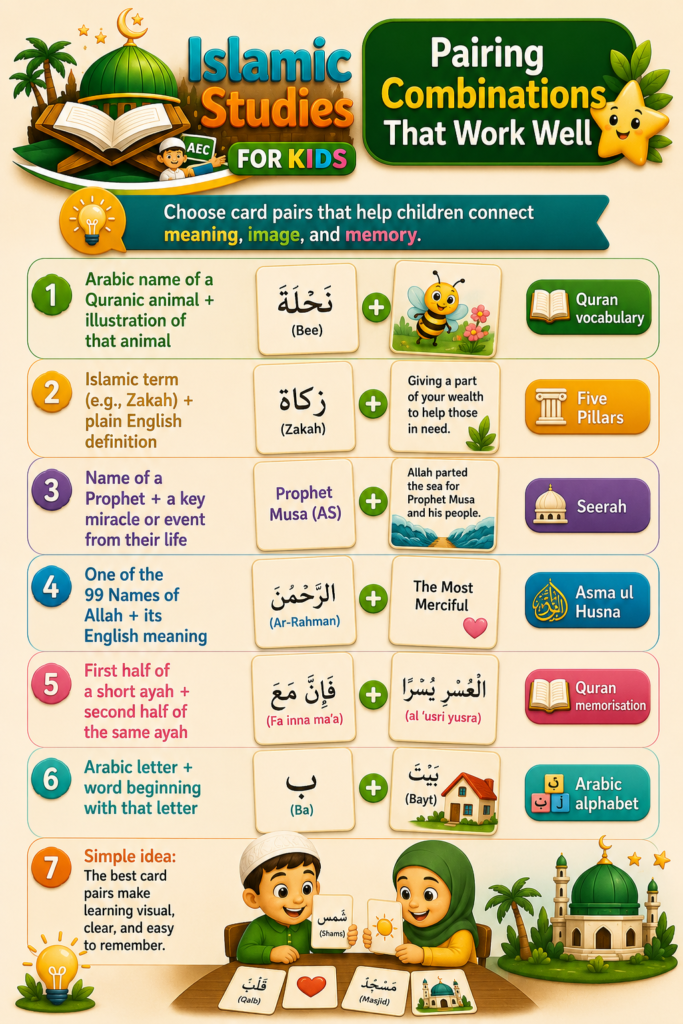
The content you load into the cards determines what children actually learn. These combinations cover the widest range of Islamic topics:
| Card A | Card B | Topic Covered |
| Arabic name of a Quranic animal | Illustration of that animal | Quran vocabulary |
| Islamic term (e.g., Zakah) | Plain English definition | Five Pillars |
| Name of a Prophet | A key miracle or event from their life | Seerah |
| One of the 99 Names of Allah | Its English meaning | Asma ul Husna |
| First half of a short ayah | Second half of the same ayah | Quran memorisation |
| Arabic letter | Word beginning with that letter | Arabic alphabet |
How to Play
The rules are simple enough for ages 5 and up:
- Shuffle all pairs and lay every card face-down in a grid.
- Players alternate turning over two cards per turn.
- A correct match earns another immediate turn and the player keeps that pair.
- When all cards have been matched, count pairs — most pairs wins.
Quran Games for Kids
Memorising the Quran is one of the most rewarding things a child can accomplish, and quran games for kids make that journey feel like an adventure rather than a duty.
Quran Recitation Race
A game that rewards both speed and quality — so children who memorize quickly and children who recite beautifully both have something to compete for:
| Setup | Rules | Prize Structure |
| Children sit side by side, each with a Mushaf open | The first to recite the announced Surah from memory, without errors, wins | One prize for speed, a separate prize for best Tajweed |
| Parent or teacher announces the Surah | Children who cannot yet memorise may recite with the Mushaf open as a starting level | Celebrate every child’s improvement, not just the winner |
Prophets’ Treasure Hunt
Hide small cards around the house or classroom. Each card carries one of the following:
- A short Quranic verse.
- One of the 99 Names of Allah.
- The name of a Prophet with a blank for a key attribute.
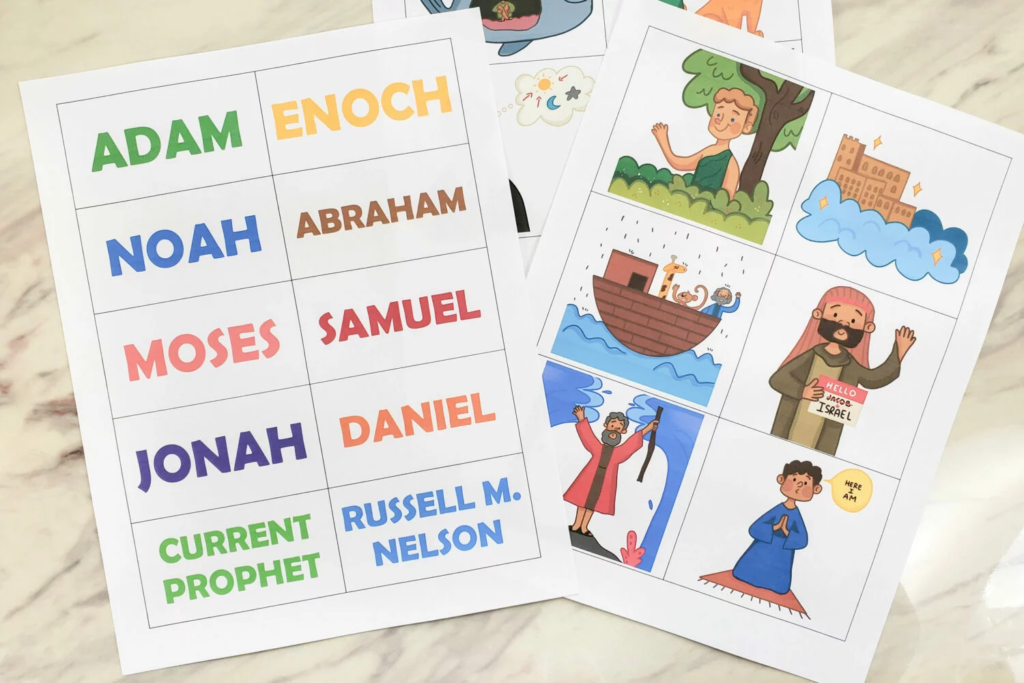
- A Hadith the child should be able to identify.
When a child finds a card, they read it aloud and share one thing they know about it before moving to the next hiding spot.
Quranic Word Builder
Write Arabic letters on individual cut-out shapes — stars, crescent moons, clouds — and scatter them on a table. Children arrange the letters to form Quranic words they know: Salat, Surah, Allah, Rahim, Ummah.
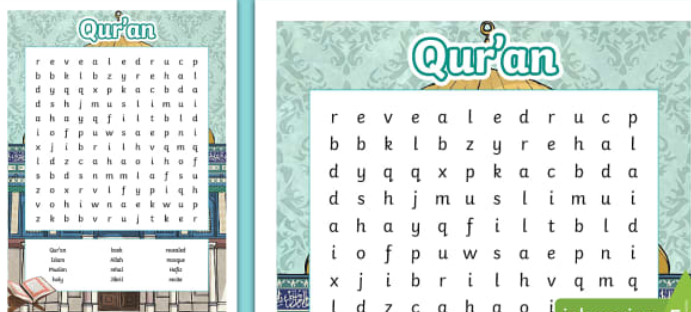
For older children, challenge them to form words from Surahs they have memorised.
Role Play and Storytelling as Fun Islamic Games for Children
Storytelling and role-play are among the most ancient teaching traditions in Islamic education — the Quran itself uses narrative as its primary vehicle for moral instruction.
Fun islamic games for children in this category put children inside the story rather than outside it.
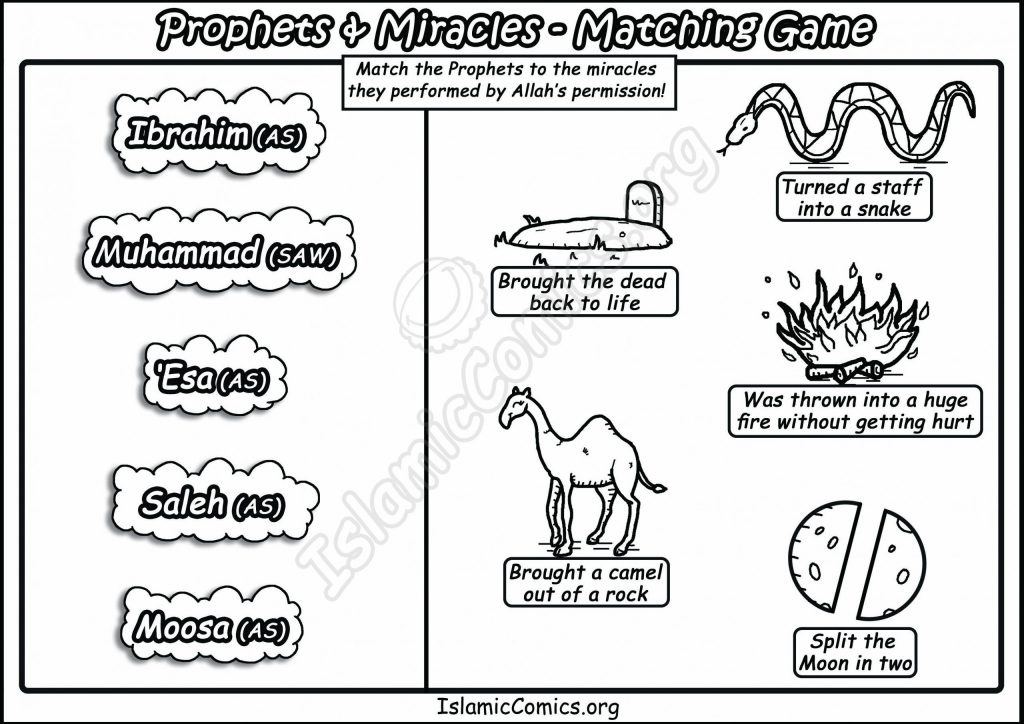
Prophet Pictionary
A game that turns Seerah into something children draw, debate, and remember:
- One player draws a scene from a Prophet’s life — no words, only pictures.
- Other players race to identify which Prophet is depicted and name the event shown.
- The drawer earns a point for each correct guess; the guesser earns a point for identifying it.
“Who Am I?” — Islamic Personalities
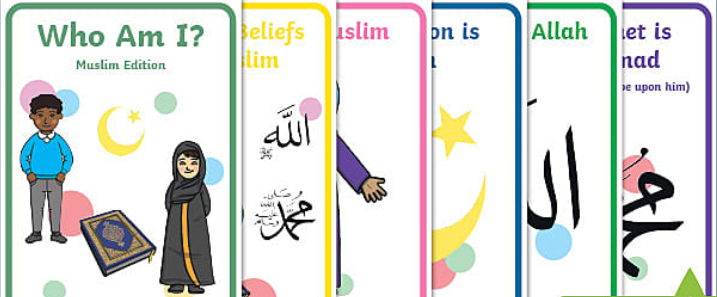
A game that works across every age group and requires nothing but knowledge — no board, no cards, no timer needed.
| How It Works | Best Used For |
| One child describes a Companion, Prophet, or Islamic figure through clues | Companions of the Prophet (RA) |
| They may not say the person’s name or country | Mothers of the Believers |
| Other players guess as quickly as possible | Prophets mentioned in the Quran |
| First correct guess earns a point | Famous scholars or Islamic historical figures |
Act the Dhikr
The parent or teacher calls out a Dhikr recited during a specific position in Salah — for example, “Subhana Rabbiyal Adheem.” Upon hearing it, children must immediately move into the correct Salah position (Ruku, Sujood, etc.).
The last child to take the correct position is out. This game makes the physical and verbal components of Salah feel connected and natural.
Puppet Stories from the Quran
Use puppets, stuffed animals, or even paper bag dolls to act out stories from the Quran — the story of Prophet Musa (AS) crossing the sea, or the People of the Cave.
Children take on roles, improvise dialogue, and make decisions about how scenes unfold. Afterwards, compare their version to the actual Quranic account and discuss what they noticed.
Arts, Crafts, and DIY Islamic Activities for Kids
Hands-on making is not a distraction from Islamic learning — it is one of its most effective delivery mechanisms. A child who builds a miniature mosque out of cardboard carries a physical memory of that experience that a lecture cannot replicate.
Mini Masjid Construction
One of the few crafts that teaches architecture, community, and worship in a single afternoon:
| Materials Needed | What Children Learn While Building |
| Cardboard boxes, paper rolls, scissors, paint | The architectural elements of a mosque (minaret, dome, mihrab, sahn) |
| Glue, tape, decorative paper | The role of the mosque in Islamic community life |
| Optional: fabric scraps for carpets | How to line up for Salah and what the rows mean |
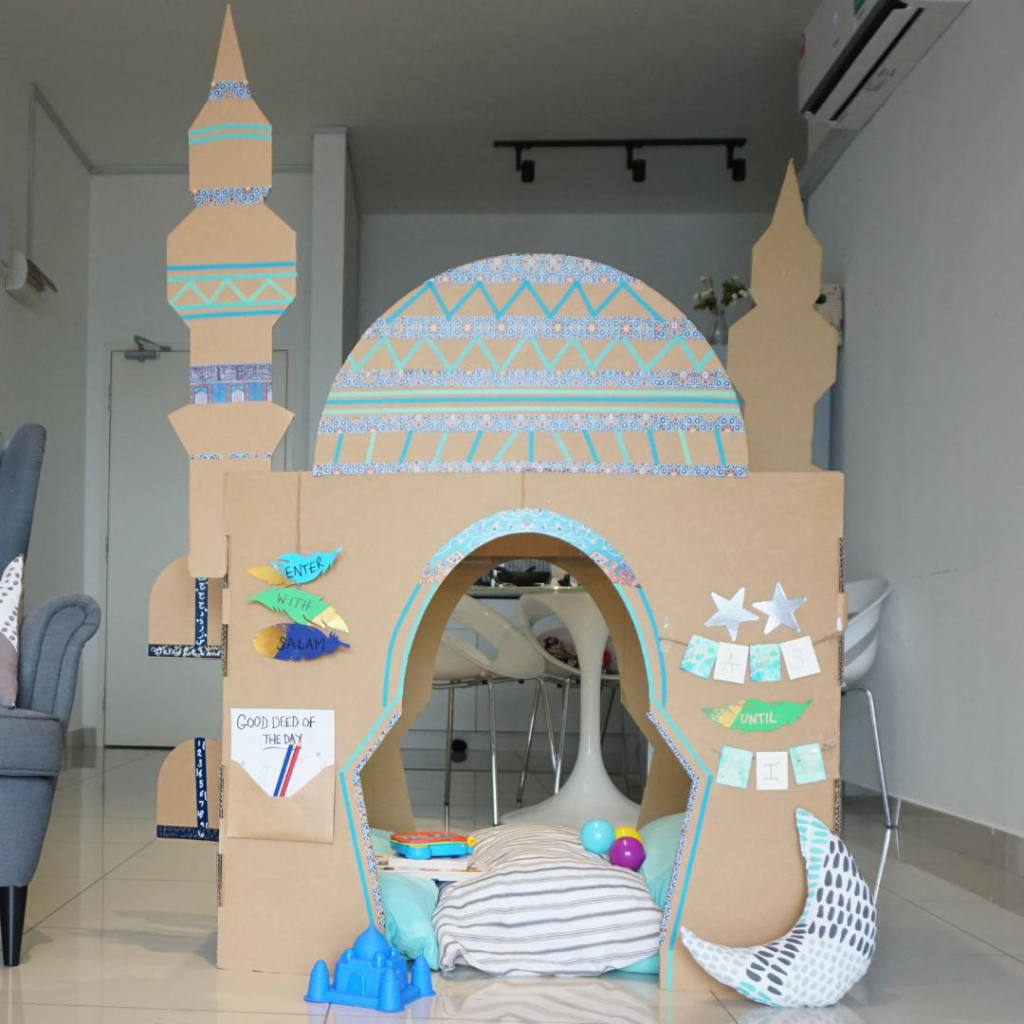
After the mosque is complete, children can role-play the Adhan, lead a pretend Jumu’ah, or arrange small figures in prayer rows.
99 Names of Allah Daily Cards
A month-long project that builds both knowledge and a keepsake children return to:
- Choose one Name each day and write it large on a blank card.
- Ask your child to illustrate or decorate the card in any way they choose.
- Sit together and discuss: where do we see this Name in everyday life?
- By the end of the month, you have a personal hand-illustrated collection of 30 Names.
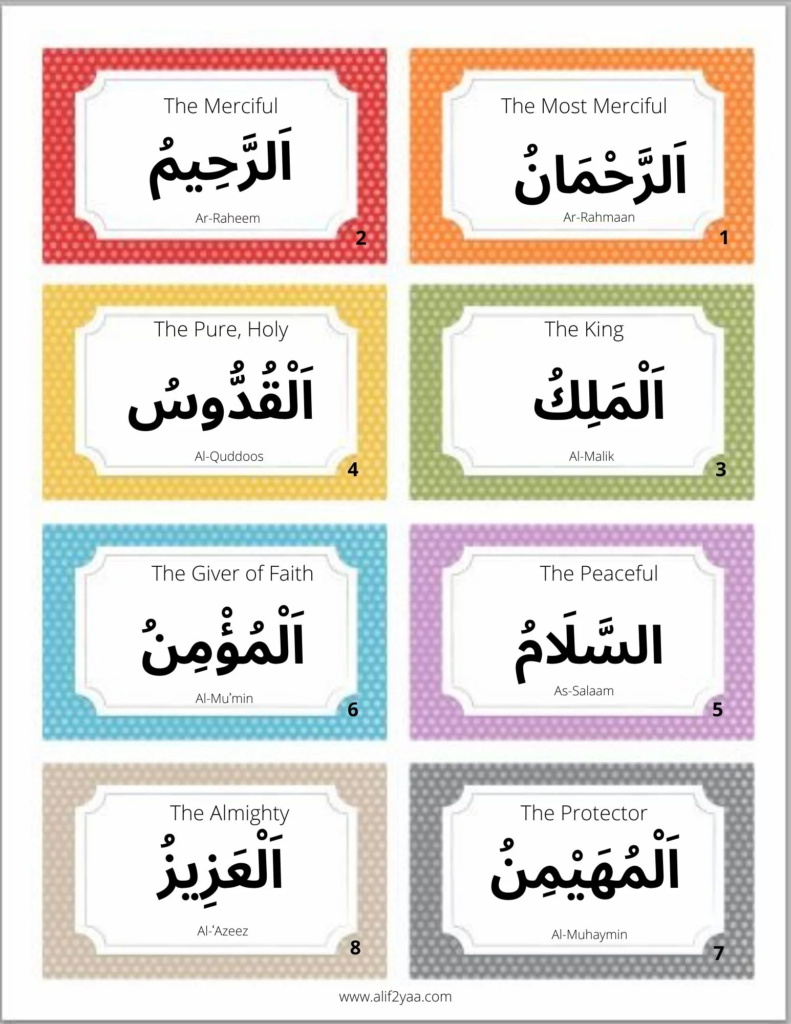
Al-Razzaq (The Provider) opens conversations about food and gratitude. Al-Ghaffar (The Forgiving) gives children a way to understand their own mistakes without shame. Al-Khaliq (The Creator) connects to art, nature, and science.
Ramadan and Eid Craft Sessions
The crafts below are built around the Islamic calendar — each one tied to a moment children already look forward to, and made more memorable by the fact that they built it themselves.
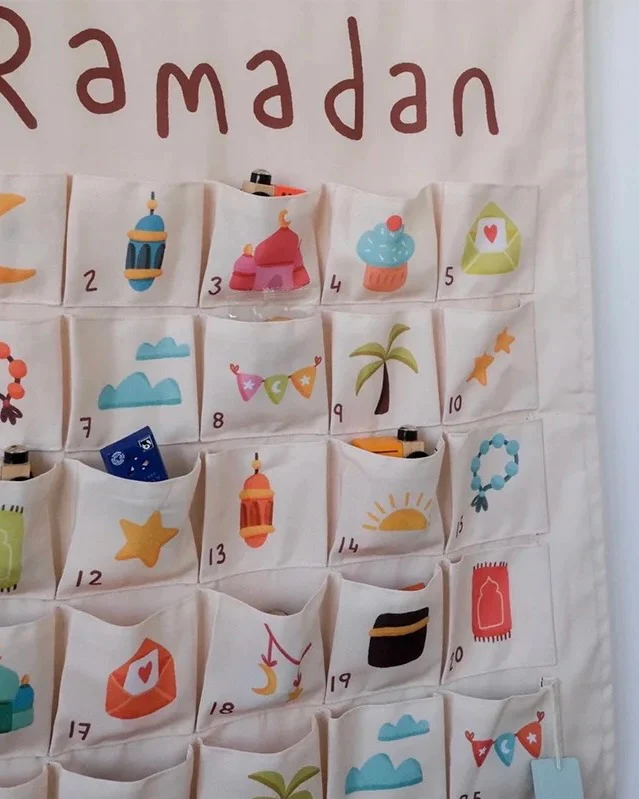
- Paper lanterns with Asma ul Husna printed inside.
- Crescent and star garlands hung across a window.
- Personalised Eid cards decorated with geometric Islamic patterns.
- A Ramadan countdown chain — one link for each night, torn off after Tarawih.
Sadaqah Jar
Place a decorated jar in a shared family space. Each time a child does a good deed — shares with a sibling, completes a Du’a, helps without being asked — they add a token.
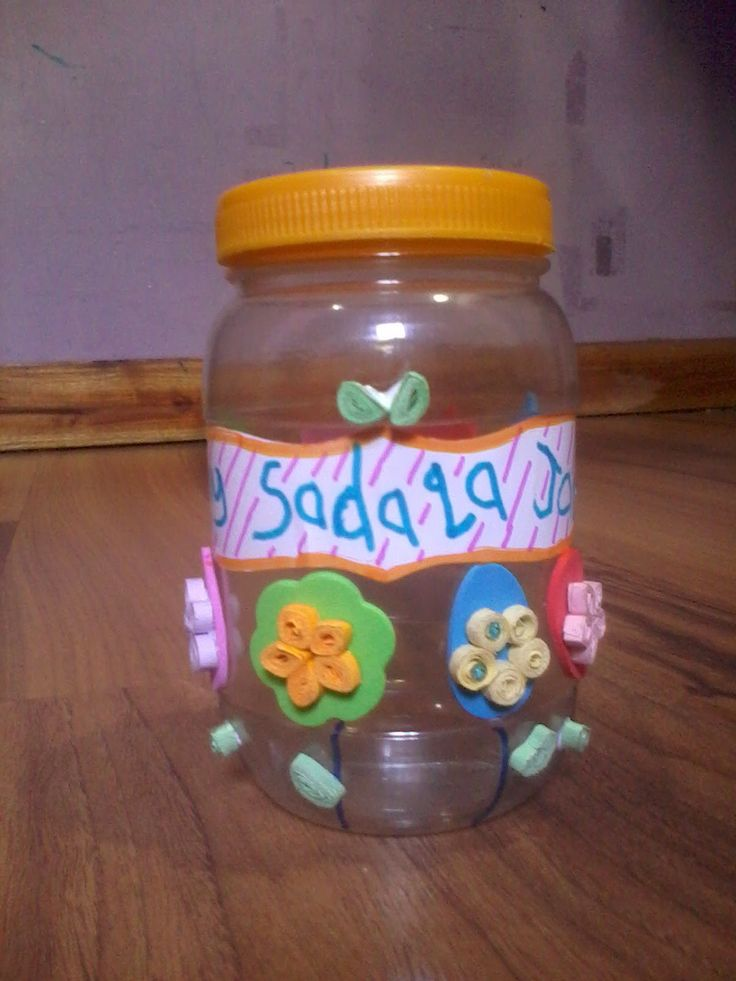
The jar becoming visibly fuller is a daily, tangible reminder that small actions accumulate. When the jar is full, decide together where the charity will go.
Online Islamic Games for Kids
For families who want online islamic games for kids that are safe, purposeful, and actually enjoyable for children, the landscape has improved significantly. The options below have been selected for content quality and child-friendliness.
Top Educational Apps
Four apps worth installing before anything else — each one vetted for content, age range, and classroom or home use:
| App Name | Age Range | Key Features | Where to Find It |
| Miraj: Islamic Games & Stories | 4–9 years | Animated stories, Arabic lessons, interactive puzzles, completely ad-free | Apple App Store |
| Muslim Kids: Learn & Fun | 5–12 years | Daily quizzes, Prophets’ story collection, real-time trivia competitions | Google Play Store |
| Islamic Kids: Quiz & Games | 4–10 years | Wudhu step-by-step, Five Pillars quiz, gentle audio narration | Google Play Store |
Browser-Based Platforms
For families who prefer no downloads, these platforms run entirely in a browser — no installation, no account required for most:
| Platform | Best For | What It Offers |
| Wordwall | All ages | Hundreds of ready-made Islamic quiz games, matching activities, and word puzzles; parents can build custom sets in minutes |
| Islamic Playland | Ages 4–8 | Browser-based games with safari and space themes, visually gentle and safe |
| My Islam | Ages 10+ | Vocabulary crosswords, 99 Names of Allah quizzes, Islamic history trivia |
| Islam4Kids | Ages 5–12 | Printable word puzzles, Surah matching sheets, offline-friendly |
Specific Islamic Game Ideas Worth Knowing for Girls
Every child deserves games that reflect their identity. Here are activities shaped around the interests and experiences of Muslim girls:
| Activity | What Makes It Meaningful |
| Hijab Fashion Sketchbook | Girls design modest outfits and discuss how clothing reflects personal values |
| Quran Recitation Challenge | Tajweed-focused recitation sessions with small, meaningful prizes for accuracy |
| Halal Cooking Game | Preparing simple recipes together while discussing halal principles and food etiquette in Islam |
| Mothers of the Believers Profile Cards | Research one wife of the Prophet (SAW) each week; build a personal card collection with her qualities and contributions |
| Islamic Fashion Design (digital) | Use drawing apps to create modest fashion designs while learning about the diversity of Muslim dress across cultures |
Islamic Games for Kindergarten and Preschool Children
Very young children need shorter sessions, more movement, and stronger visual cues. The best islamic games for kids at this stage prioritise tactile experience over information quantity.
| Game Format | Islamic Content | Developmental Skill |
| Picture matching cards | Arabic letters paired with familiar objects | Memory and visual recognition |
| Counting with Tasbih beads | Counting to 33 while reciting Subhanallah | Numeracy and Dhikr |
| Story puppets | Scenes from the Quran or Prophets’ lives | Language and imagination |
| Mosaic puzzles | Famous mosques and Islamic geometric art | Fine motor skills and patience |
| Colouring sheets | Islamic calligraphy, crescent and star patterns | Creativity and focus |
| Hide-and-seek with letters | Finding hidden Arabic letter cards around the room | Physical movement and letter recognition |
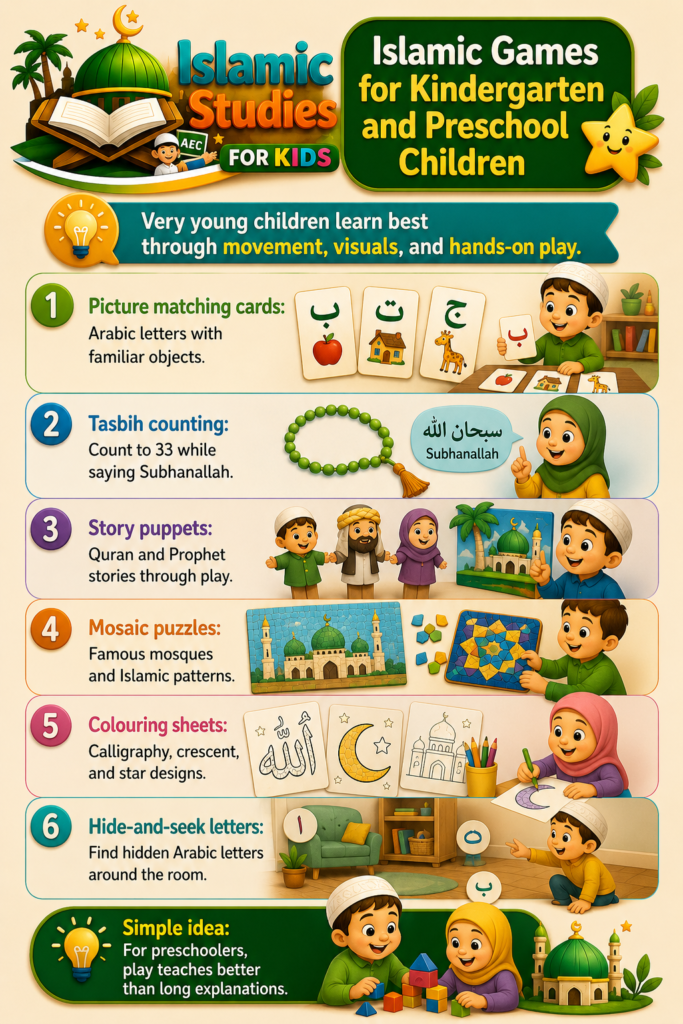
A note on session length: keep each activity to 10–15 minutes maximum for this age group. Ending while children still want to continue means they will associate Islamic learning with wanting more — which is precisely the habit you are building.
Read Also: Best Islamic Apps for Kids in 2026
Watch a Sample Lesson from Our Academy
Get a firsthand look at how our students learn Islamic values, Quran, and essential knowledge through engaging and interactive online classes. See why families trust Islamic Studies for Kids Academy.
Fun & Engaging Islamic Classes for Kids
Start your child’s journey today with interactive lessons designed to make learning Islam loved and easy.
Get Your Child a Free TrialWhat to Look for When Choosing an Islamic Game for Your Child
With so many formats available, use this checklist before purchasing or preparing any game:
| Factor | Questions to Ask |
| Age fit | Does this match my child’s reading level, attention span, and emotional maturity? |
| Islamic content | Does it accurately represent Quran, Seerah, or Islamic values — or is it superficially branded? |
| Engagement style | Does my child prefer competitive, cooperative, creative, or physical activities? |
| Screen vs. screen-free | Is this a screen-time addition or a replacement for an offline session? |
| Parent involvement | Can my child play independently or does this work best with an adult? |
| Reviews | Have other Muslim parents or Islamic educators tested and approved this? |
| Safety (for digital tools) | Are there parental controls, no inappropriate ads, and secure data handling? |
Read Also: Islamic Quotes for Kids
Building a Consistent Islamic Games Habit at Home
A single game session is enjoyable. A weekly habit is transformative. Here is how to make it sustainable:
- Set a fixed time — a Friday family game night or a post-Asr session on weekdays creates an expectation children look forward to
- Keep one physical card deck — add new question cards as you cover new Islamic topics throughout the year, so revision happens automatically
- Let children choose — rotate who picks the game each week; ownership increases investment
- Mark milestones with games — when a child finishes a Juz or memorises a new Surah, celebrate with a special extended game session rather than a material gift
- Use older siblings as game hosts — running a game for younger siblings reinforces the older child’s knowledge while building their confidence
Read Also: Islamic Activities for Kids
The Game Ends, The Learning Doesn’t Have To
Every quiz, craft, and Quran race in this article sparks something in a child — curiosity, pride, a question they didn’t have before. The families who see the deepest Islamic growth are the ones who catch that spark and give it somewhere to go.
Islamic Studies for Kids Academy is where the spark becomes a foundation.
Prophets Stories Course for Kids
Your child just acted out a Prophet’s story with puppets. Now imagine them learning the full account — the Quranic verses, the moral, what it meant for the people of that time, and what it means for their life today.
Prophets course teaches children ages 4 to 15 authentic Quranic accounts with Al-Azhar certified tutors who make every story land — not as history, but as identity.
Book Your Child’s Free Trial Class

Salah Course for Kids
Your child just played “Act the Dhikr” and moved into Sujood faster than their siblings. Now give them a teacher who explains why their face on the ground is the closest they’ll ever be to Allah — and makes sure every position is correct, every word is right.
Quran Memorization Course for Kids
The Quran Recitation Race ends when someone wins. The Hifz journey ends with something that stays forever. This course gives children ages 4 to 15 a structured memorization program with systematic revision — so what they memorize this month is still with them in ten years.
And While the Kids Learn — Mothers Can Too
Islamic Studies for Kids Academy also offers dedicated courses for mothers: Quran, Tajweed, Arabic, and Islamic Studies — scheduled around your family’s routine, taught by qualified female instructors.
Our Islamic Studies Courses Include:
- Islamic Studies for Kids
- Islam Basics for Kids (Beginners)
- 5 Pillars of Islam for Kids
- 6 Pillars of Iman (Faith) for Kids
- Salah (Prayer) for Kids
- Wudu for Kids
- Dua for Kids
- Ramadan for Kids
- Zakat & Sadaqah for Kids
- Hajj for Kids
- Aqeedah (Islamic Belief) for Kids
- Islamic Manners & Akhlaq for Kids
- Good Deeds for Kids
- Cleanliness (Taharah) in Islam for Kids
- Angels in Islam for Kids
- Islamic History for Kids
- Seerah (Prophet’s Life) for Kids
- Prophets Stories for Kids
- Islamic Stories & Morals for Kids
- Fiqh for Kids (Islamic Jurisprudence Basics)
- Hadith for Kids
- Quran Tafseer Course for Kids
- Islamic Holidays & Events for Kids
- Islamic Identity for Kids
- Intensive Islamic Course for Kids
Enroll today and give your child the knowledge, values, and confidence to grow as a practicing Muslim with a strong connection to Allah and His teachings.
Fun & Engaging Islamic Classes for Kids
Start your child’s journey today with interactive lessons designed to make learning Islam loved and easy.
Get Your Child a Free TrialConclusion
The most effective islamic games for kids share one quality: they make a child forget they are learning. When a seven-year-old is racing to recite a Surah before their sibling, or a five-year-old is triumphantly placing the final card on a matching grid, or a group of children is dissolving into laughter while acting out Salah positions — that is Islamic education working exactly as it should.
Faith grows through joy. Every game you introduce is one more moment of joy tied to Islam in your child’s memory. Start with a single activity this week, play it with genuine enthusiasm, and let the momentum build from there.
Frequently Asked Questions About Islamic Games for Kids
Are there free online Islamic games for kids?
Yes. Several platforms offer free online islamic games for kids with no account required. Wordwall hosts hundreds of ready-made Islamic quizzes and matching activities.
Islamic Playland offers browser-based games for young children. Islam4Kids provides free printable puzzles and Surah matching sheets. My Islam offers free vocabulary crosswords and 99 Names quizzes for older children.
What Islamic quiz games are suitable for children under 6?
For children under 6, the best islamic quiz game for kids focuses on matching and recognition rather than written questions. Picture-to-Arabic-letter matching, counting Tasbih beads, and simple “point to the answer” picture quizzes work well. Apps like Miraj: Islamic Games & Stories are specifically designed for ages 4–9 and use audio and animation instead of text.
What is the best Islamic quiz game for kids to use in a classroom?
For classrooms, Kaboom! and Heads Up! are both excellent because they require minimal materials, scale to any group size, and can be adapted to any Islamic topic being studied.
For digital classrooms, Wordwall allows teachers to build custom Islamic quiz games that students can access on any device, and the results are visible in real time.
Are Islamic games suitable for non-Muslim children too?
Absolutely. Islamic games for kids built around values — cooperation, honesty, generosity, storytelling — are accessible and enriching for any child.
Games focused on Arabic letters, Prophets’ stories, or Islamic art and architecture offer genuine cultural and educational value regardless of a child’s background.


Leave a Reply