 Books
Books
Finding islamic books for kids that hold a child’s attention while staying authentic to the deen is something most Muslim parents work hard at. The right book at the right age plants seeds of faith that grow quietly for years.
This guide covers the best islamic story books for kids, islamic picture books for younger children, Quran books for kids, and a few standout Ramadan books for kids — organized so you can match each title to your child’s exact age and reading stage.
1. My First Quran With Pictures
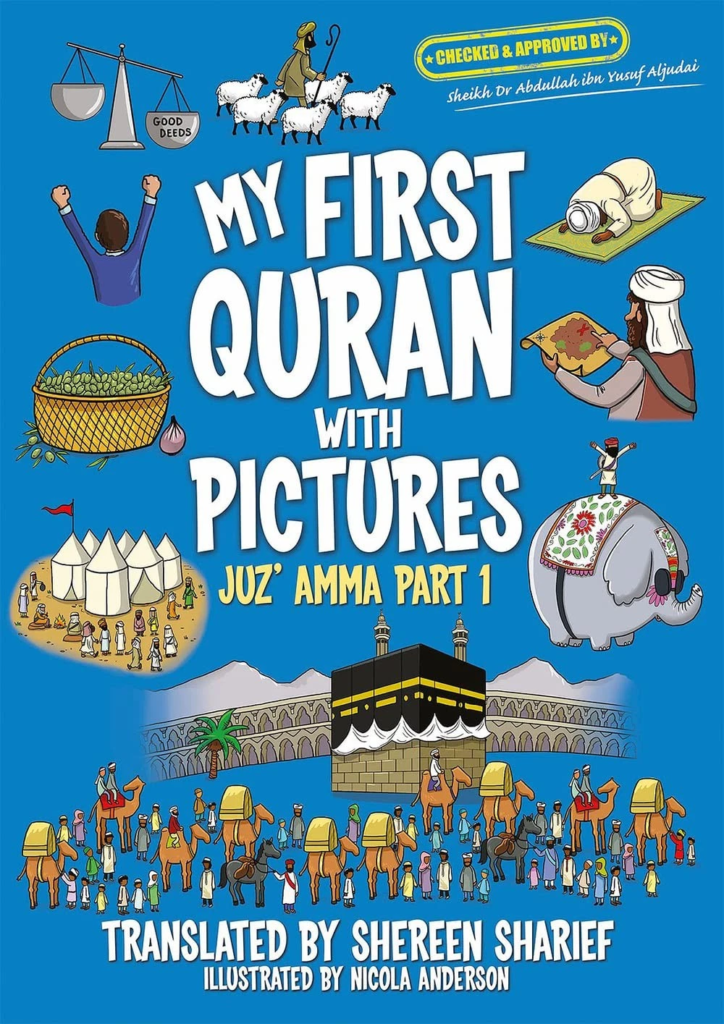
My First Quran With Pictures, translated by Shereen Sharief, is built for children aged 4–8 and introduces Quranic vocabulary through colorful illustrations paired with simple Arabic words and their English meanings.
Each page shows one Quranic word — sky, sun, mountain — next to a clear image, which makes memorization feel natural rather than forced.
Parents can use this during a morning routine, reviewing two or three words for five to ten minutes. Most children retain the vocabulary confidently within a week of light repetition.
It’s also a natural lead-in to Islamic Studies For Kids Academy’s Quranic Arabic course for kids, which builds directly on this kind of early word recognition.
2. Goodnight Stories from the Quran
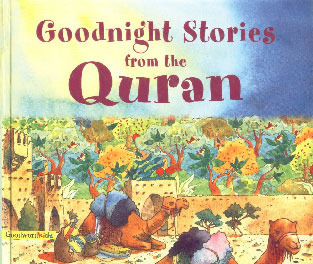
Goodnight Stories from the Quran by Saniyasnain Khan suits children aged 5–10 and retells Quranic narratives in gentle, story-like language well suited to bedtime.
Each chapter focuses on a single Quranic theme or character — the story of the elephant army, Sulaiman (عليه السلام) and the hoopoe bird, and more.
A single story takes about five to seven minutes to read. Over a few weeks, children absorb Quranic events and the names of Allah without it ever feeling like study. It works well across a wide age range, which makes it one of the more durable quran books for kids on this list.
3. In My Mosque
In My Mosque follows a young boy through his Friday visit to the mosque — praying, meeting friends, helping with food drives, and learning from the imam. Hatem Aly’s illustrations bring mosque life to vivid detail for children who may not attend regularly.
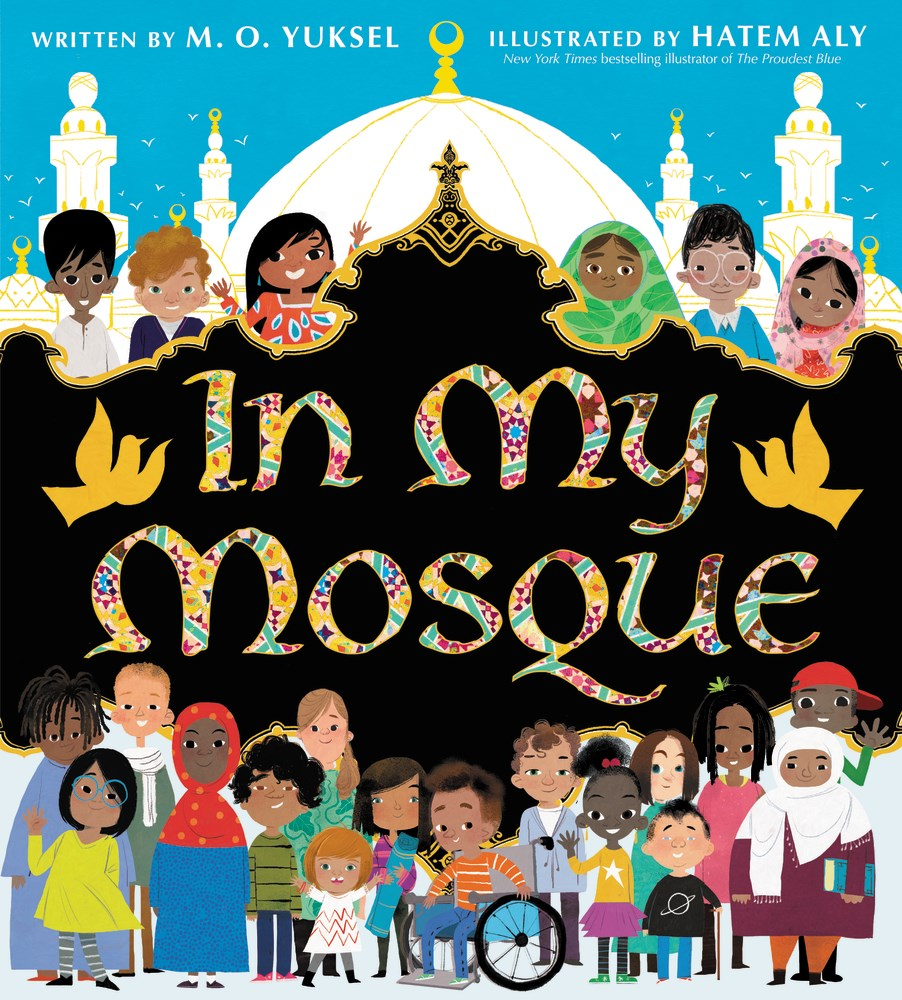
This title won the American Library Association Notable Book award and several other honors for its lyrical, age-appropriate text.
For children growing up away from a large Muslim community, reading it before their first Jumu’ah visit reduces anxiety and builds genuine excitement. It pairs naturally with Islamic Studies For Kids Academy’s Fiqh course for kids, which covers the practical how-to of prayer and mosque etiquette in more depth.
4. Golden Domes and Silver Lanterns
Golden Domes and Silver Lanterns: A Muslim Book of Colors introduces children aged 2–5 to Islamic culture through one color per illustrated spread — a red prayer rug, a blue hijab, a golden dome. Each color connects directly to a recognizable Islamic object.
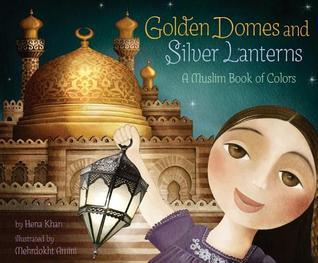
The rhyming, read-aloud text makes it an easy bedtime book even for parents with no teaching background. After reading, point to the matching object in your own home — a real prayer rug, a real Quran cover — to build lasting association for toddlers.
Read Also: Best 8 Arabic Kids Books
5. The Stories of the Prophets for Kids
The Stories of the Prophets for Kids by Ibrahim Al-Abadi covers all 25 prophets named in the Quran, from Adam (عليه السلام) to Muhammad (صلى الله عليه وسلم), in child-friendly language across roughly 40 stories.
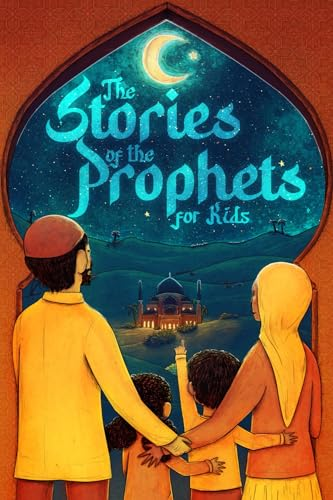
Each one is followed by a short du’a and an authentic hadith connecting the lesson to daily life.
Some editions include QR codes children can scan to hear each du’a recited aloud, which adds a multi-sensory layer that ages 7–10 respond to well. Assigning one prophet story per week as a family ritual, then asking each child one thing they learned at dinner, builds steady knowledge without formal pressure.
This kind of prophet-by-prophet structure is exactly what Islamic Studies For Kids Academy‘s Hadith course for kids builds on, connecting each story to its supporting hadith in more structured detail.
Experience a Real Classroom
Curious about how we teach? This video offers a glimpse into a real class, showcasing our interactive approach, qualified teachers, and child-friendly learning experience.
Fun & Engaging Islamic Classes for Kids
Start your child’s journey today with interactive lessons designed to make learning Islam loved and easy.
Get Your Child a Free Trial6. Planet Omar: Accidental Trouble Magnet
Planet Omar by Zanib Mian is the first book in an award-winning chapter series for ages 7–10. Omar is a funny, imaginative Muslim boy navigating a new school and a class bully, with his Islamic identity woven naturally into his voice rather than delivered as a separate lesson.
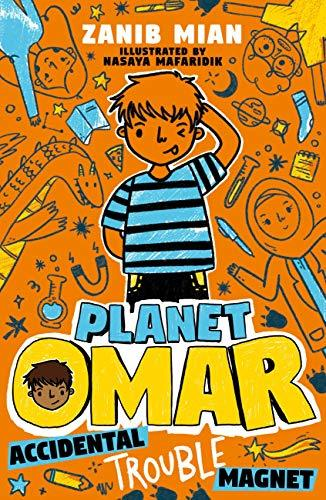
The series won the Little Rebels Award and earned starred reviews from Booklist and Kirkus Reviews. Its illustrated, diary-style format — similar to Diary of a Wimpy Kid — makes it one of the more effective islamic story books for kids who call religious books “boring.”
7. My First Ramadan
For the youngest fasters-in-training, simple board books built around the rhythm of Ramadan — suhoor, fasting hours, iftar, and Eid — give toddlers and preschoolers a concrete sense of what the month means before they’re old enough to fast themselves.
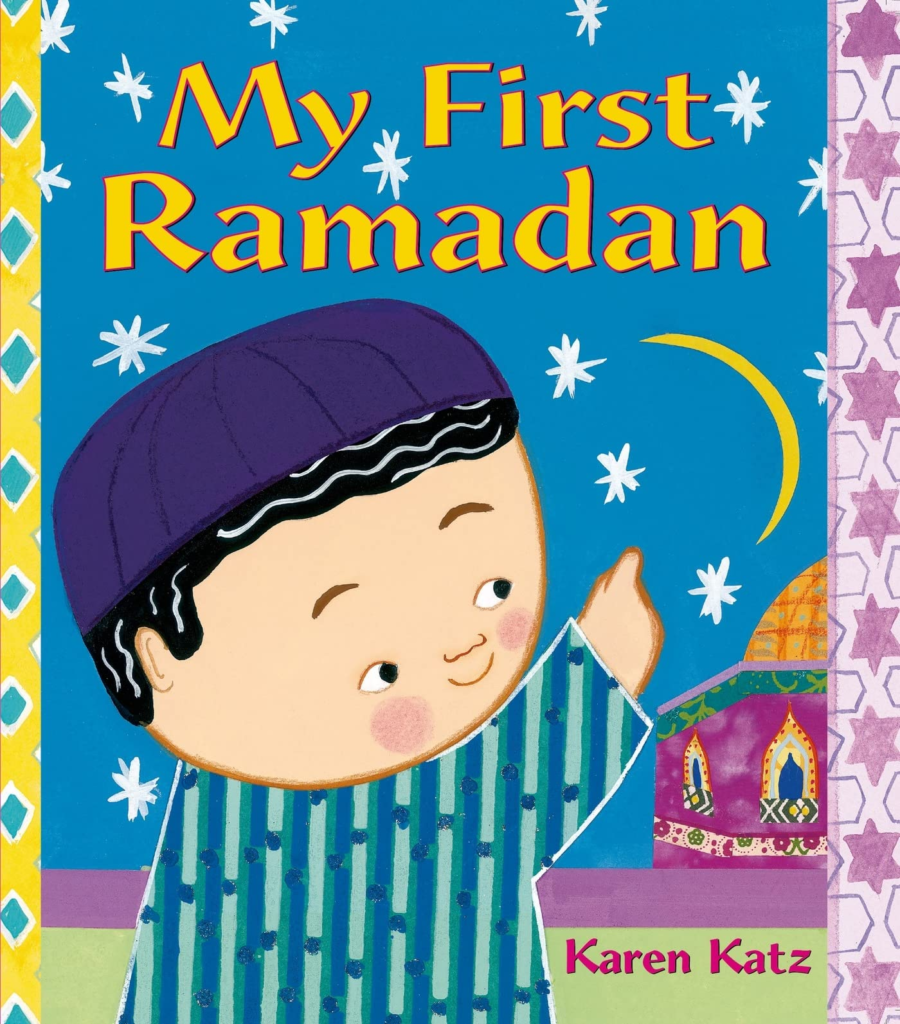
These Ramadan books for kids like My First Ramadan work best read once a day throughout the month, building a yearly tradition a child recognizes instantly by age four or five.
A practical add-on many families use alongside the book: a “Good Deeds Jar,” where a child adds a slip of paper for every kind act during Ramadan and counts them together at Eid.
8. Lailah’s Lunchbox
Lailah’s Lunchbox by Reem Faruqi follows a Pakistani-American girl fasting for the first time at her American school, navigating the awkwardness of explaining Ramadan to classmates who don’t understand it.
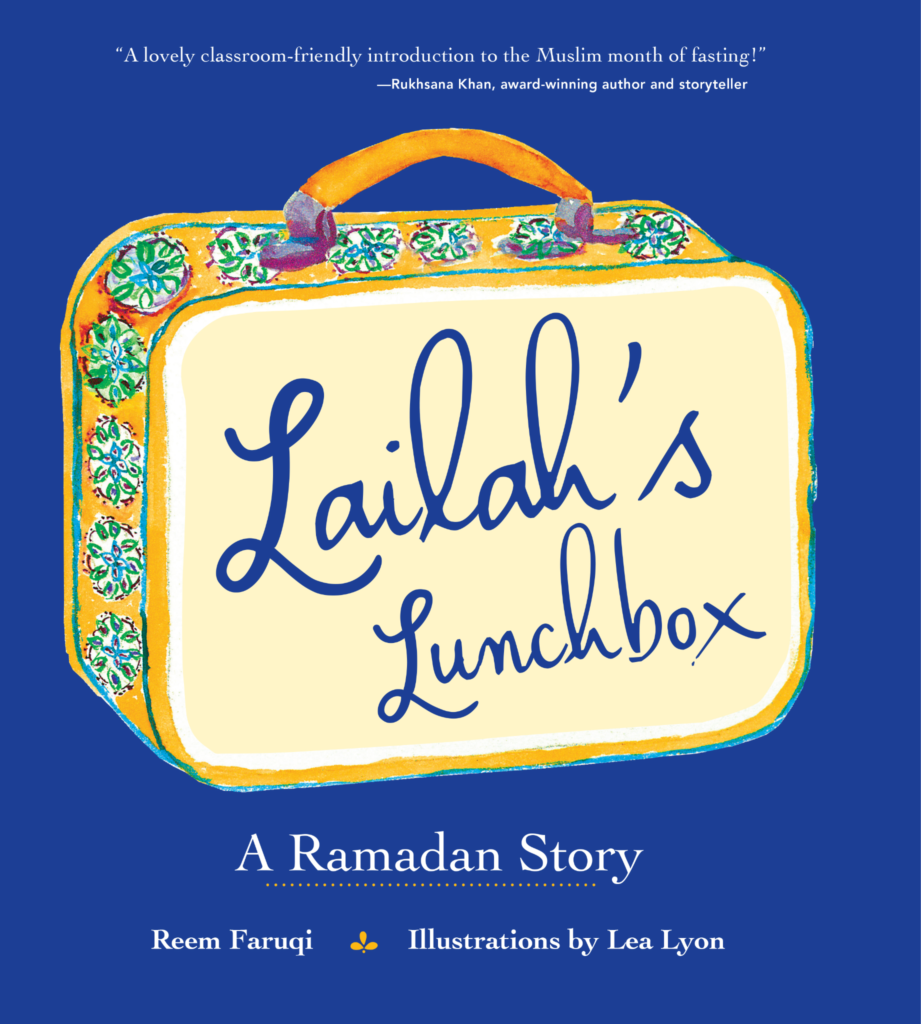
For children aged 6–10 who attend school outside a majority-Muslim community, this is one of the more relatable Ramadan books for kids available.
The story handles the discomfort of feeling different with warmth rather than drama, ending with Lailah finding confidence in her own identity — a useful conversation starter for parents whose children face similar situations.
9. How to Pray for Kids
How to Pray for Kids is a step-by-step guide to performing Salah and Wudu, using clear illustrations and simple English instructions alongside the Arabic text. It’s written as a true beginner’s guide for children who have never prayed before.
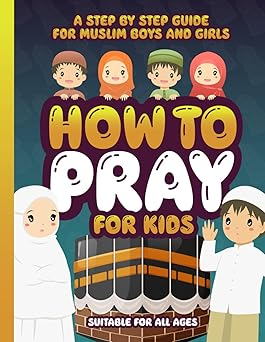
Unlike narrative islamic picture books for kids, this one is meant to be used actively — open beside the child during practice rather than read once and shelved.
For children ready to move from reading about prayer to actually learning to recite Quran correctly, Islamic Studies For Kids Academy’s Quran Recitation course for kids and Tajweed course for kids build the recitation skills this book assumes.
Read Also: ramadan books for kids
10. It Is Sunnah to Say So
It Is Sunnah to Say So by Yusra Khan is a lift-the-flap book where children physically lift flaps to discover the Sunnah phrases said throughout the day — when eating, sneezing, entering the home, and more.
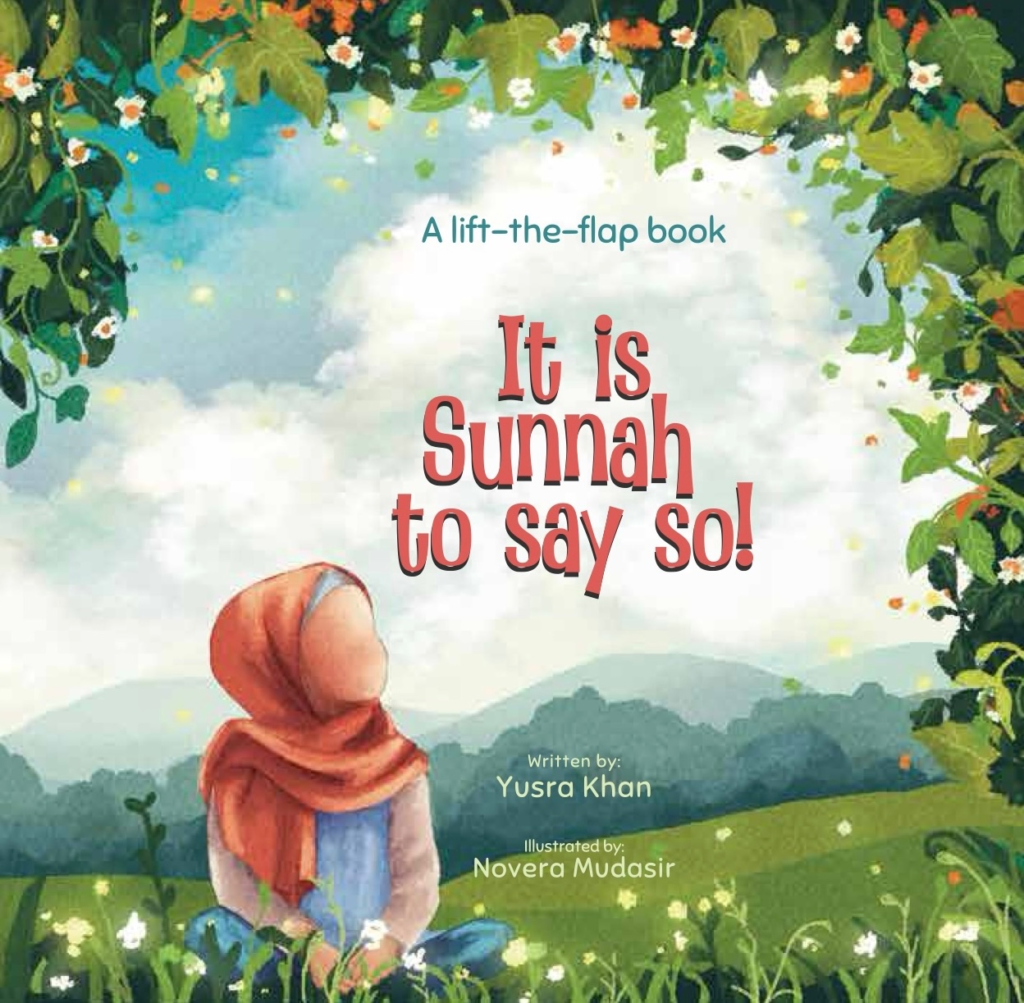
The interactive format suits children aged 3–6 who learn best by doing rather than passive listening.
Teaching these everyday phrases early builds habits that carry into adulthood without ever feeling like memorization work.
[image: stack of Islamic children’s books organized by age group]
Read Also: The 8 Best Quran Books For Kids
Watch a Sample Lesson from Our Academy
Get a firsthand look at how our students learn Islamic values, Quran, and essential knowledge through engaging and interactive online classes. See why families trust Islamic Studies for Kids Academy.
Fun & Engaging Islamic Classes for Kids
Start your child’s journey today with interactive lessons designed to make learning Islam loved and easy.
Get Your Child a Free TrialStart your child’s Islamic learning journey today
Books open the door, but structured learning is what walks a child through it. A storybook can introduce your child to Wudu, Salah, or the story of a prophet — but it can’t correct a mispronounced letter or answer the questions a curious child asks mid-lesson. That’s the gap between structured classes.
Whether your child is just starting to recognize Arabic letters or is ready to begin memorizing the Quran, Islamic Studies For Kids Academy has a course built for their stage.
Beginners start with Noorani Qaida to build letter recognition, then move into Quran Recitation and Tajweed for correct pronunciation, and into Quran Memorization once they’re reading confidently. Alongside the Quran track, Fiqh and Hadith classes build on what books like In My Mosque or The Stories of the Prophets for Kids only begin to introduce.
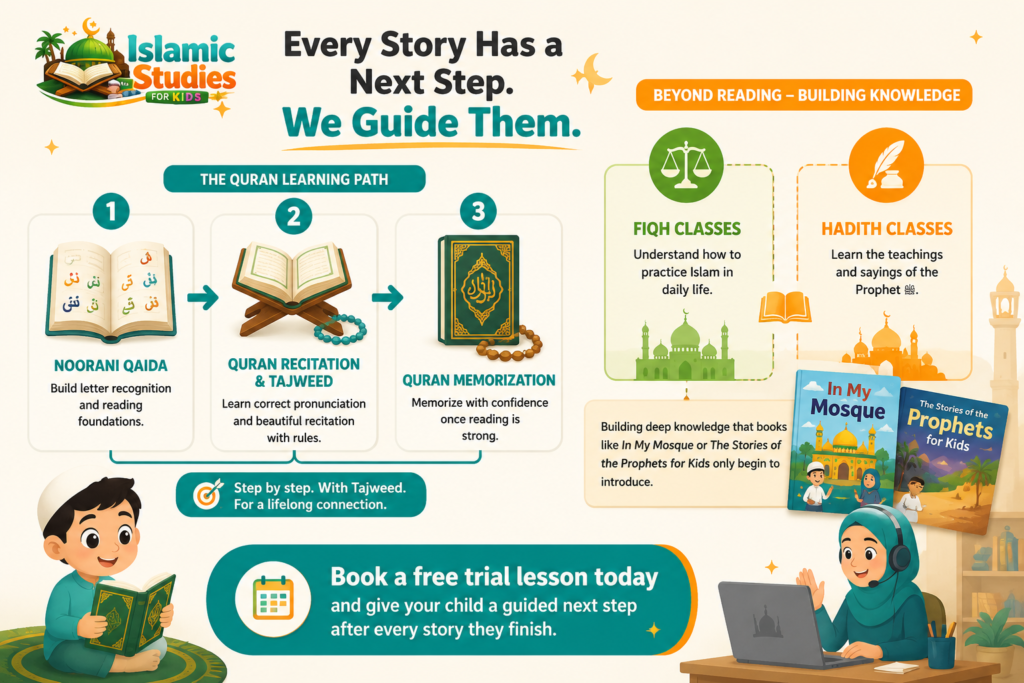
Book a free trial lesson today and give your child a guided next step after every story they finish.
Our Islamic Studies Courses Include:
- Islamic Studies for Kids
- Islam Basics for Kids (Beginners)
- 5 Pillars of Islam for Kids
- 6 Pillars of Iman (Faith) for Kids
- Salah (Prayer) for Kids
- Wudu for Kids
- Dua for Kids
- Ramadan for Kids
- Zakat & Sadaqah for Kids
- Hajj for Kids
- Aqeedah (Islamic Belief) for Kids
- Islamic Manners & Akhlaq for Kids
- Good Deeds for Kids
- Cleanliness (Taharah) in Islam for Kids
- Angels in Islam for Kids
- Islamic History for Kids
- Seerah (Prophet’s Life) for Kids
- Prophets Stories for Kids
- Islamic Stories & Morals for Kids
- Fiqh for Kids (Islamic Jurisprudence Basics)
- Hadith for Kids
- Quran Tafseer Course for Kids
- Islamic Holidays & Events for Kids
- Islamic Identity for Kids
- Intensive Islamic Course for Kids
Enroll today and give your child the knowledge, values, and confidence to grow as a practicing Muslim with a strong connection to Allah and His teachings.
Fun & Engaging Islamic Classes for Kids
Start your child’s journey today with interactive lessons designed to make learning Islam loved and easy.
Get Your Child a Free TrialConclusion
The best islamic books for children work as a set, not a single purchase — a board book for color and rhythm, a picture book for early story comprehension, and a chapter book once a child reads independently.
Mixing in a couple of strong Ramadan books for kids each year and a Quran book or two builds a well-rounded library that grows alongside your child rather than getting outgrown in a season.
Ten minutes of reading a day, with one short follow-up question afterward, does more for a child’s Islamic identity than occasional long sessions. And once a child is ready to move from reading about the Quran to actually reading it, structured lessons give them the skill the books were always pointing toward.
FAQs
Here are answers to the questions parents ask most often when choosing islamic books for kids.
1. What age should a child start reading islamic books for kids?
Children can start as early as two years old with simple board books featuring color, repetition, and short rhymes. By age four, most children are ready for full islamic picture books for kids with a basic story arc.
2. What are the best islamic story books for kids who don’t enjoy reading?
Chapter book series with a relatable, funny main character work best for reluctant readers, since the humor draws children in before they notice they’re absorbing Islamic content. Illustrated, diary-style formats tend to hold attention longest for ages 7–10.
3. How many Ramadan books for kids should we buy each year?
Two or three well-chosen ramadan books for kids are enough — one simple board book for younger children and one or two narrative picture books for school-age kids. Reusing the same titles each year builds a recognizable family tradition.
4. Can quran books for kids replace formal Quran lessons?
No. Quran books for kids build vocabulary and emotional connection to Quranic stories, but they don’t teach correct reading, pronunciation, or Tajweed rules. A structured course alongside reading is necessary once a child is ready to read the Quran themselves.
5. How do I know if a book is age-appropriate for my child?
Match the reading time to attention span: five minutes for toddlers, seven to ten minutes for ages 4–8, and ten to fifteen minutes for independent readers aged 9 and up. If a child loses interest before a story ends, the book is likely above their current stage.


Leave a Reply