 Books
Books
Choosing between a picture-based Quran, a story collection, and a full tafsir series is one of the first real decisions Muslim parents make in their child’s Islamic education — and getting it wrong usually means an expensive book sitting untouched on a shelf.
The best Quran books for kids match three things at once: your child’s actual age, their reading level, and the format that keeps them coming back to it. This guide covers eight verified titles — flashcards, coloring books, illustrated Juz’ Amma sets, story collections, and a full tafsir series with clear guidance on which age group each one suits.
Whether you’re building a toddler’s first bookshelf or looking for a tafsir your ten-year-old can actually follow, this list is organized so you can find the right fit fast.
1. The Clear Quran: Tafsir for Kids Series
The Clear Quran: Tafsir for Kids, edited by Dr. Mustafa Khattab, is a multi-volume tafsir series reviewed and simplified by children in grades 2 through 5. Tafsir means Quranic explanation — this series pairs the translated text with learning points, background context, and full-color illustrations for each surah.
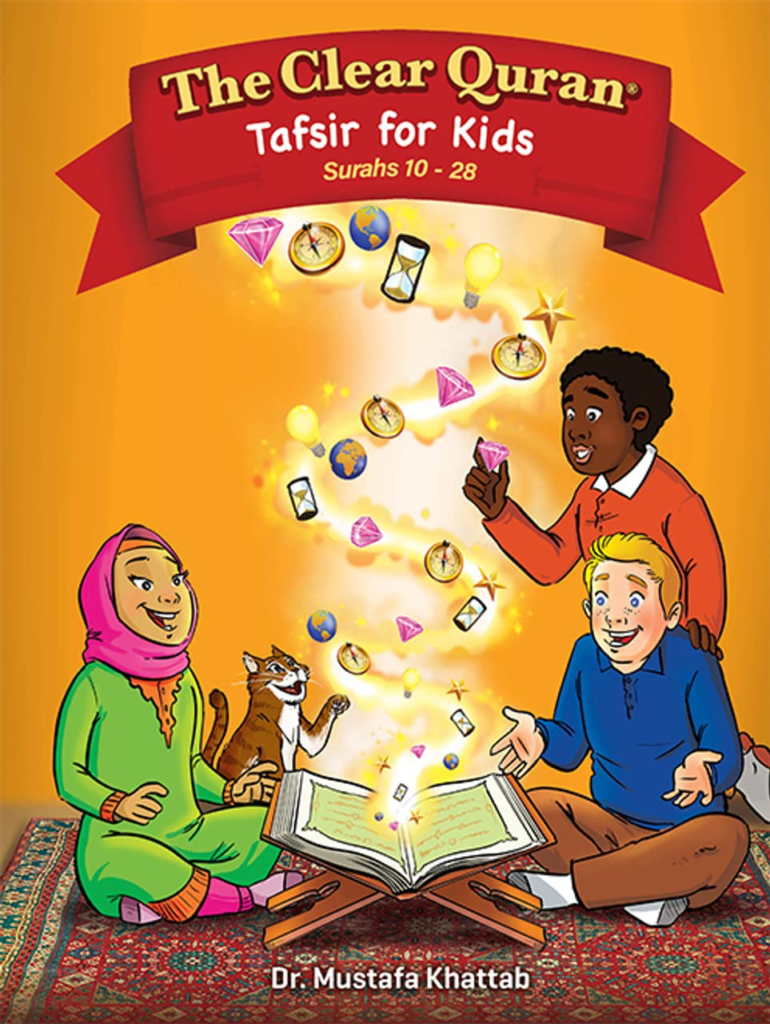
What sets this series apart is process, not just content: the difficult vocabulary was replaced by the children who tested it, not by adults guessing at what kids would understand.
Volumes like Surahs 10–28 work well for children aged 8 and up who already read independently and are ready to move past simple stories into structured meaning.
A common mistake here is starting a child on tafsir before they’re comfortable reading on their own — the volume becomes a parent-read book instead of a self-study tool, which defeats its purpose. If your child is still sounding out sentences, start with a picture-based title instead and move to this series once fluency is in place.
Parents building a full Quran study routine often pair a tafsir like this with structured recitation practice — the Quran Recitation Course for Kids Online at Islamic Studies For Kids Academy gives children a teacher to apply what they’re reading directly to their own recitation.
2. My First Quran With Pictures: Flash Cards
My First Quran With Pictures flashcard set contains 99 cards explaining verses from the last 25 surahs of the Quran, each paired with a simple illustration and short explanation a young child can grasp without adult interpretation.
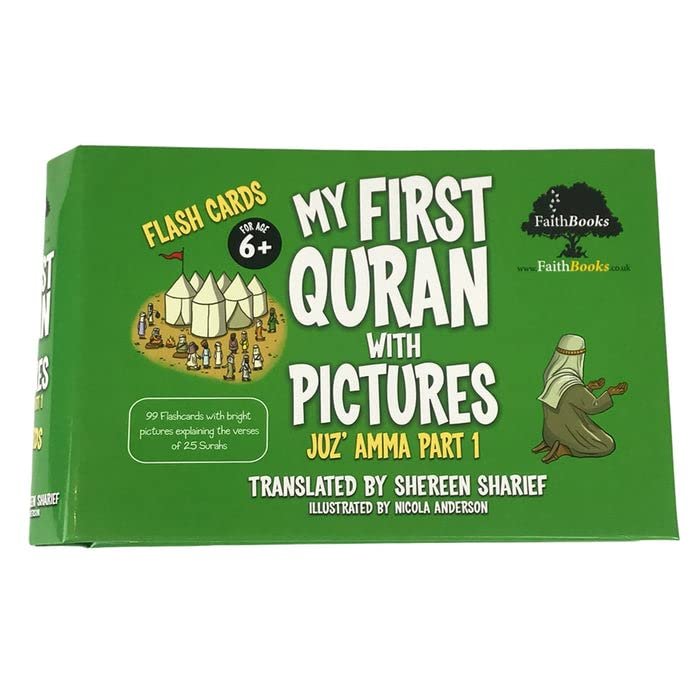
Flashcards solve a specific problem picture books don’t: portability and repetition in short bursts. A five-minute flashcard session in the car or waiting room accomplishes what a 20-minute sit-down story time can’t — frequent, low-friction exposure that builds recognition over weeks rather than a single reading.
Use five cards a day rather than working through the full set at once. Children retain short verse meanings better through spaced repetition — reviewing yesterday’s five cards before introducing five new ones — than through one long session covering fifteen or twenty.
3. My First Quran with Pictures — Coloring Book (Part 1)
This coloring book takes the same illustrated verse concept as the flashcard set and turns it into an activity-based format, letting children color scenes tied to specific ayahs while absorbing the accompanying explanation.
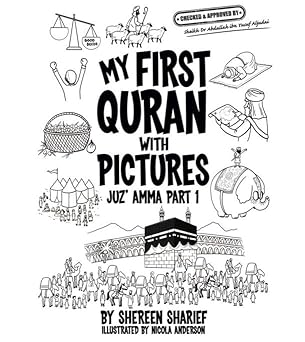
Coloring books solve the attention problem that pure text creates for children aged 4 to 7 — the hands stay occupied while the verse and meaning are being introduced verbally by a parent, which keeps young children engaged far longer than passive listening alone.
This format works best as a companion to another primary book rather than a standalone study tool. Pair it with flashcards or the illustrated Juz’ Amma set below so the coloring reinforces verses the child is already being introduced to elsewhere, instead of introducing entirely new content on its own.
Read Also: Islamic Books for Kids
Experience a Real Classroom
Curious about how we teach? This video offers a glimpse into a real class, showcasing our interactive approach, qualified teachers, and child-friendly learning experience.
Fun & Engaging Islamic Classes for Kids
Start your child’s journey today with interactive lessons designed to make learning Islam loved and easy.
Get Your Child a Free Trial4. My First Quran with Pictures: Juz’ Amma (Part 1)
This title applies the picture-and-verse format specifically to Juz’ Amma — the 30th and final section of the Quran, and the section most children begin memorizing first because its surahs are shorter.
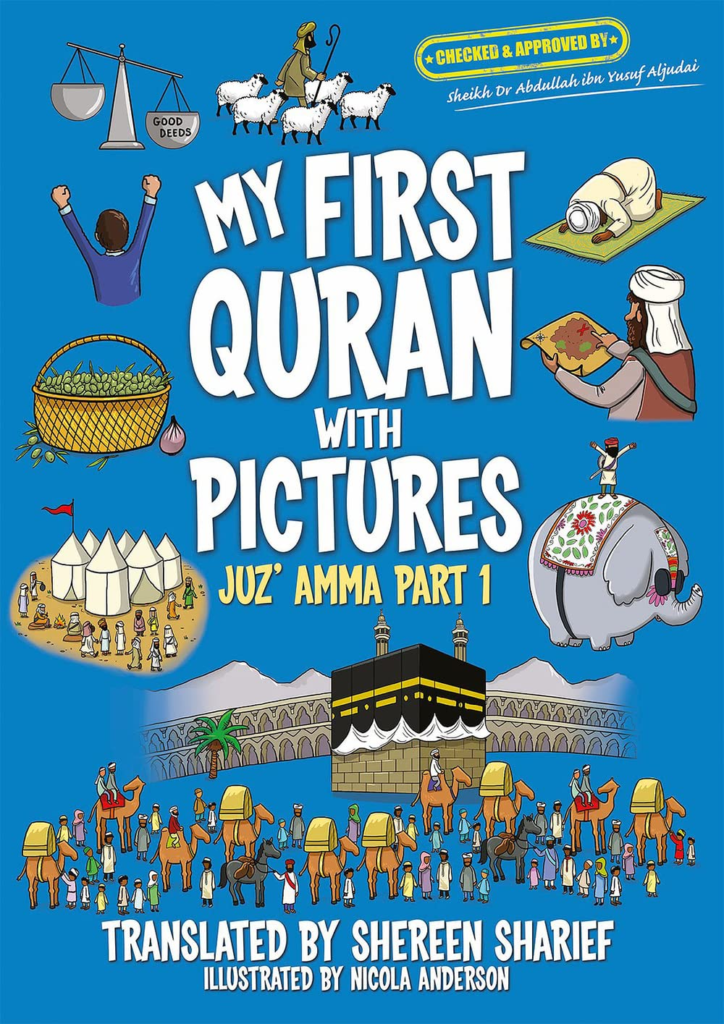
Because Juz’ Amma is the standard starting point for children’s Quran memorization globally, a picture-based introduction to its meaning before or alongside memorization gives children context for what they’re reciting.
Rather than memorizing sound without understanding the exact gap that leaves many children able to recite fluently but unable to explain a single verse.
Read one surah’s spread per week rather than working straight through the book. Juz’ Amma surahs are short enough that children often want to move fast, but meaning takes longer to settle than the words themselves.
Families running memorization at home often find this book pairs naturally with structured lessons — the Quran Memorization Course for Kids Online builds exactly this kind of guided, one-surah-at-a-time pacing with a qualified teacher.
5. The Illustrated Juz’ Amma for Kids (Part 2)
The Illustrated Juz’ Amma for Kids book continues the Juz’ Amma coverage with a fresh set of surahs, using the same full-illustration format that highlights everyday values and a child’s closeness to Allah rather than dense theological explanation.
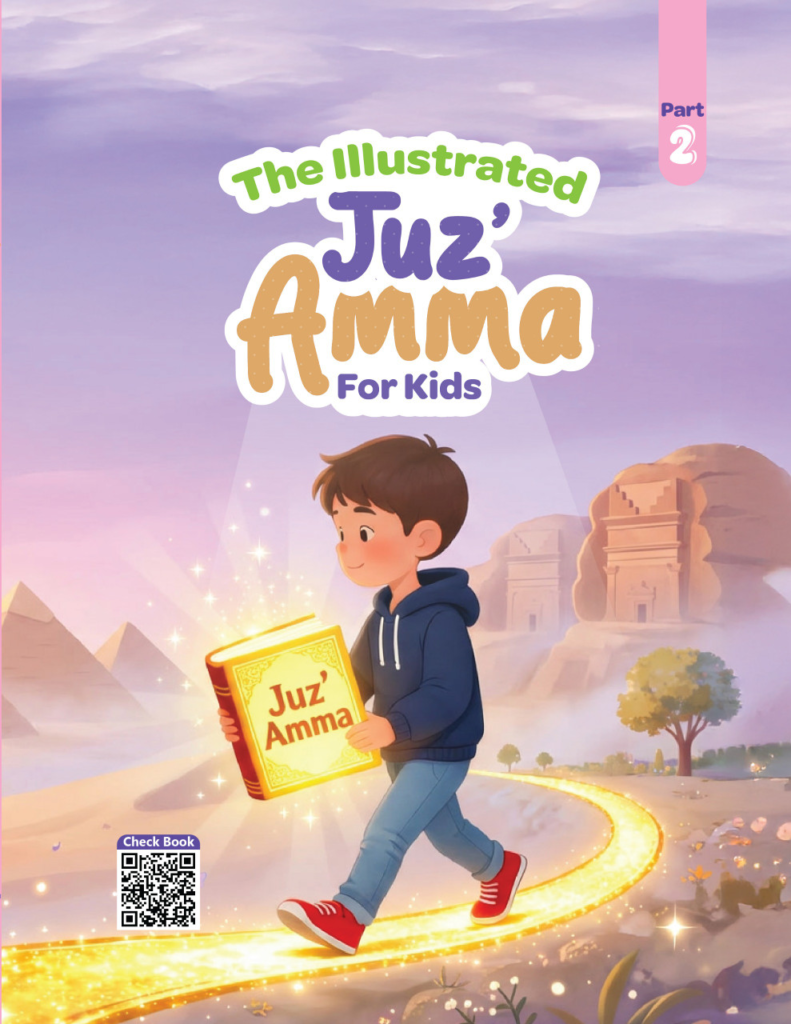
The bridge paragraph worth noting for parents: Part 1 and Part 2 together cover the full Juz’ Amma, so buying both as a set — rather than one at a time — avoids the gap that happens when a child finishes one volume and momentum stalls waiting for the second to arrive.
Children who’ve built vocabulary through this book’s illustrations tend to have an easier time when they later begin formal tajweed, since word recognition is already familiar.
The Tajweed Course for Kids Online at Islamic Studies For Kids Academy builds correct pronunciation on top of that existing word familiarity rather than starting from zero.
6. Quran Stories for Kids: Inspiring Lessons of Faith, Courage, and Guidance
This collection contains 20 Quranic stories written in accessible language, each paired with reflection questions, a clearly stated Islamic lesson, and a short dua connected to the story’s theme.
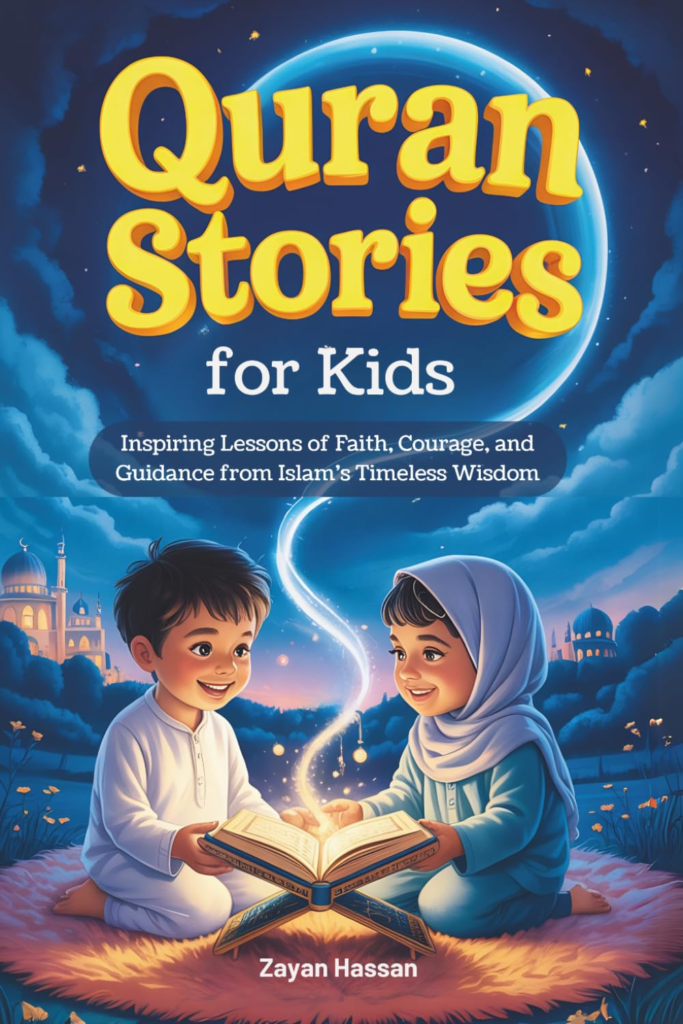
The reflection-question structure is what separates this from a simple storybook. Asking “what would you have done?” after a prophet’s story turns a five-minute read into a valuable conversation — and that conversation is usually what a child actually remembers weeks later, not the plot details of the story itself.
This title suits children aged 5 to 10 as either an independent read for confident readers or a parent-led bedtime book for younger children. Because each story stands alone, there’s no requirement to read in sequence.
Parents can pick a story that matches something happening in their child’s week, like patience or honesty.
Read Also:ramadan books for kids
7. The Read Qaidah: Your Essential Pathway to Reciting the Quran
The Read Qaidah (Madinah Script) is a foundational reading primer that teaches Arabic letter recognition and combination — the qaidah stage that comes before a child can read Quranic text fluently on their own.
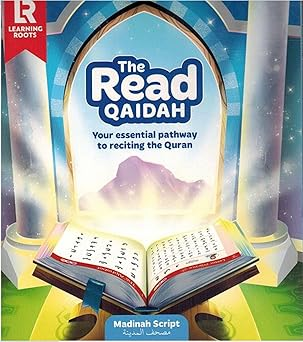
This is the one title on this list that isn’t a story or picture book, it’s a systematic reading tool, and skipping it is the single most common reason children struggle to read the Quran independently later.
A child who memorizes surahs by ear without ever completing a qaidah often hits a wall the moment they’re asked to read unfamiliar text.
A structured qaidah works best under direct teacher guidance rather than as a self-study workbook, since letter articulation errors are hard for parents to catch without training. The Noorani Qaida Course for Kids Online covers exactly this stage with a teacher correcting pronunciation in real time.
Read Also: 15 Best Islamic Story Books For Kids
8. Getting to Know & Love the Holy Quran
This title takes a different angle from the rest of the list — rather than presenting Quranic stories or verses directly, it explains the story of the Quran’s revelation itself, alongside its essential teachings and character-building lessons.
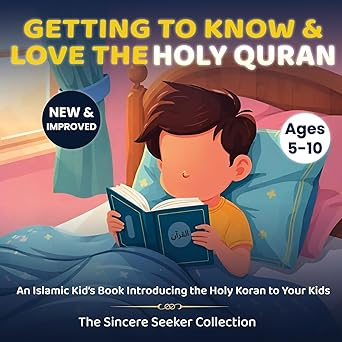
Children eventually ask where the Quran came from, and this book is built specifically to answer that question in age-appropriate terms — covering revelation, compilation, and why Muslims treat the text the way they do. It works well for children aged 7 and up who are ready to think about the Quran as a whole, not just individual verses.
This book pairs naturally with basic Islamic studies content beyond just the Quran itself — parents looking to round out that broader picture often add a structured foundation through the Fiqh Course for Kids Online or the Hadith Course for Kids Online, both of which build on the “why” this book introduces.
Read Also: Best 8 Tajweed Books For Kids
How to Choose the Right Book for Your Child’s Age
Matching a book to a birthday number isn’t enough — reading level, attention span, and prior exposure to Arabic all vary widely between children of the same age. Use the table below as a starting point, then adjust based on how your specific child responds.
| Age Range | Best Format | Why It Works |
| 2–4 years | Flashcards, coloring books | Short bursts, hands stay busy, no reading required |
| 5–7 years | Illustrated Juz’ Amma, picture books | Building vocabulary and story recall before independent reading |
| 8–10 years | Story collections, qaidah primers | Independent reading begins; reflection questions add depth |
| 10+ years | Tafsir for Kids series | Ready for structured meaning beyond individual verses |
Watch a Sample Lesson from Our Academy
Get a firsthand look at how our students learn Islamic values, Quran, and essential knowledge through engaging and interactive online classes. See why families trust Islamic Studies for Kids Academy.
Fun & Engaging Islamic Classes for Kids
Start your child’s journey today with interactive lessons designed to make learning Islam loved and easy.
Get Your Child a Free TrialGrow Your Child’s Quran Journey with Islamic Studies For Kids Academy
Books open the door to Quranic understanding, but consistent, guided practice is what turns that early exposure into real reading, correct recitation, and lasting memorization.
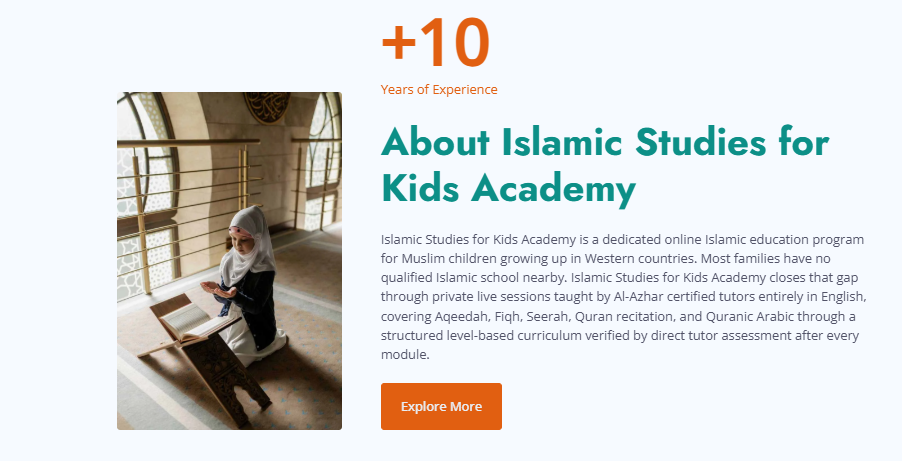
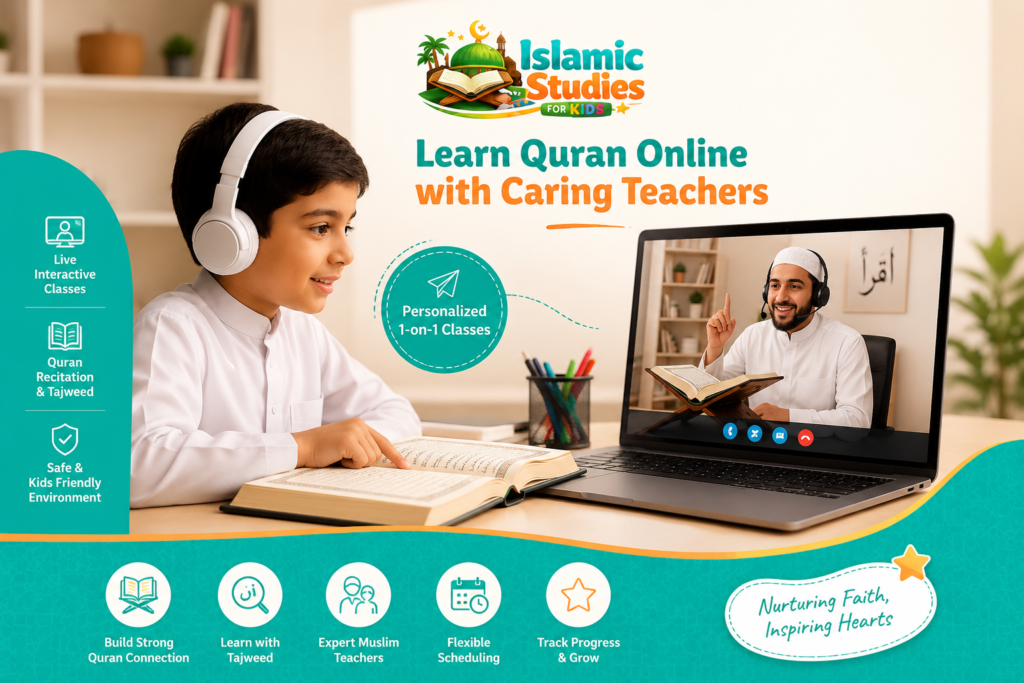
Islamic Studies For Kids Academy pairs every stage covered in this guide — letter recognition, recitation, tajweed, and Quranic Arabic — with a qualified teacher who adapts pacing to your child specifically, rather than a fixed page count.
Explore the Quranic Arabic Course for Kids Online to help your child move from recognizing words in a picture book to understanding them directly in the text.
Conclusion
The right Quran books for kids depend far less on the title’s popularity and far more on matching format to your child’s current stage flashcards and coloring books for toddlers, illustrated Juz’ Amma sets for early readers, and tafsir volumes once independent reading is established.
Buying a full set of books at once rarely outperforms adding one new title as your child outgrows the last momentum and habit matter more than shelf variety. A single book read consistently for ten minutes a day builds more lasting connection to the Quran than five books read once each and forgotten.
Pairing these books with structured teaching, whether through Islamic Studies For Kids Academy or another qualified program, closes the gap that books alone can’t — turning recognition and story recall into real reading ability and correct recitation over time.
Frequently Asked Questions
Parents choosing quran books for kids often have similar questions about age, accuracy, and how these books fit alongside formal learning. Here are direct answers to the most common ones.
1. What age should a child start reading Quran books?
Children can start with picture-based Quran books, such as flashcards or illustrated Juz’ Amma sets, as early as age 2. Independent reading of story collections or tafsir typically begins once a child reads fluently, usually around age 8.
2, Are Quran story books for kids religiously accurate?
Reputable Quran story books for kids, like Quran Stories for Kids or The Clear Quran: Tafsir for Kids, are based directly on Quranic text and reviewed for accuracy. Always check that a title cites its Quranic sources rather than paraphrasing loosely from memory.
3. What’s the difference between a Quran story book and a tafsir book?
A Quran story book retells specific narratives, such as prophet stories, in simplified language. A tafsir book explains the meaning of the Quranic text itself, surah by surah, and is generally suited to children who already read independently.
4. Do coloring books actually help kids learn the Quran?
Coloring books help by keeping a child’s hands occupied while a parent introduces a verse and its meaning verbally, which extends a young child’s attention span during the activity. They work best paired with a primary book rather than used alone.
5. Should I buy books instead of enrolling my child in Quran classes?
Books and classes serve different purposes — books build early exposure and vocabulary at home, while classes provide correct pronunciation, structured pacing, and teacher feedback that books can’t replace on their own. Most families use both together for the best results.


Leave a Reply