 Books
Books
Ramadan is one of those months kids feel before they understand the early wake-ups, the smell of iftar cooking, the countdown to Eid. A good book turns that feeling into something they can talk about, ask questions about, and connect to their own family’s traditions.
This list of Ramadan books for kids covers board books for toddlers, picture books for early readers, a rhyming story, nonfiction guides, and chapter books for older kids.
Each entry below tells you what the book actually covers, who it suits, and how to use it at home — not just a summary, but a way to get more out of the reading.
1. Lailah’s Lunchbox
Lailah’s Lunchbox by Reem Faruqi is the story of a girl who has just moved from Abu Dhabi to Atlanta and is fasting for the first time — but she’s nervous about explaining it to her classmates and teacher.
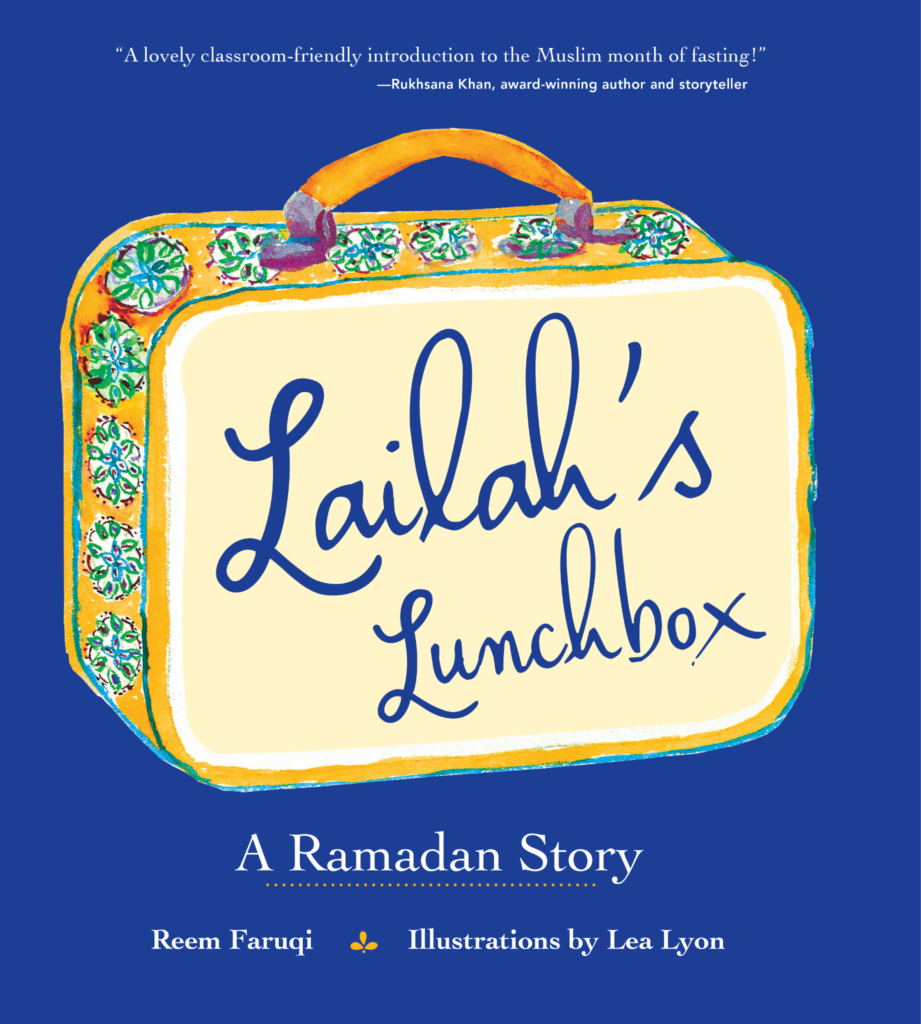
The book doesn’t rush its ending, which is part of why it lands so well. Children aged 6 and up sit with Lailah’s worry before the relief arrives, and that pacing makes the emotional payoff genuine rather than rushed.
A useful way to use this book: read it a week or two before Ramadan starts, then ask your child directly — “How would you explain fasting to a friend at school?” Letting them practice the words out loud before they need them removes a lot of the real-world anxiety the book describes.
2. My First Ramadan
My First Ramadan by Karen Katz uses simple language and bright illustrations to walk a young boy through suhoor, fasting, evening prayer, and the joy of Eid.
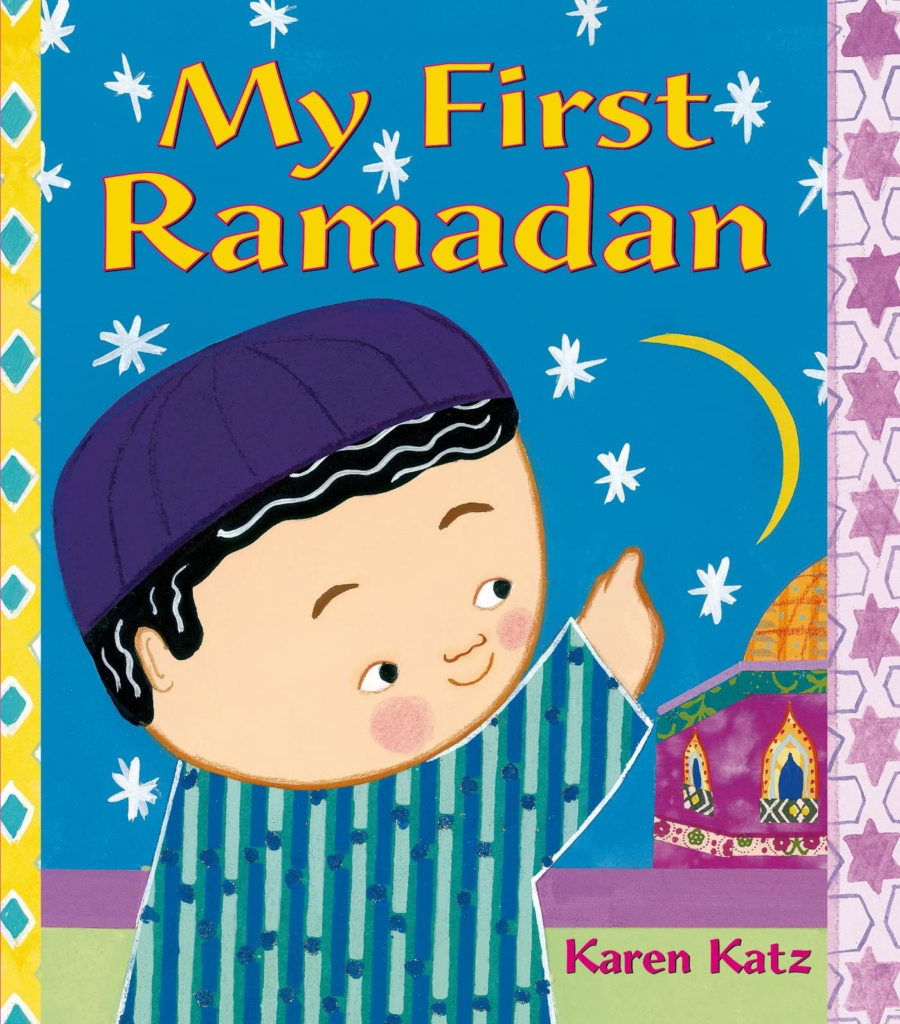
It’s built for children aged 3 to 6 who are encountering these words for the first time. The book sticks to the core rhythm of the day rather than trying to explain the religious reasoning behind it — which is exactly the right amount of detail at that age.
One detail worth knowing if you’re reading critically alongside your child: the book shows suhoor ending at sunrise rather than at dawn (the actual cutoff for the pre-dawn meal). It’s a small point, but worth correcting verbally if your child is old enough to notice timing.
This is also where a structured course helps — Islamic Studies For Kids Academy’s Fiqh course for kids covers fasting rules like the suhoor cutoff in a way that’s accurate from the start, rather than something a parent has to catch and correct later.
3. It’s Ramadan, Curious George
It’s Ramadan, Curious George by H.A. Rey and Hena Khan follows George celebrating the first night of Ramadan with his friend Kareem’s family — the meal, the distraction techniques during a long fasting day, and the evening celebration.
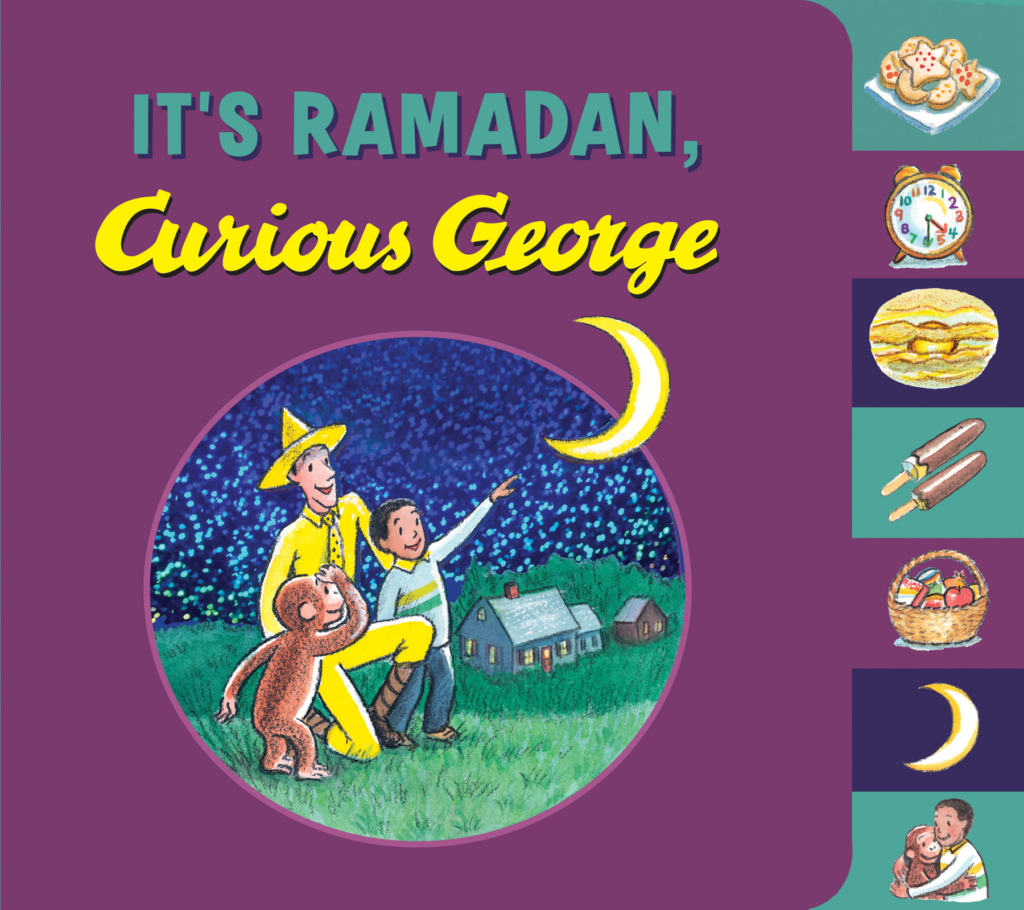
Using a character children already love is genuinely effective for ages 2 to 6. Kids arrive at the book with warm feelings already attached to George, which makes them receptive to the Ramadan content layered in.
It’s worth knowing this book stays at the surface — it covers the cultural side of Ramadan (the food, the gathering) without going into the religious “why,” such as reading the Quran or the spiritual purpose of fasting. Pair it with a deeper book, or with conversation, if your child is asking more questions than this one answers.
Read Also: Best 8 Arabic Kids Books
4. Under the Ramadan Moon
Under the Ramadan Moon by Sylvia Whitman is written in verse, which makes it stand out from most Ramadan picture books — and it’s genuinely satisfying for children who already love rhythmic, read-aloud books.
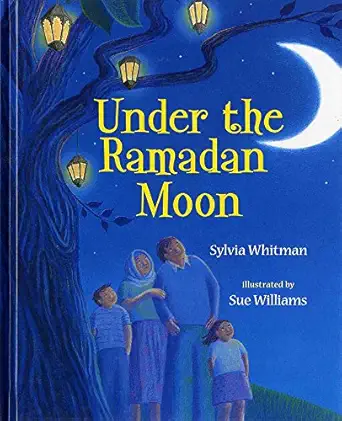
Despite the rhyming format, it doesn’t skip content. It covers fasting, Quran reading, prayer, and charity in full, and shows Muslim women both with and without hijab, reflecting the real diversity within Muslim families.
The rhyme makes this one easy to memorize lines from after a few readings — useful for children aged 4 to 8 who like to “read along” before they can read independently.
5. Ramadan Around the World
Ramadan Around the World by Ndaa Hassan takes readers through Ramadan traditions across North America, South America, Europe, Asia, Africa, and Australia in a single book.
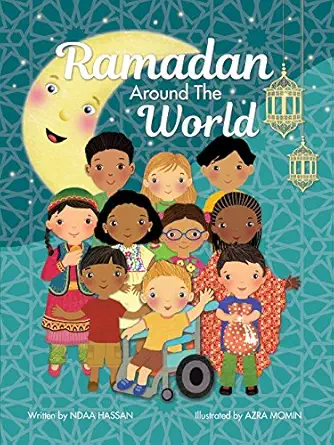
It carries more information than a typical Ramadan picture book, which makes it a better fit for children aged 6 to 10 who already know the basics and are ready to see how Ramadan looks different from family to family across the globe.
Use this one to start a comparison conversation: “Our family does iftar like this — what’s different about how the family on this page celebrates?” Comparing rather than just reading builds the kind of cultural awareness this book is actually built for.
6. Fasting and Dates
Fasting and Dates by Jonny Zucker reads less like a story and more like seven Ramadan facts paired with illustrations — including a mention of Laylat al-Qadr (the Night of Power), which most children’s Ramadan books skip entirely.
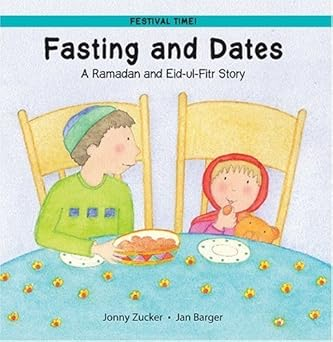
That makes it a useful introductory reference for children aged 5 to 9, especially if your child responds better to short facts than to a full narrative arc.
If the Night of Power comes up and your child wants to know more — why it matters, what makes it different from other nights that’s a good moment to bring in actual Quran engagement rather than just facts about it.
Islamic Studies For Kids Academy‘s Quran Recitation course for kids gives children the tools to read the verses connected to nights like these, instead of only hearing about them secondhand.
7. Moon’s Ramadan
Moon’s Ramadan by Natasha Khan Kazi follows the moon as it watches countries around the world begin and celebrate Ramadan, ending with the crescent that signals the start of Eid.
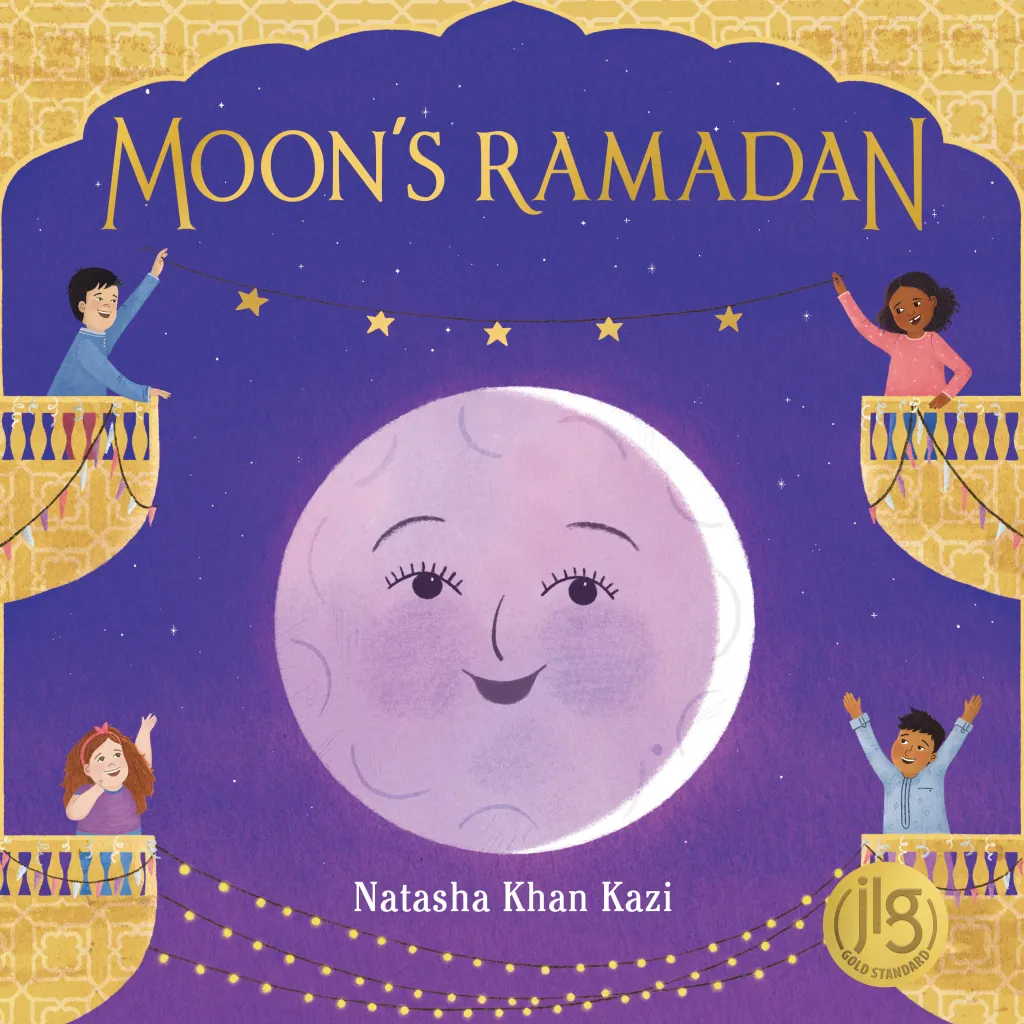
The framing device — seeing the month through the moon’s “eyes” — gives young children aged 4 to 8 a concrete, visual anchor for an abstract idea: that Ramadan starts and ends with moon sighting, and that Muslims everywhere are connected by that same sky.
After reading, step outside on a clear evening and look for the moon together. Asking “What do you think the moon sees tonight?” turns the book’s central idea into a real, repeatable family moment.
Read Also: 15 Best Islamic Story Books For Kids
Experience a Real Classroom
Curious about how we teach? This video offers a glimpse into a real class, showcasing our interactive approach, qualified teachers, and child-friendly learning experience.
Fun & Engaging Islamic Classes for Kids
Start your child’s journey today with interactive lessons designed to make learning Islam loved and easy.
Get Your Child a Free Trial8. The Ramadan Drummer
The Ramadan Drummer by Sahtinay Abaza follows Adam as he wakes to the sound of the Ramadan Drummer — a traditional figure who walks the streets waking people for suhoor — and learns along the way that small acts of kindness carry extra weight during the month.
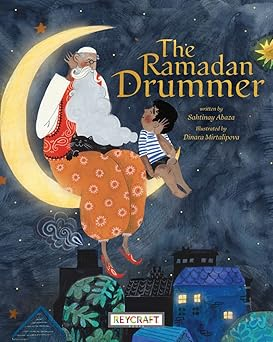
This book leans on a real cultural tradition still practiced in parts of the Muslim world, which gives children aged 5 to 9 something concrete and specific rather than a generic “be kind” message.
9. Hannah and the Ramadan Gift
Hannah and the Ramadan Gift by Qasim Rashid follows Hannah on the first day of Ramadan, frustrated that she’s too young to fast — until her grandfather tells her she can “save the world” through small good deeds instead.
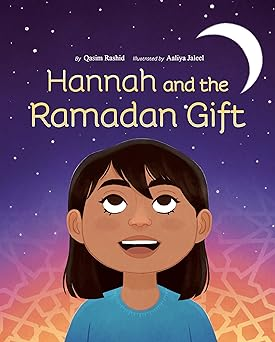
This solves a real problem many parents run into: young children often feel left out of Ramadan because fasting is the most visible practice, and they can’t do it yet. Children aged 4 to 7 walk away from this book understanding that charity and good deeds are just as central to Ramadan as fasting is.
That message — that good deeds carry real weight in Islam — is also a core building block in Islamic Studies For Kids Academy‘s Fiqh course for kids, which teaches children the “why” behind practices like charity and kindness, not just the instruction to be kind.
10. The Gift of Ramadan
The Gift of Ramadan by Rabiah York Lumbard follows Sophia as she tries to fast for the first time, only to be defeated by her growling stomach and her little brother’s cookies — until her grandmother helps her find another meaningful way to take part.
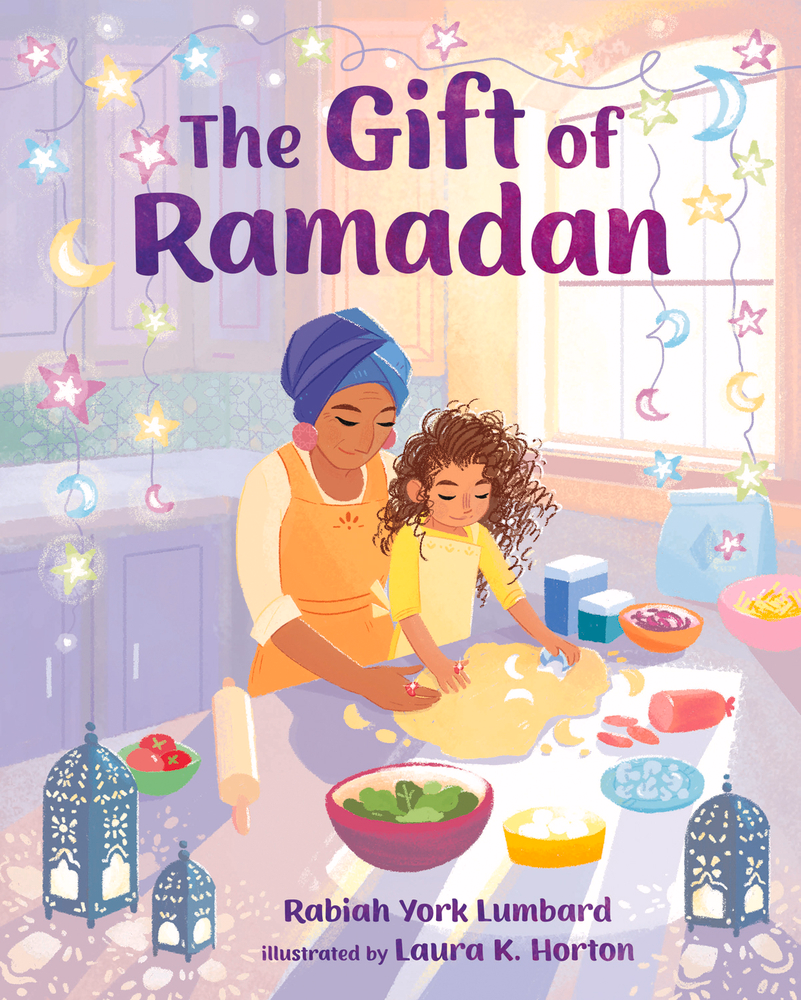
This is a particularly reassuring book for children aged 4 to 8 who have tried fasting and felt discouraged when it didn’t go as planned. The multigenerational relationship at the center of the story — a grandmother helping a granddaughter reframe “failure” — gives parents a script for the same conversation at home.
Ask afterward: “What’s one kind thing you could do today, even if you can’t fast the whole day?” Writing the answer down and checking it off makes the book’s lesson something your child actually does, not just reads.
Read Also: Best 10 Islamic Books For Kids
11. The Night Before Eid
The Night Before Eid: A Muslim Family Story by Aya Khalil follows three generations of an Egyptian American family as they share memories and a precious recipe while preparing for Eid al-Fitr.
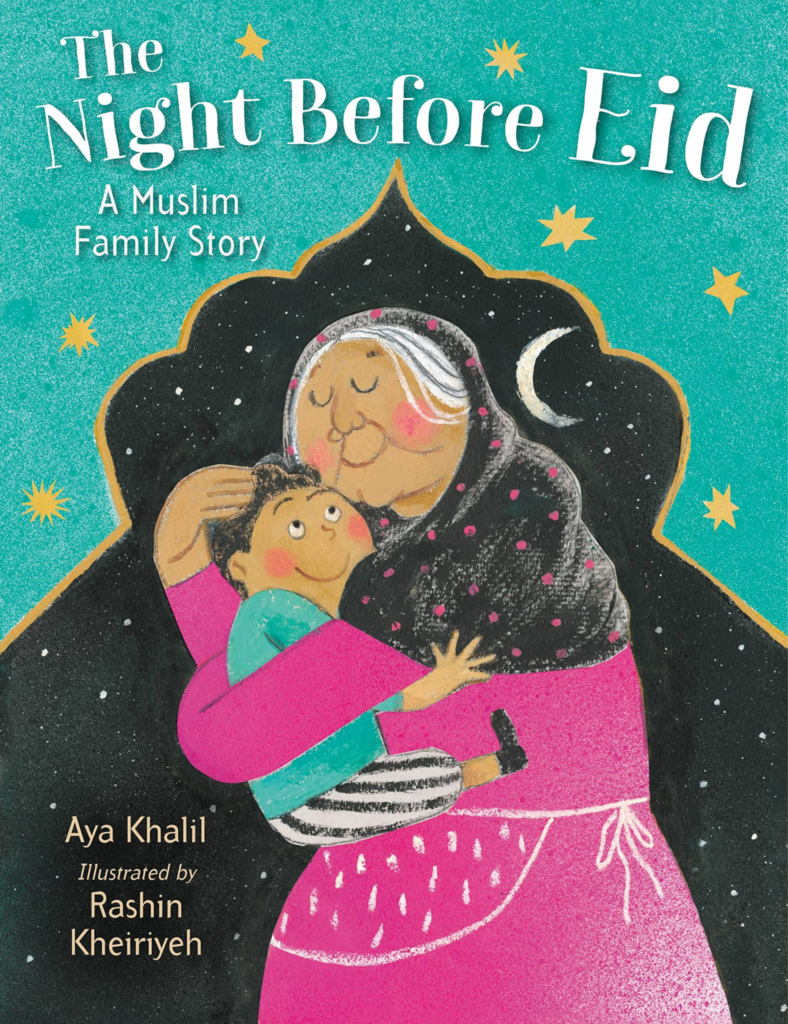
For children aged 5 to 9, this is less about the rules of Ramadan and more about the texture of family life around its grandparents, recipes passed down, and the specific joy of Eid morning.
It’s a good pick if your child already understands the basics of fasting and is ready for the cultural and emotional side of the celebration.
12. Sadiq and the Ramadan Gift
Sadiq and the Ramadan Gift by Siman Nuurali follows Sadiq and his friends as they form a “Money Makers Club” to plan a community iftar fundraiser — and the friction that comes up when one friend stops participating.
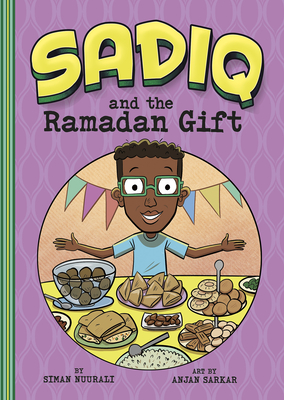
This chapter book suits children aged 7 to 10 and goes further than most Ramadan books for kids by showing the actual logistics and social dynamics behind community charity work, rather than just the concept of giving.
13. Once Upon an Eid
Once Upon an Eid: Stories of Hope and Joy by 15 Muslim Voices, edited by Aisha Saeed, is a short-story collection capturing the range of feelings Eid brings up across different Muslim families and backgrounds — including a poem and a graphic-novel chapter.
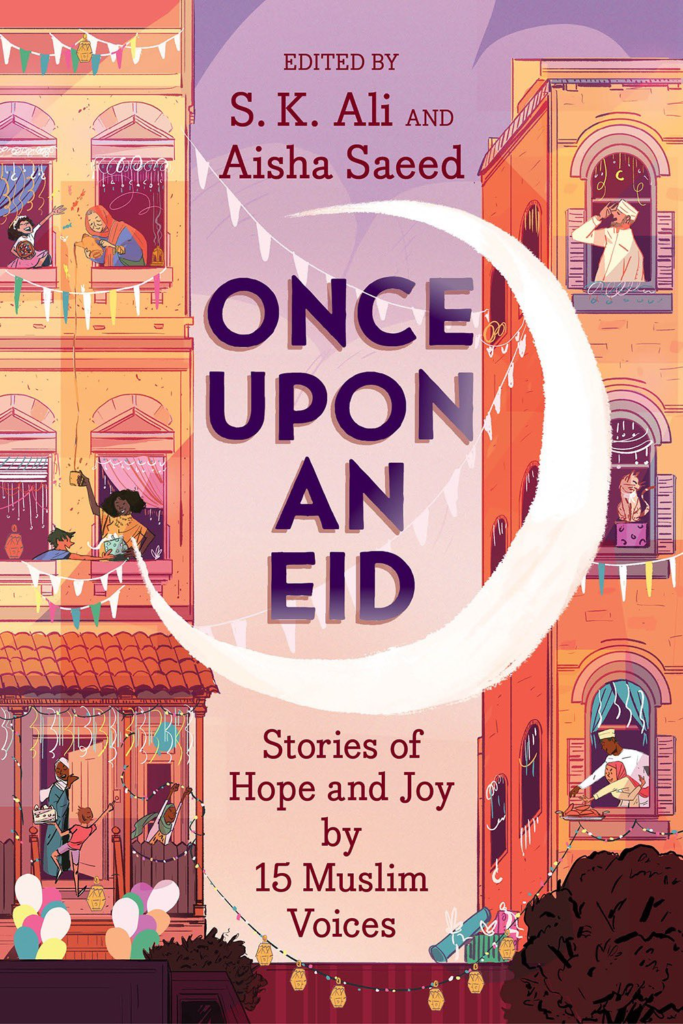
Because it’s an anthology, children aged 8 and up can read one story at a time rather than committing to a single narrative arc, which makes it a flexible option for reluctant readers or for bedtime reading spread across several nights.
Read Also: Best 8 Tajweed Books For Kids
14. Ramadan and Eid Al-Fitr
Ramadan and Eid Al-Fitr follows a child named Raya and her parents through iftar, baking, community good deeds, and mosque visits, with a “factivity” section built in for hands-on learning.
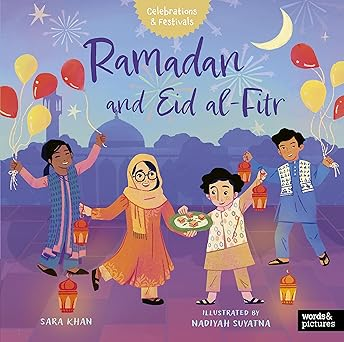
If your child responds better to clear, structured information than to a story arc, this nonfiction format works well for ages 5 to 10. It’s also a useful companion to fiction picture books — read a story for the emotional connection, then this one for the factual grounding.
For families who want that factual grounding to go deeper — into actual Quran recitation, Arabic vocabulary, or the meaning behind the practices these books describe — that’s the gap structured classes are built to fill.
Islamic Studies For Kids Academy’s Quranic Arabic course for kids and Hadith course for kids take the concepts these books introduce and teach children to understand them directly from the source text, at a pace built for young learners.
Read Also: The 8 Best Quran Books For Kids
Watch a Sample Lesson from Our Academy
Get a firsthand look at how our students learn Islamic values, Quran, and essential knowledge through engaging and interactive online classes. See why families trust Islamic Studies for Kids Academy.
Fun & Engaging Islamic Classes for Kids
Start your child’s journey today with interactive lessons designed to make learning Islam loved and easy.
Get Your Child a Free TrialGive Your Child Year-Round Islamic Learning, Not Just a Ramadan Book
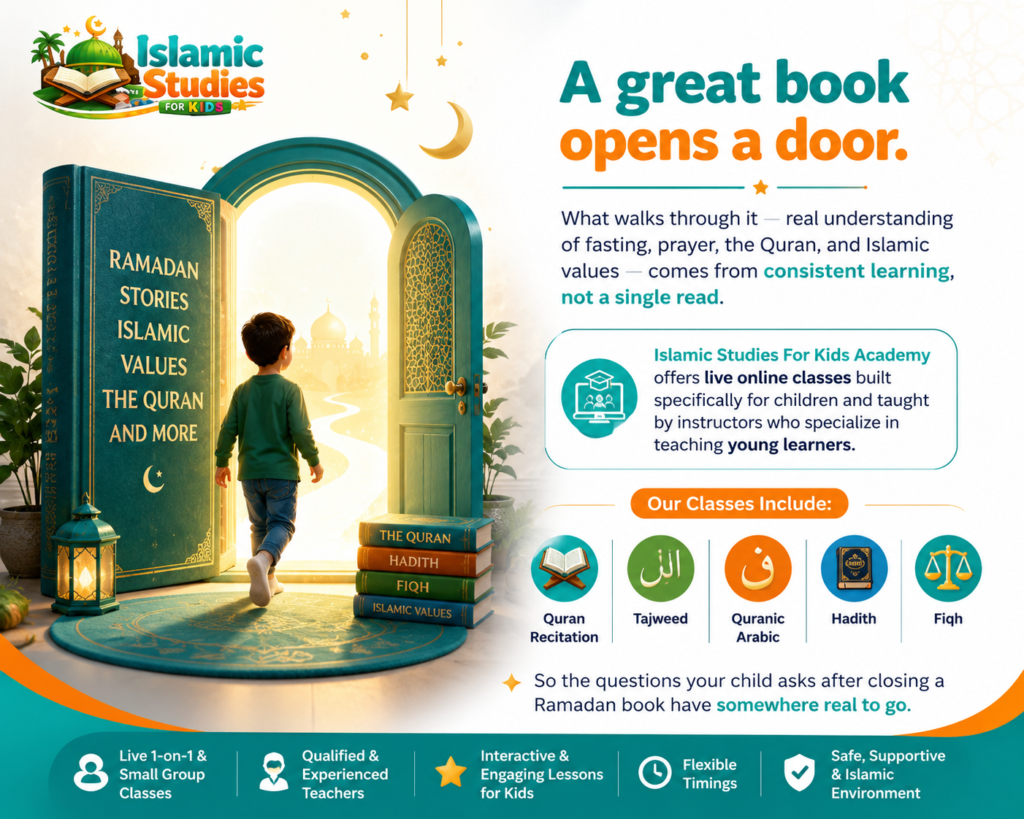
A great book opens a door. What walks through it — real understanding of fasting, prayer, the Quran, and Islamic values — comes from consistent learning, not a single read.
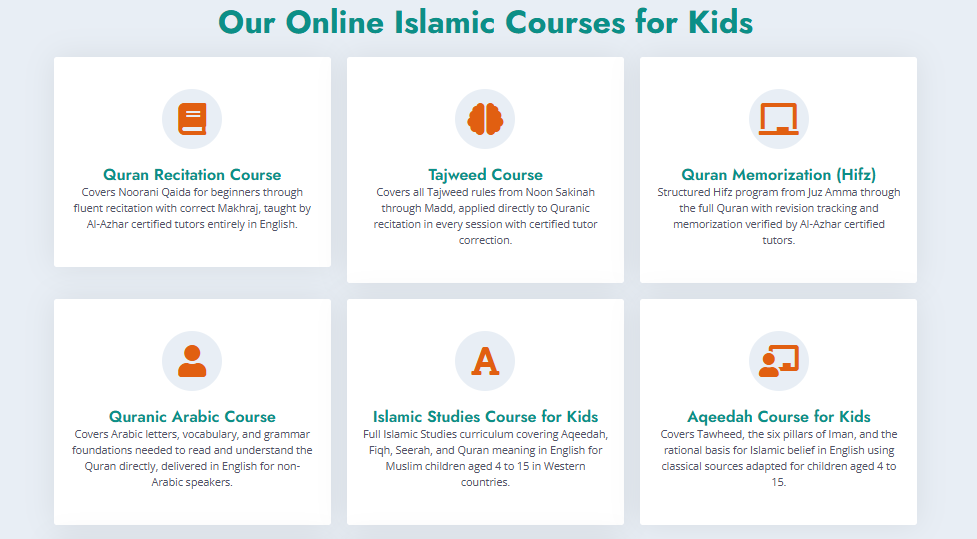
Islamic Studies For Kids Academy offers live online classes built specifically for children and taught by instructors who specialize in teaching young learners, including Quran Recitation, Tajweed, Quranic Arabic, Hadith, and Fiqh — so the questions your child asks after closing a Ramadan book have somewhere real to go.
Book a free trial class for your child today and turn this Ramadan’s reading into a habit that lasts all year.
Here is where your child can begin:
- Noorani Qaida Course for Kids Online: Learn the Arabic alphabet and basic pronunciation from scratch.
- Quran Recitation Course for Kids Online: Read full Surahs correctly with proper fluency and articulation.
- Quran Memorization Course for Kids Online: A structured Hifz path from Juz Amma and beyond.
Our Islamic Studies Courses Include:
- Islamic Studies for Kids
- Islam Basics for Kids (Beginners)
- 5 Pillars of Islam for Kids
- 6 Pillars of Iman (Faith) for Kids
- Salah (Prayer) for Kids
- Wudu for Kids
- Dua for Kids
- Ramadan for Kids
- Zakat & Sadaqah for Kids
- Hajj for Kids
- Aqeedah (Islamic Belief) for Kids
- Islamic Manners & Akhlaq for Kids
- Good Deeds for Kids
- Cleanliness (Taharah) in Islam for Kids
- Angels in Islam for Kids
- Islamic History for Kids
- Seerah (Prophet’s Life) for Kids
- Prophets Stories for Kids
- Islamic Stories & Morals for Kids
- Fiqh for Kids (Islamic Jurisprudence Basics)
- Hadith for Kids
- Quran Tafseer Course for Kids
- Islamic Holidays & Events for Kids
- Islamic Identity for Kids
- Intensive Islamic Course for Kids
Enroll today and give your child the knowledge, values, and confidence to grow as a practicing Muslim with a strong connection to Allah and His teachings.
Conclusion
The best ramadan books for kids match the child in front of you — board books and simple picture books for toddlers just learning the words “fasting” and “Eid,” relatable school-age stories like Lailah’s Lunchbox and Sadiq and the Ramadan Gift for kids navigating fasting around friends and school, and chapter books or anthologies for older children ready for more nuance.
What matters more than any single title is the conversation that follows it. A few minutes of talking after the last page — about the moon, about good deeds, about what your child found confusing — does more for understanding than the reading itself.
Used together with consistent learning, these books can turn into something bigger than a seasonal read: a real foundation your child carries into every Ramadan that follows.
Frequently Asked Questions
Here are quick answers to common questions parents ask when choosing Ramadan books for their kids.
1. What age should kids start reading Ramadan books?
Children can start as early as age 2 to 3 with simple board books like My First Ramadan. At this age, the goal isn’t full understanding — it’s familiarity with the words “Ramadan,” “fasting,” and “Eid” before the concepts are introduced more fully around ages 5 to 6.
2. Are Ramadan books only useful during Ramadan?
No — many of these books, especially the family-relationship and good-deeds stories, work well year-round. Books like Hannah and the Ramadan Gift teach values like charity and kindness that apply outside the month of Ramadan too.
3. How do I choose between a board book and a chapter book for my child?
Match the format to your child’s attention span, not just their age. A confident 5-year-old reader may handle a short chapter book like Sadiq and the Ramadan Gift, while a less-confident 7-year-old may still prefer a picture book format.
4. What’s the best Ramadan book for a child fasting for the first time?
Lailah’s Lunchbox and The Gift of Ramadan both deal directly with first-fasting experiences — one focused on the social side at school, the other on the physical difficulty and finding alternative ways to participate.
5. Do any of these books cover Eid as well as Ramadan?
Yes — The Night Before Eid and Ramadan and Eid Al-Fitr both extend into Eid celebrations, making them good picks if you want a single book covering both the fasting month and the celebration that follows it.


Leave a Reply