 Islamic Studies
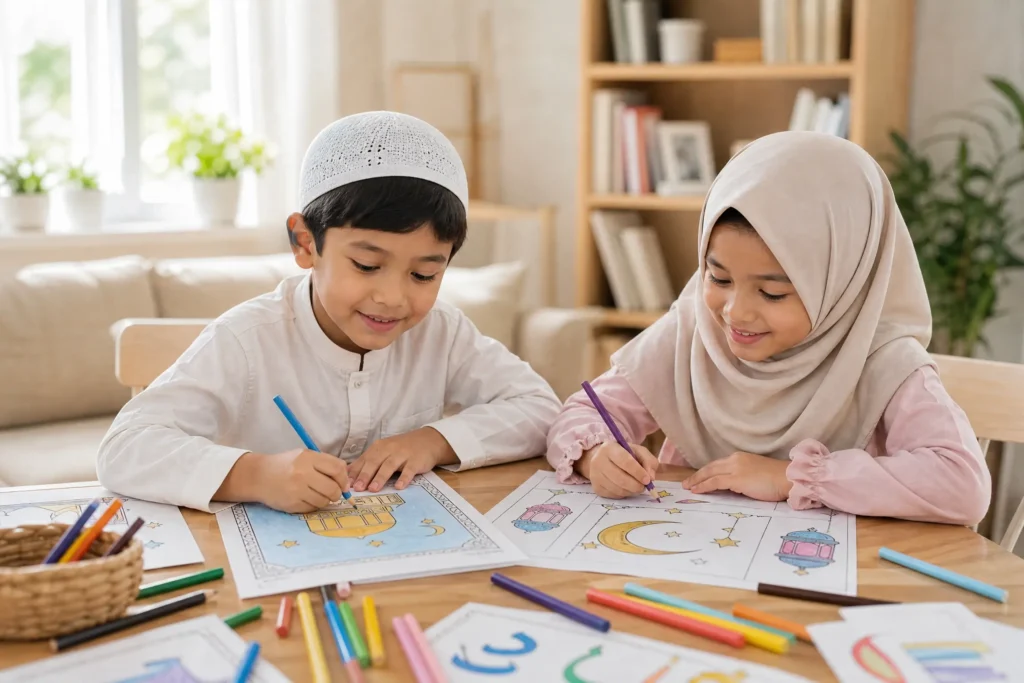
Learning about Islam should feel like an adventure, not a chore. Whether you’re a homeschooling parent, a weekend madrasa teacher, or simply a mom who wants her children to grow up rooted in their faith — free printable Islamic worksheets for kids are one of the most powerful tools in your hands.
At Islamic Studies For Kids Academy, we believe every child deserves access to engaging, faith-centered learning materials. That’s why we’ve put together this complete guide to the best free Islamic activities printable for families — covering everything from Quran activities for kids to character-building behavior boards, Arabic letter practice, and beyond.
No expensive subscriptions. No complicated prep. Just meaningful learning, one printed page at a time.
What you’ll learn in this article
- Why printable worksheets are one of the most effective tools for Islamic education at home.
- The 8 main types of Islamic worksheets available — and what each one teaches.
- How to use worksheets effectively so they become conversations, not just homework.
- The best free sources to find quality Islamic printables.
- A ready-to-run 45-minute lesson plan using free printables.
Why Printable Islamic Worksheets For Kids Work So Well
Children learn best when they can touch, color, cut, and write. Printable worksheets bring abstract Islamic values into the child’s physical world.
A worksheet about road manners isn’t just a piece of paper — it becomes a conversation, a craft activity, and a lesson about responsibility all at once.
Here’s why parents and teachers consistently choose printables:
- Low prep, high impact — print and go in minutes.
- Multi-sensory learning — cutting, pasting, coloring, and writing reinforce memory.
- Flexible for all ages — the same topic can be simplified for a 3-year-old or extended for a 10-year-old.
- Works at home, school, or madrasa — no special equipment needed.
- Sparks conversations about Islamic values naturally and gently.
What Types of Islamic Worksheets for Kids Are Available?
A good collection of Islamic studies worksheets for children covers far more than just Quran memorization. Below is a breakdown of the most popular and effective categories, each serving a distinct purpose in your child’s Islamic education.
1. Quran Worksheets for Kids
Quran-based printables help children connect with Allah’s words in an age-appropriate way. These typically include:
- Surah tracing and copywork — children write out short surahs to build handwriting and memory simultaneously.
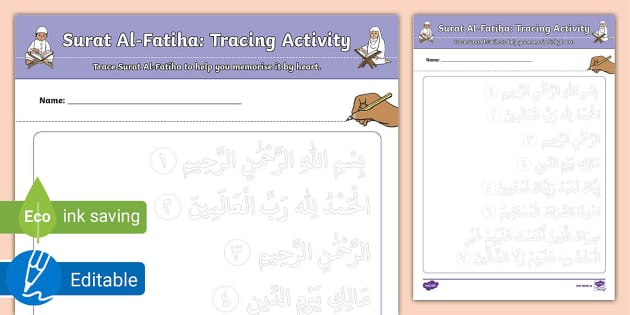
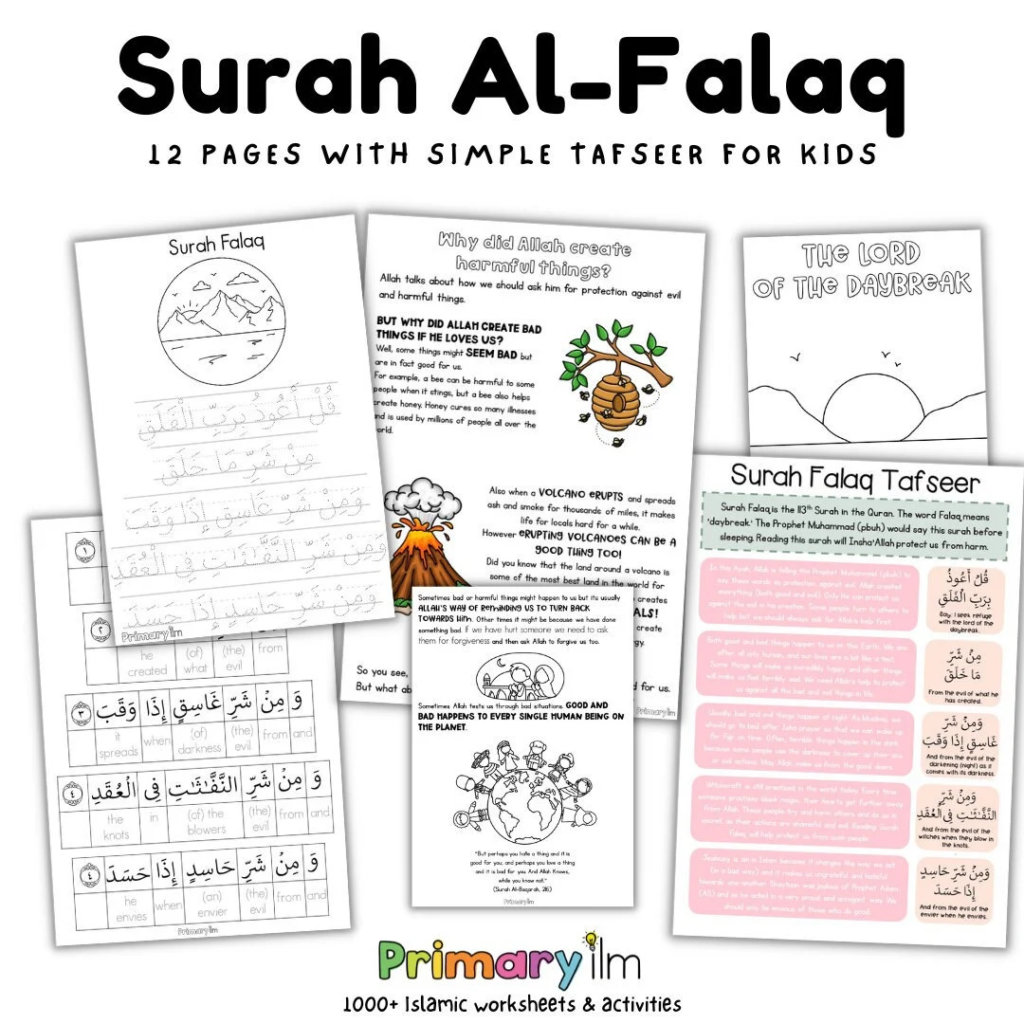
- Tafseer activity sheets — child-friendly explanations of surah meanings with fill-in activities.
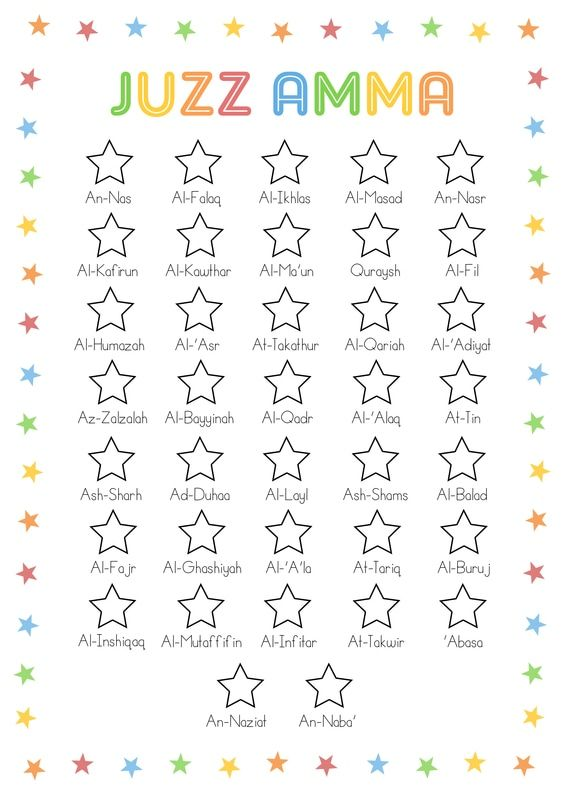
- Juz Amma memorization trackers — colorful charts children fill in as they memorize.
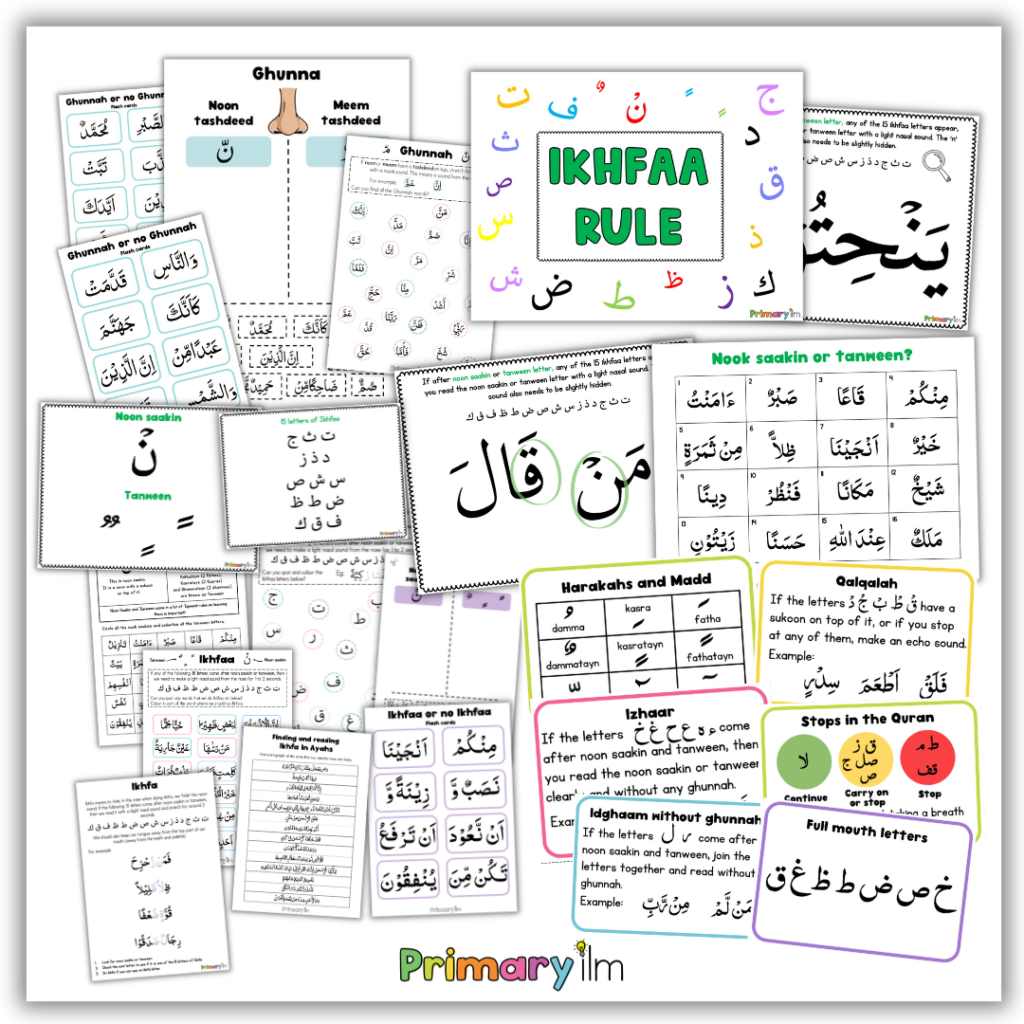
- Tajweed rule cards — flashcards and activity booklets on rules like ghunnah, qalqala, and idgham.
Looking to go beyond printables? Explore the Quran Memorization Course for Kids Online and the Tajweed Course for Kids for live, structured instruction — or check out our full guide to Quran Activities for Kids for more printable ideas.
2. Islamic Manners & Character Worksheets
These are some of the most beloved free Islamic activities printable for younger children. Activities like the “Road Manners Board” — where a child helps a friendly elephant sort correct and incorrect behaviors — teach values like:
- Lowering the gaze (غضّ البصر).
- Removing harm from the path (إماطة الأذى).
- Following traffic rules.
- Maintaining cleanliness and quiet in public spaces.
- Avoiding littering or disturbing others.
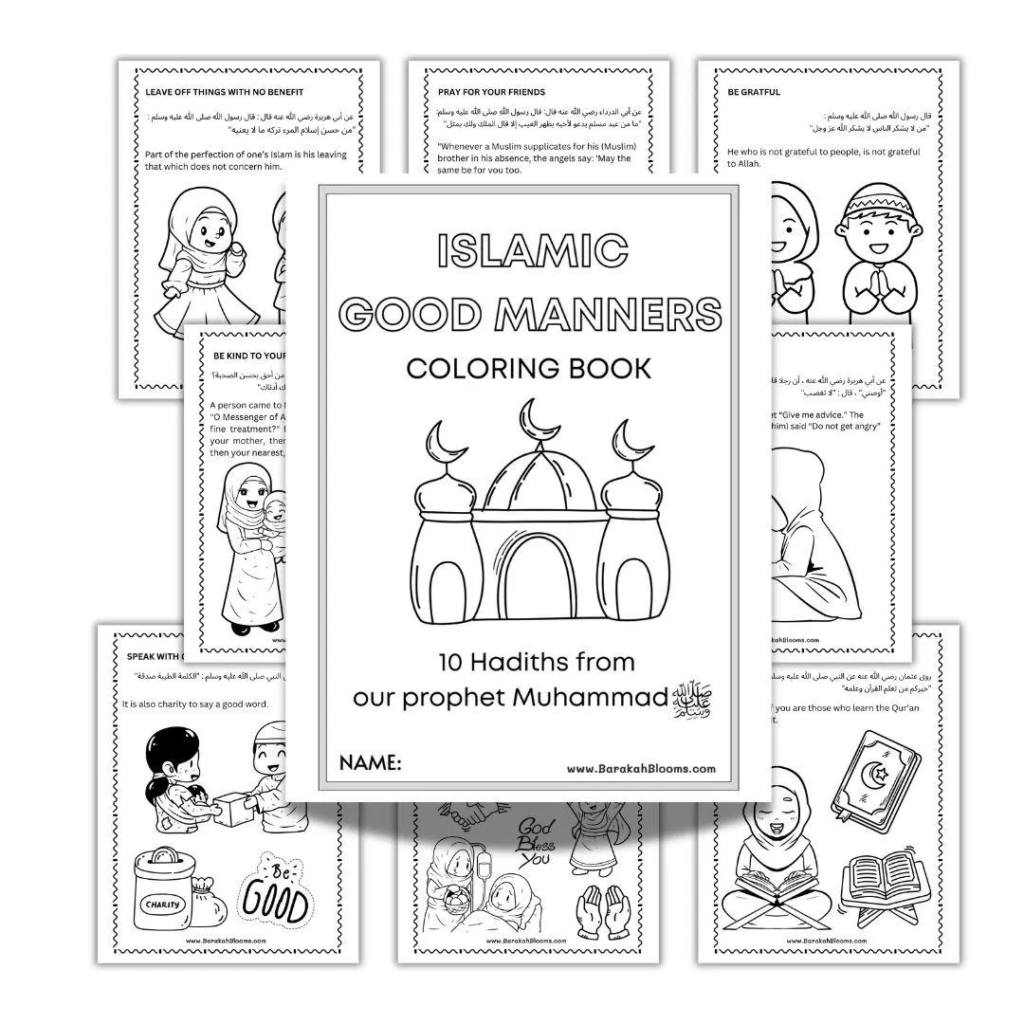
Children read behavior cards, decide whether they’re appropriate or not, and place them on the board. For older kids, they rewrite the correct behaviors in their own handwriting — reinforcing both Islamic values and writing skills. For a structured course on this topic, see the Islamic Manners and Akhlaq for Kids Course Online.
Experience a Real Classroom
Curious about how we teach? This video offers a glimpse into a real class, showcasing our interactive approach, qualified teachers, and child-friendly learning experience.
Fun & Engaging Islamic Classes for Kids
Start your child’s journey today with interactive lessons designed to make learning Islam loved and easy.
Get Your Child a Free Trial3. Prophets & Seerah Worksheets
Stories of the Prophets come alive through:
- Coloring and writing pages about Prophet Nuh’s boat, Prophet Yusuf’s well, or the splitting of the moon.
- Reading comprehension worksheets on the life of Prophet Muhammad ﷺ.
- Prophet Muhammad’s family tree poster activities.
- Sequencing and craft pages tied to key events in Islamic history.
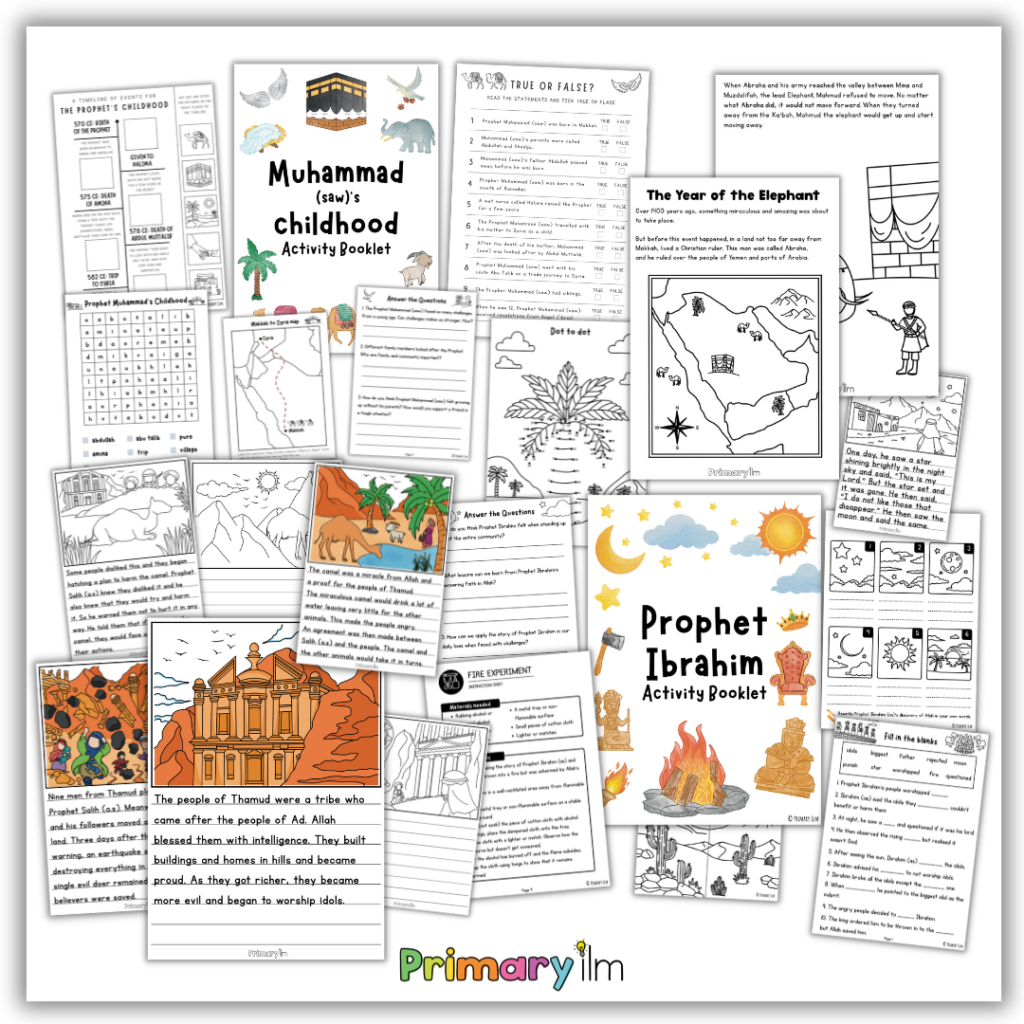
Pair these printables with our Seerah Course for Kids Online for deeper learning, or explore dedicated stories like The Prophet Musa Story for Kids and The Prophet Ibrahim Story for Kids.
4. Arabic Letter Worksheets
Building Arabic literacy from a young age is a gift that lasts a lifetime. Look for:
- Dot-to-dot and coloring sheets for each letter of the alphabet.
- Playdough letter mats for tactile learners.
- Find-the-letter activities for early readers.
- Writing practice sheets with proper letter formation guides.
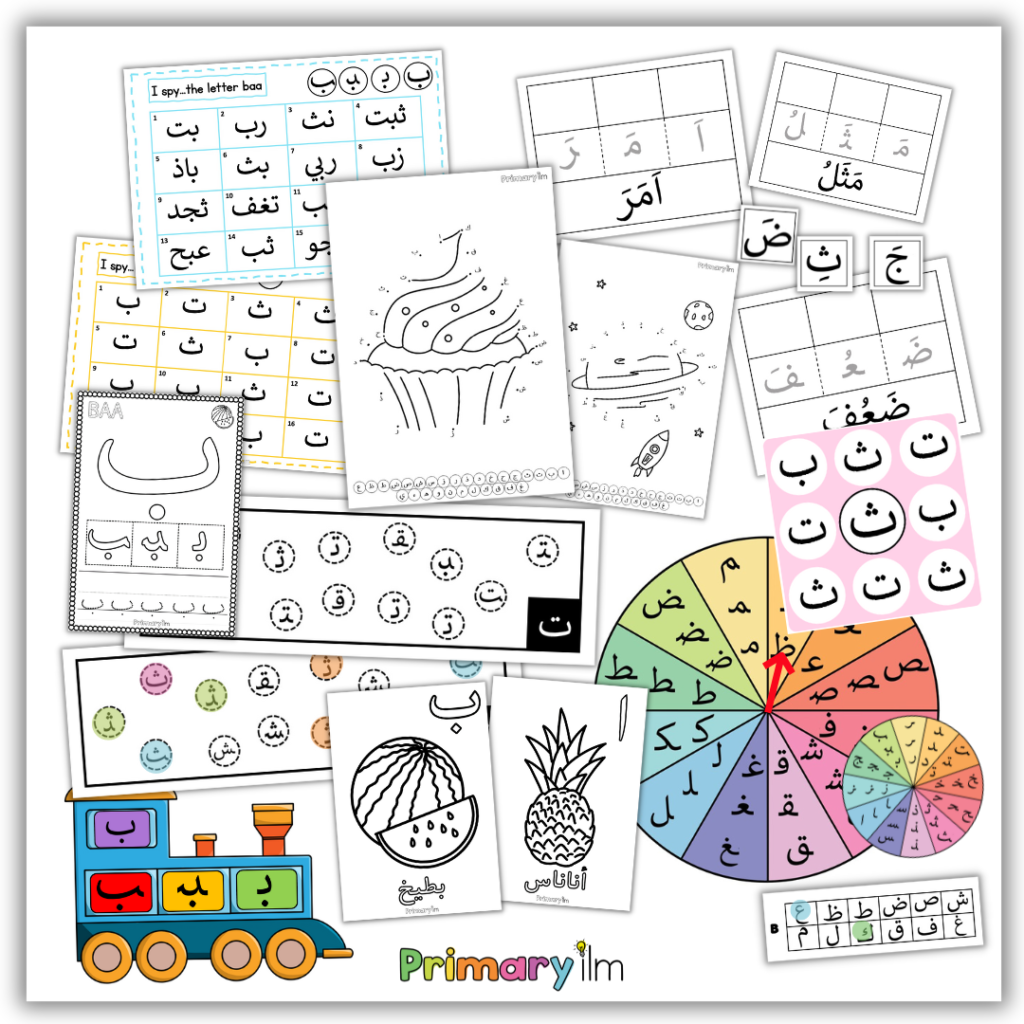
If your child needs more support, the Noorani Qaida Course for Kids Online builds a solid Arabic reading foundation step by step.
5. Daily Duas & Adhkar Printables
Teaching children their daily supplications is one of the greatest investments a parent can make. Printables in this category include:
- Morning and evening adhkar card sets.
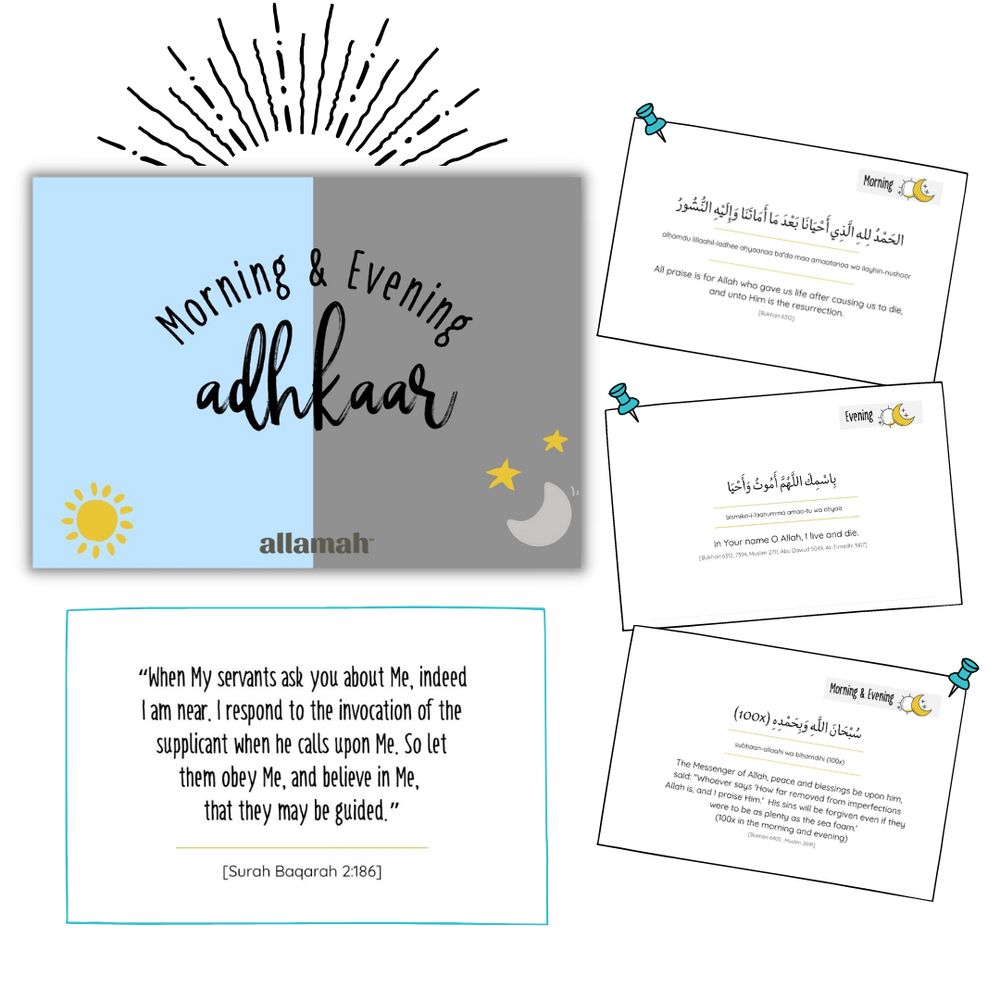
- Daily dua cards for eating, sleeping, entering the home, and more.
- Dua activity books with illustrations.
See our collection of Beautiful Duas for Kids for printable-ready dua resources to use alongside these worksheets.
6. Aqeedah Worksheets for Kids
Age-appropriate belief education is often overlooked in home learning. Look for printables that answer big questions simply:
- “Where is Allah?”
- “Why does Allah allow bad things to happen?”
- “Who are the angels?”
- 99 Names of Allah tracing and card sets.
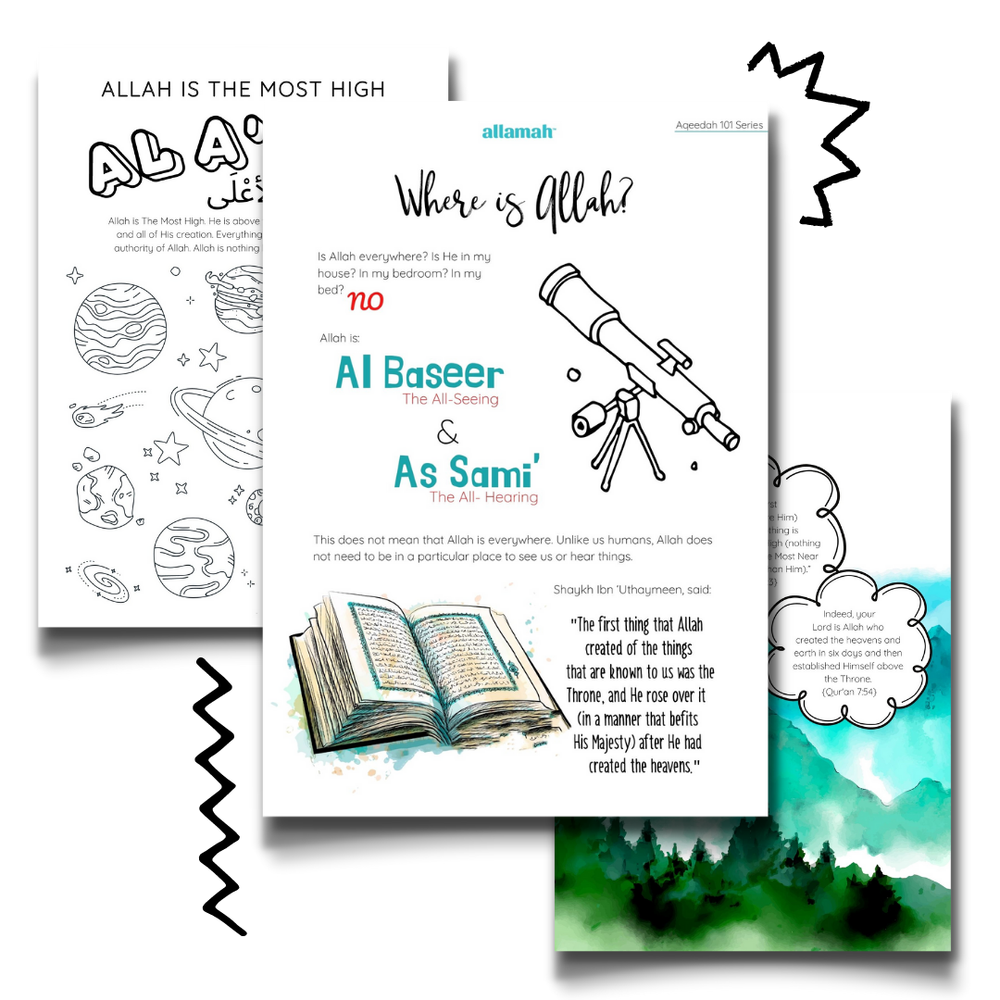
Support this area with the Aqeedah for Kids Course Online for live, teacher-guided belief education.
7. Ramadan, Hajj & Seasonal Printables
Faith-based learning intensifies during special seasons. Top resources include:
- Ramadan activity books and coloring pages.
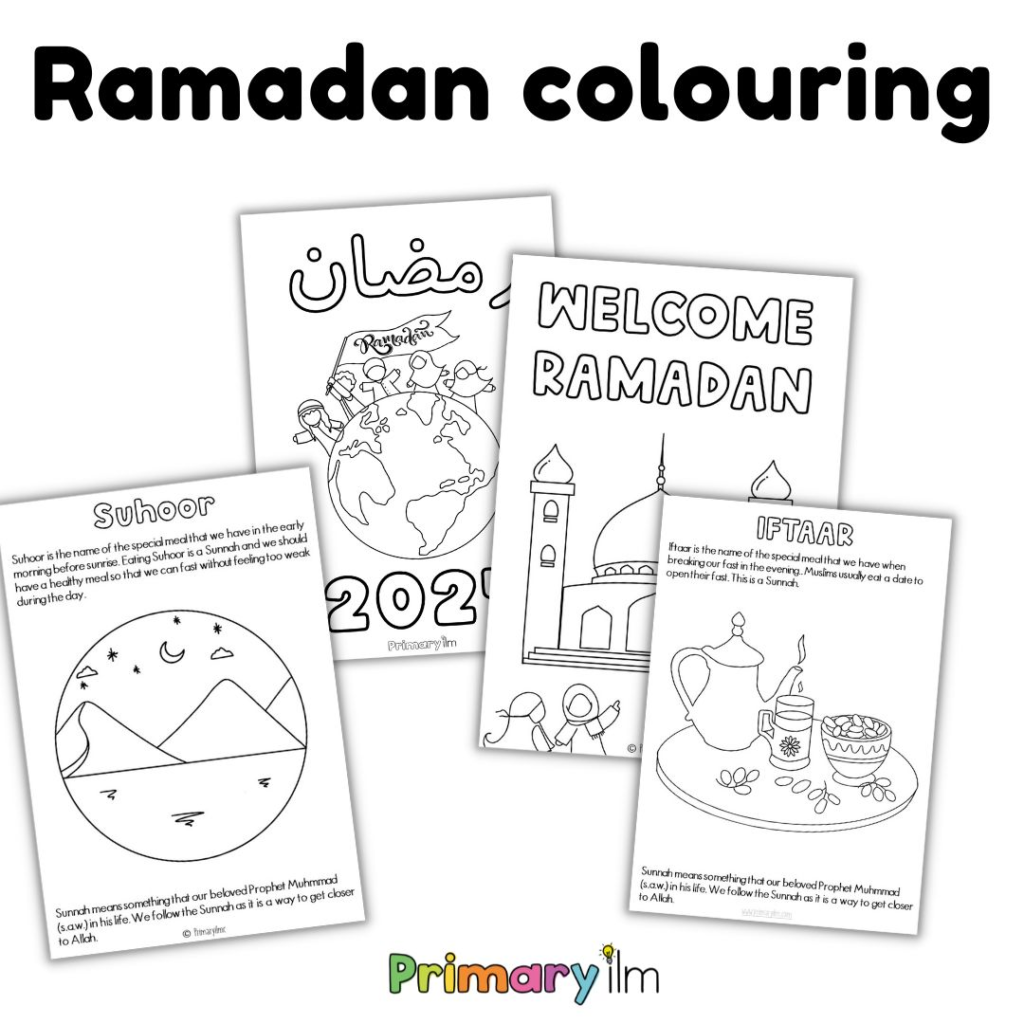
- Hajj and Eid Al-Adha word search and coloring packs.
- Dhul Hijjah virtue posters.
- Ramadan Quran journaling pages.
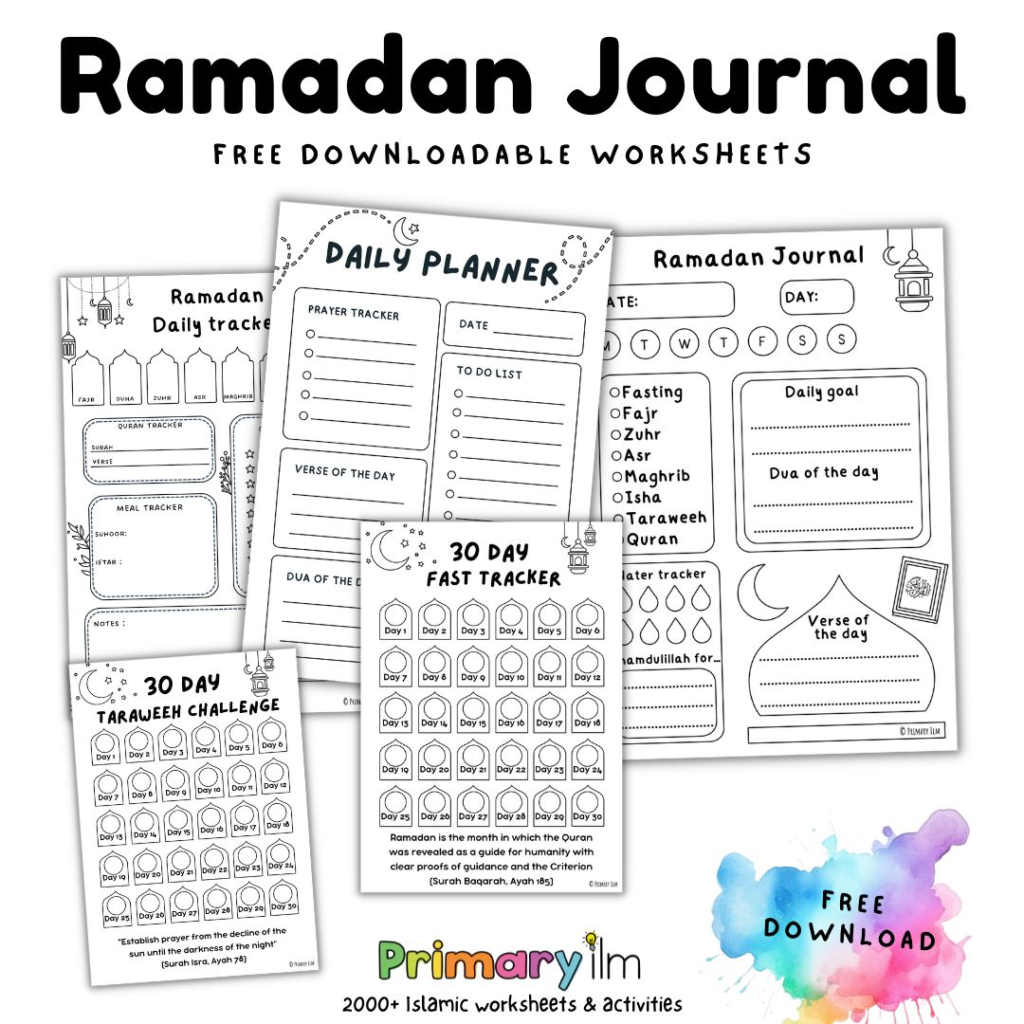
Explore more on this topic in our guides to Ramadan for Kids and Eid ul Adha for Kids.
8. Good Deed Trackers & Habit Charts
Character-building doesn’t happen in one lesson. Printable charts help children:
- Track their daily prayers (Salah chart).
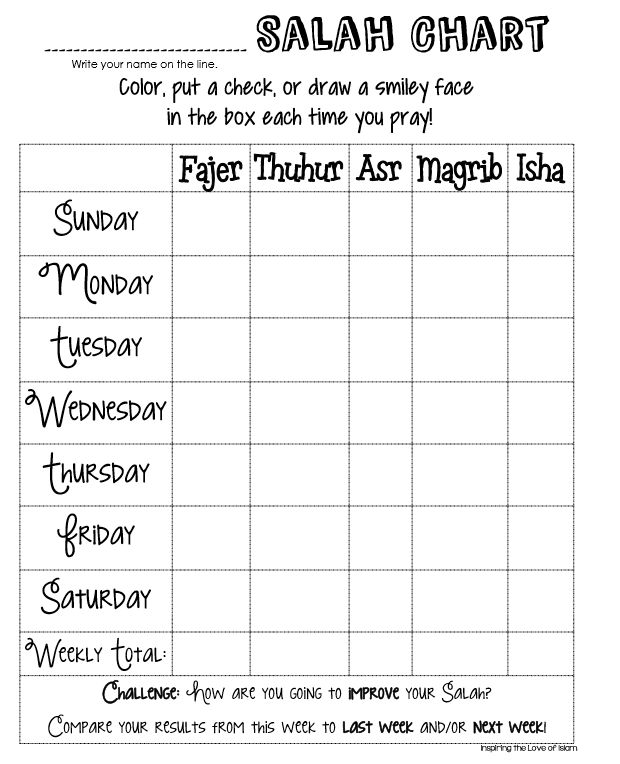
- Record good deeds throughout the week.
- Follow Sunnah routines for eating, sleeping, and interacting with others.
For a full structured course on this topic, see the Good Deeds for Kids Course Online and our guide to Good Deeds for Kids.
How to Use Islamic Worksheets Effectively at Home
Getting the most out of Islamic studies lesson plans for kids comes down to how you use the materials, not just whether you print them. These five practices make the biggest difference.
a. Read and discuss first
Before a child picks up a pencil, read through the worksheet together and talk about what it means. Why is removing harm from the road considered an act of worship? What does it feel like when someone litters near you?
b. Let them lead
Older children (6+) can self-direct through worksheets while parents supervise. Younger children (3–5) benefit from hands-on guidance, especially for cut-and-paste activities.
c. Display the finished work
A completed “Road Manners Board” hung on the bedroom wall becomes a daily reminder. A Juz Amma tracker displayed in the kitchen keeps motivation alive.
d. Connect worksheets to real life
After completing a manners worksheet, take a walk together and practice the behaviors discussed. After a Prophets worksheet, watch an age-appropriate animated story about that Prophet.
e. Mix activity types
Alternate between coloring pages (low effort, high enjoyment), writing worksheets (skill-building), and craft activities (creative and memorable).
Read Also: Eid ul Adha for Kids
The Best Sources of Free Islamic Worksheets for Parents
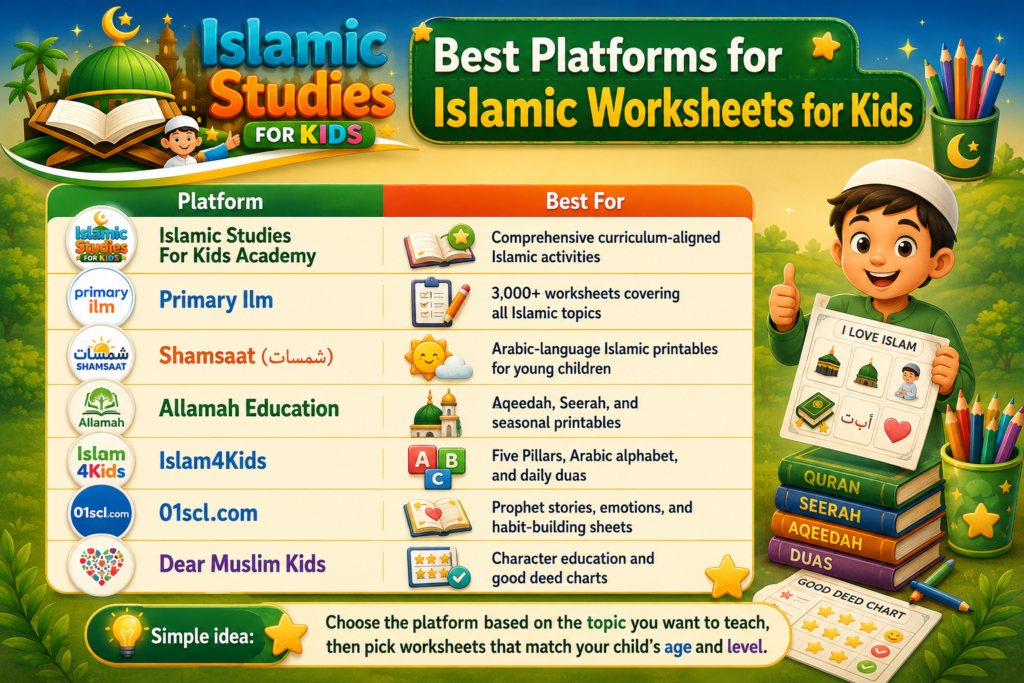
Here is a curated list of trusted platforms where you can find high-quality free printable Islamic worksheets for kids:
| Platform | Best For |
| Islamic Studies For Kids Academy | Comprehensive curriculum-aligned Islamic activities |
| Primary Ilm | 3,000+ worksheets covering all Islamic topics |
| Shamsaat (شمسات) | Arabic-language Islamic printables for young children |
| Allamah Education | Aqeedah, Seerah, and seasonal printables |
| Islam4Kids | Five Pillars, Arabic alphabet, and daily duas |
| 01scl.com | Prophet stories, emotions, and habit-building sheets |
| Dear Muslim Kids | Character education and good deed charts |
Read Also: Islam Facts for Kids
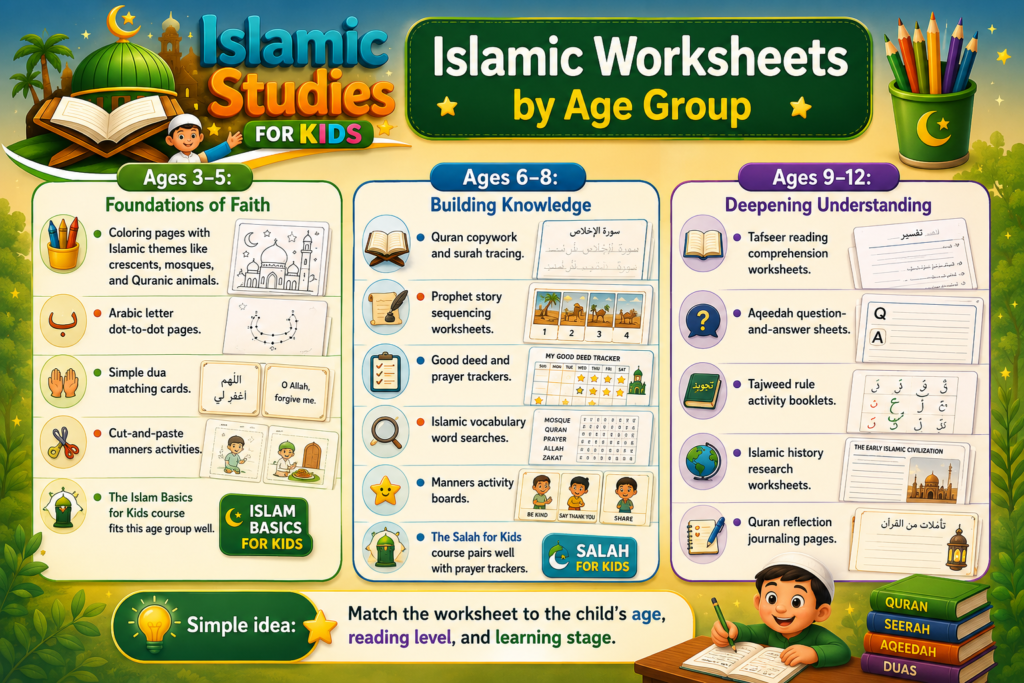
Islamic Worksheets by Age Group
Not every worksheet works for every child. Here’s a quick guide to matching Islamic studies worksheets for children to the right developmental stage.
a. Ages 3–5: Foundations of Faith
At this stage, visual and tactile activities are far more effective than reading or writing. Focus on:
- Simple coloring pages with Islamic themes (crescent, masjid, animals from the Quran).
- Arabic letter dot-to-dot pages.
- Basic dua matching cards (match the dua to the action).
- Cut-and-paste manners activities with simple visuals.
The Islam Basics for Kids Course Online is built specifically for this age group and pairs perfectly with these printables.
b. Ages 6–8: Building Knowledge
Children at this age can read, write, and follow multi-step instructions. Ideal worksheets include:
- Quran copywork and surah tracing.
- Prophet story sequencing worksheets.
- Good deed and prayer trackers.
- Word searches with Islamic vocabulary.
- Manners activity boards (sort correct/incorrect behaviors).
The Salah (Prayer) for Kids Course complements prayer tracker printables particularly well at this stage.
c. Ages 9–12: Deepening Understanding
Older children can engage with comprehension, reflection, and research-style activities:
- Tafseer reading comprehension worksheets.
- Aqeedah question-and-answer sheets.
- Tajweed rule activity booklets.
- Research-style worksheets on Islamic History for Kids.
- Journaling pages for Quran reflection.
The Intensive Islamic Course for Kids Online is an excellent next step for children in this age group who are ready for a more comprehensive Islamic education. You might also explore the Islamic Identity Course for Kids Online to help older children build a confident, grounded Islamic identity.
Read Also: How to Teach My Child Islam Online?
A Sample Islamic Studies Lesson Plan Using Printables
Here is a simple 45-minute lesson you can run at home or in a small group setting using free printables.
Topic: Road Manners in Islam (آداب الطريق) Age Group: 5–8 years Materials: Printed manners cards, scissors, glue, a poster board
Lesson Flow:
- (5 min) Opening dua — recite together and explain its meaning.
- (10 min) Story time — tell a short story about a child who finds something harmful on the road and removes it, explaining this as a form of sadaqah.
- (15 min) Worksheet activity — children sort behavior cards into “correct” and “incorrect” piles, then glue the correct ones onto the manners board.
- (10 min) Discussion — “Which behavior was your favorite? Why?” and “Can you think of a time you did something kind in public?”
- (5 min) Closing — children share one good behavior they’ll practice this week.
This kind of Islamic studies lesson plan for kids is simple, memorable, and rooted in authentic Islamic values. For more structured Islamic Activities for Kids ideas, visit our resource hub.
Watch a Sample Lesson from Our Academy
Get a firsthand look at how our students learn Islamic values, Quran, and essential knowledge through engaging and interactive online classes. See why families trust Islamic Studies for Kids Academy.
Fun & Engaging Islamic Classes for Kids
Start your child’s journey today with interactive lessons designed to make learning Islam loved and easy.
Get Your Child a Free TrialTake Your Child’s Islamic Learning Further with Islamic Studies For Kids Academy
Printable worksheets are a powerful starting point — but lasting Islamic education happens when children learn from qualified teachers who know how to make faith come alive.
At Islamic Studies For Kids Academy, our live online courses give children the structured, teacher-guided learning that printables alone can’t provide. Our instructors are certified Islamic educators experienced in teaching children from ages 3 to 12, across all levels and backgrounds.
Whether your child is just beginning with:
- The 5 Pillars of Islam for Kids Course
- Memorizing their first surahs with the Quran Memorization Course for Kids
- Deepening their understanding through the Fiqh Course for Kids Online
….. we have a course that fits exactly where they are right now. Flexible scheduling. 1-on-1 and group options.
Our Islamic Studies Courses Include:
- Islamic Studies for Kids
- Islam Basics for Kids (Beginners)
- 5 Pillars of Islam for Kids
- 6 Pillars of Iman (Faith) for Kids
- Salah (Prayer) for Kids
- Wudu for Kids
- Dua for Kids
- Ramadan for Kids
- Zakat & Sadaqah for Kids
- Hajj for Kids
- Aqeedah (Islamic Belief) for Kids
- Islamic Manners & Akhlaq for Kids
- Good Deeds for Kids
- Cleanliness (Taharah) in Islam for Kids
- Angels in Islam for Kids
- Islamic History for Kids
- Seerah (Prophet’s Life) for Kids
- Prophets Stories for Kids
- Islamic Stories & Morals for Kids
- Fiqh for Kids (Islamic Jurisprudence Basics)
- Hadith for Kids
- Quran Tafseer Course for Kids
- Islamic Holidays & Events for Kids
- Islamic Identity for Kids
- Intensive Islamic Course for Kids
Enroll today and give your child the knowledge, values, and confidence to grow as a practicing Muslim with a strong connection to Allah and His teachings.
Start your child’s free trial today at islamicstudiesforkids.com/free-trial/
Conclusion
The best Islamic worksheets for kids aren’t the ones with the fanciest design — they’re the ones that spark a question, start a conversation, or teach a value that a child carries with them for life.
Whether your child is learning their first Arabic letters, memorizing their first surah, or understanding what it means to be kind in public spaces, printable Islamic activities give you a simple, accessible way to make faith a living, breathing part of everyday family life.
And when they’re ready for more — when you want consistency, qualified teaching, and a curriculum that builds week by week — Islamic Studies For Kids Academy is here to take that next step with you.
Explore the full collection and all available courses at islamicstudiesforkids.com
Frequently Asked Questions About Islamic Worksheets for Kids
Many parents come to us with the same questions before getting started with printable Islamic learning. Below you’ll find honest, helpful answers to the most common ones — so you can dive in with confidence.
Are free Islamic worksheets actually good quality, or do I need to pay for better ones?
Many free resources are genuinely excellent. Platforms like Primary Ilm, Allamah Education, and Islamic Studies For Kids Academy offer carefully designed, curriculum-aligned printables at no cost. The key is knowing where to look.
Paid memberships (like Shamsaat’s annual subscription) typically offer editable files and larger bundles, which is useful for teachers and homeschooling parents who need volume. For most families, free printables are more than enough to get started.
What age are Islamic worksheets suitable for?
Printable Islamic activities are available for children as young as 2–3 years old (simple coloring and matching) all the way through age 12 and beyond. The best platforms organize their resources by age group, so you can filter for exactly what your child needs.
As a general rule: ages 3–5 benefit most from visual and hands-on activities, while ages 6–12 can engage with reading, writing, and comprehension-based worksheets.
How do I teach Islamic values without making it feel like homework?
The secret is variety and connection to real life. Rotate between different activity types — coloring one day, a craft the next, a short worksheet after that. Always tie the worksheet to a real conversation or experience.
A child who completes a worksheet about removing harm from the road and then does it on a walk with their parent will remember that lesson far longer than one who just filled in boxes. For more ideas, see our guide on How to Teach Islam to Kids.
Can I use these worksheets in a madrasa or Islamic school classroom?
Absolutely. Most free printable Islamic worksheets for kids are designed to be versatile enough for home and classroom use. Activities like manners boards, prophet story sequencing, and Quran trackers work beautifully in group settings.
For classrooms, look for resources that include group discussion prompts or collaborative craft components, which turn individual worksheets into shared learning experiences.
My child struggles with Arabic. Are there Islamic worksheets that help with Arabic literacy?
Yes — and starting early makes a huge difference. Look specifically for Arabic letter worksheets that use multi-sensory approaches: tracing sheets, dot-to-dot pages, playdough mats, and “find the letter” activities.
Platforms like Primary Ilm and Shamsaat have strong Arabic literacy sections. Pair these with the Noorani Qaida Course for Kids Online for structured, teacher-guided support, and short daily practice of 5–10 minutes.
How often should my child use Islamic worksheets?
There’s no magic number — consistency matters more than quantity. For most families, 2–3 focused Islamic activities per week is sustainable and effective.
One Quran-based activity, one manners or character activity, and one prophets or aqeedah activity per week gives children a well-rounded Islamic education without overwhelming them. Quality, reflection, and conversation will always outperform racing through a stack of printed pages.
Are there Islamic worksheets available in Arabic?
Yes. Shamsaat (شمسات) is the leading platform for high-quality Arabic-language Islamic printables, specifically designed for young Arabic-speaking children and covering topics from road manners to Quran activities and Islamic etiquette.
Many of their materials are also available in editable formats for teachers who want to customize the content.
What topics should I prioritize for a 5-year-old just starting Islamic education?
Start with the foundations that connect to daily life: basic duas (for eating, sleeping, entering the home), the concept of Allah as Creator, the Prophet Muhammad ﷺ as a role model, and simple Islamic manners.
Worksheets that use familiar, concrete scenarios — like how to behave in public, how to treat others, and what we say before meals — are ideal for this age.


Leave a Reply