 Islamic Studies
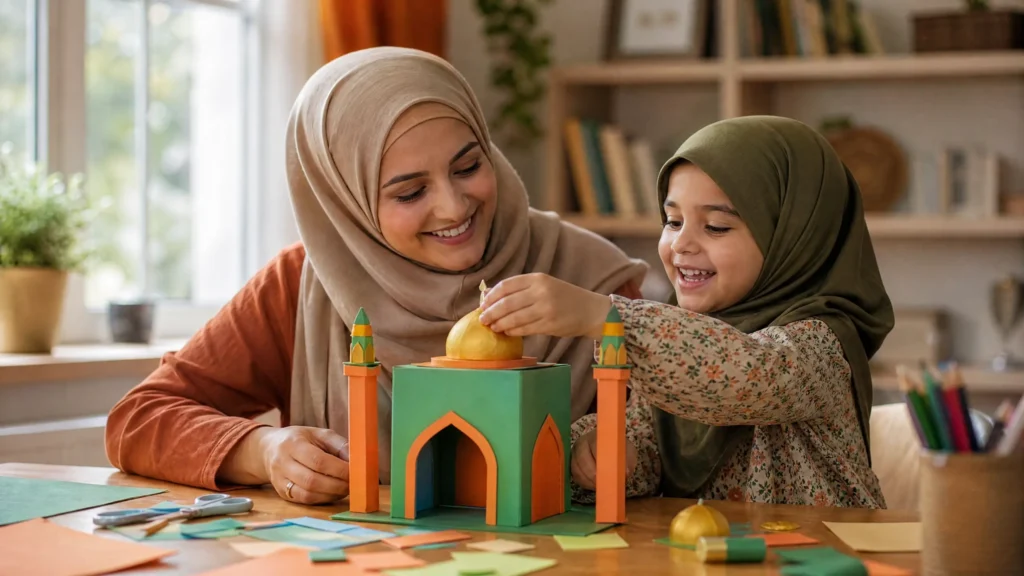
Islamic activities for kids are the most natural way to raise children who love their deen — not because they were told to, but because Islam has always felt joyful, creative, and alive in their home. Every craft, game, and daily routine that connects a child to their faith leaves a mark far deeper than any lecture ever could.
This guide gives parents and educators 20 practical, engaging Islamic activities for kids covering Quran, worship, character, Arabic, and celebration — organized by type, with age-specific tips and a bridge into every section.
What You’ll Learn in This Article
- Fun Islamic activities for kids that work at home with no special preparation.
- Islamic crafts for kids that teach worship, values, and Quranic identity.
- Islamic games for kids that make learning feel like play.
- Ramadan activities and Eid activities for kids tied to the Islamic calendar.
- Quran activities and Islamic worksheets for kids to use daily.
- How structured Islamic classes deepen what home activities begin.
Why Play Is the Best Teacher for Islamic Activities for Kids?
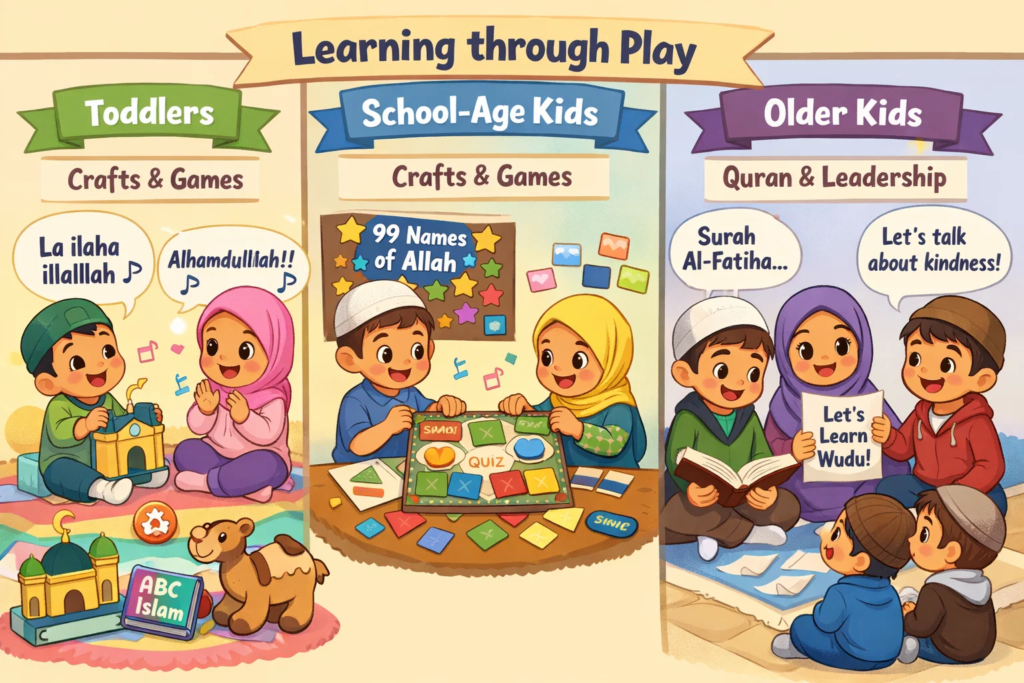
Islamic activities for kids are interactive, hands-on ways to teach prophetic values, Quran memorization, and daily worship — through:
- Sensory games.
- Illustrated stories.
- Creative projects that match children’s developmental stages.
All of these make learning a natural part of everyday life.
Experience Over Instruction
Children absorb what they experience far more than what they are told. A child who:
- Decorates their own prayer mat.
- Drops coins into a sadaqah jar.
- Acts out a Prophet’s story.
…is building a lived relationship with Islam — not just memorizing information about it.
The Prophet Muhammad ﷺ modeled this approach directly. He was known for his playfulness with children — running with his grandson Husayn (RA), making him laugh, and showing that lightness and joy are part of a healthy Muslim life.
The Mistake Most Parents Make
The biggest mistake in Islamic home education is trying to do too much at once. One activity done consistently builds a stronger foundation than ten activities attempted once and abandoned:
- A nightly Prophet story.
- A weekly sadaqah moment.
Start with one. Make it a habit. Then add the next.
Experience a Real Classroom
Curious about how we teach? This video offers a glimpse into a real class, showcasing our interactive approach, qualified teachers, and child-friendly learning experience.
Fun & Engaging Islamic Classes for Kids
Start your child’s journey today with interactive lessons designed to make learning Islam loved and easy.
Get Your Child a Free TrialHands On Islamic Crafts for Kids That Make Faith Stick
Islamic crafts for kids connect Islamic symbols, worship rituals, and Arabic letters to physical creation — giving children spatial memory for concepts that worksheets alone cannot reach. When a child builds, paints, or decorates something tied to their faith, the lesson lives in their hands, not just their head.
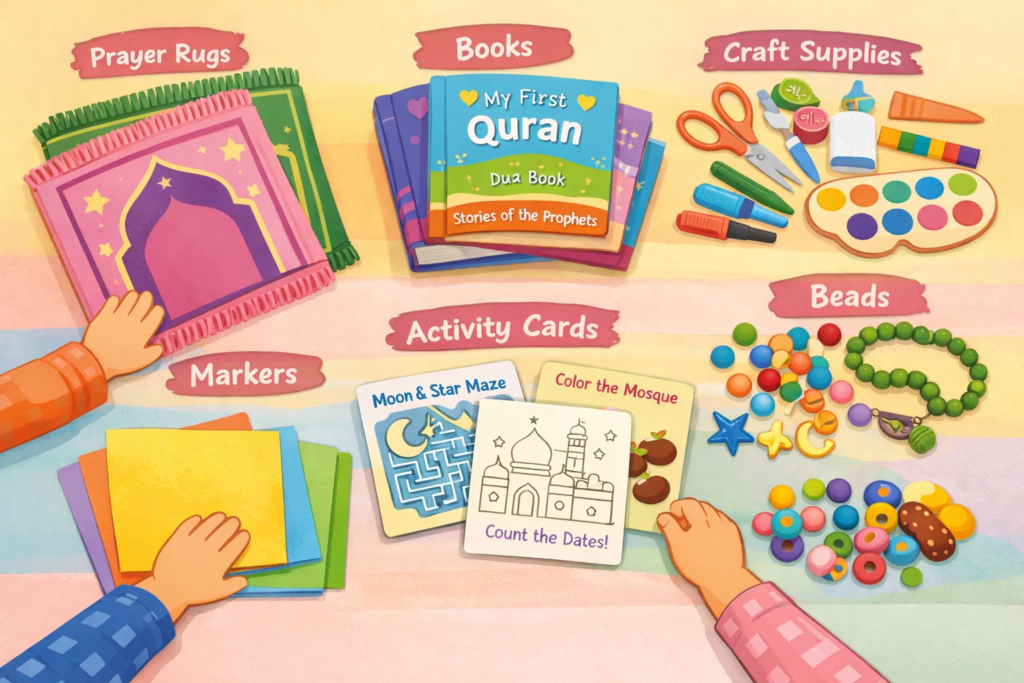
The crafts below require nothing more than household supplies: paper, markers, cotton balls, empty containers, and fabric. Each one opens a natural conversation about Islam without a single formal lecture.
Decorate a Personal Prayer Mat
Give your child a plain cotton canvas and fabric markers. Let them draw geometric patterns, their name in Arabic, or floral Islamic designs on their own prayer mat.
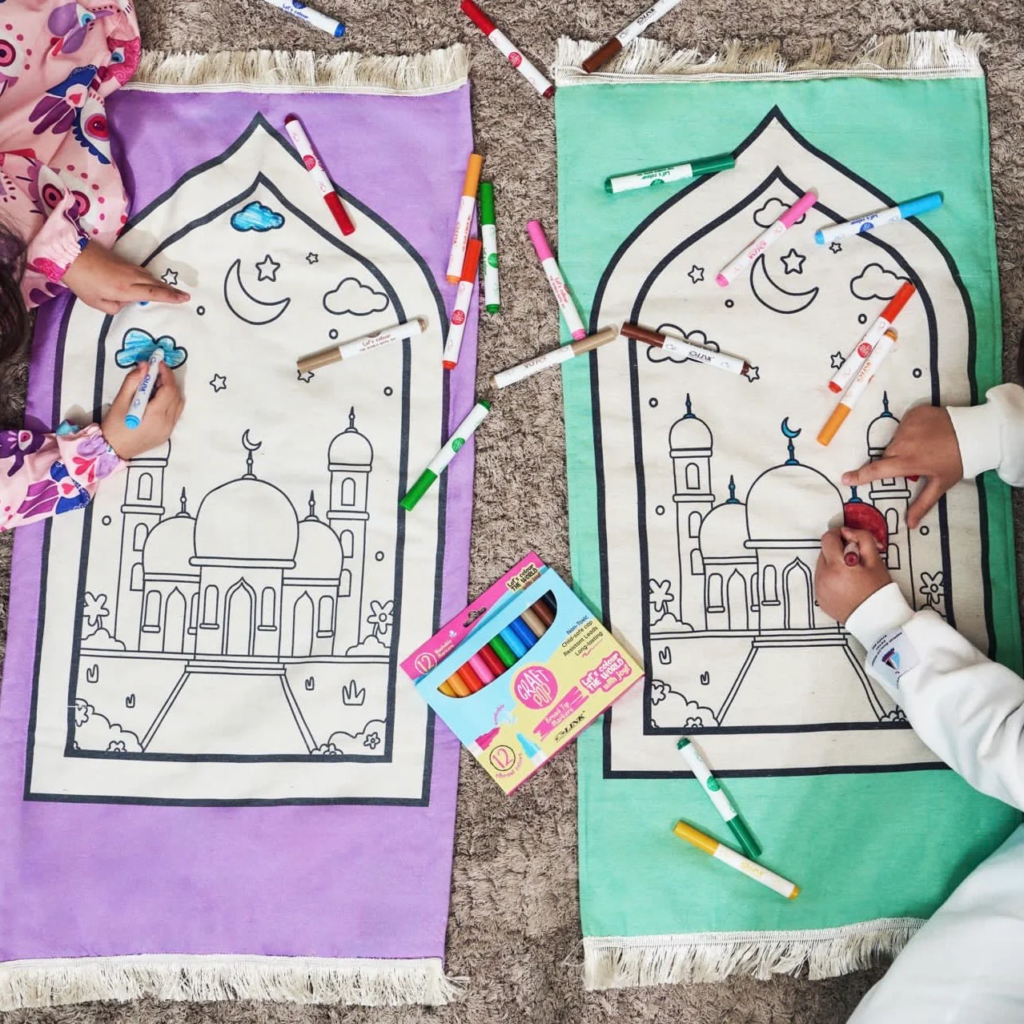
When they pray on something they made themselves, Salah becomes personal — not just obligatory. This works for ages 5–10; younger children can use stickers, older children can attempt simple calligraphy borders.
Build the Five Pillars Tower
Label five paper cups or building blocks with the Five Pillars:
- Shahadah
- Salah
- Zakah
- Sawm
- Hajj.
Stack them into a tower, then discuss what each one means as you build. Ask: “What happens if we remove one pillar?”
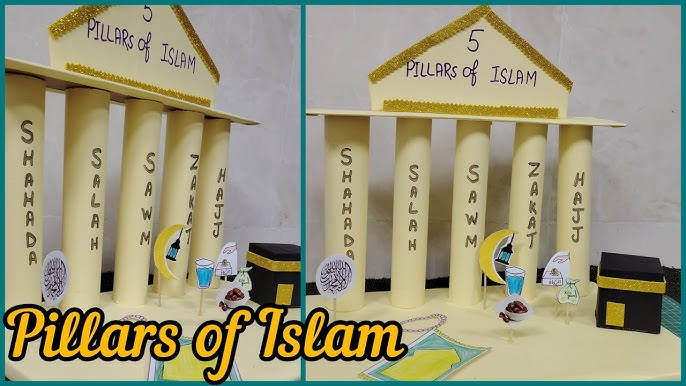
Ages 4–9 love the physical building; ages 10–12 can add a written description on each cup explaining the pillar in their own words.
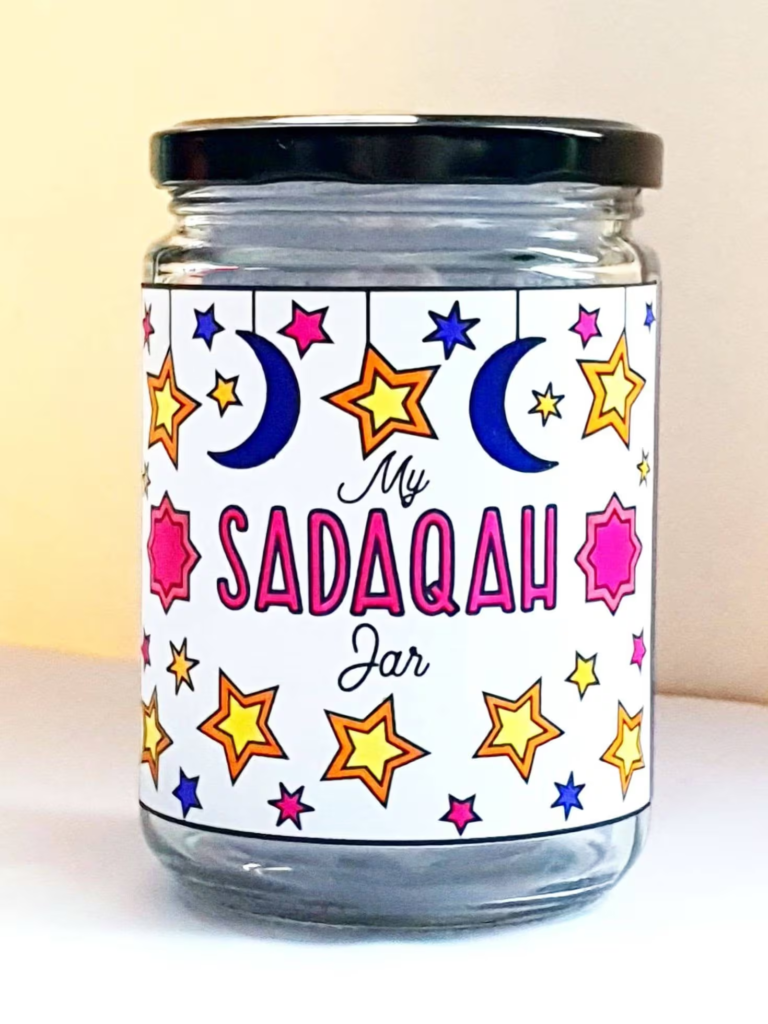
Sadaqah Jar
Decorate an empty jar or tin together using paint, stickers, or ribbon. Set a family rule:
- A portion of any money received
- Pocket money
- Eid gifts
- Weekly rewards
….goes into the jar. When it is full, choose a cause together and donate as a family, letting the child make the final decision on the recipient when age-appropriate.
Mini Handmade Quran Book
Fold paper into a small booklet. Children write short surahs they already know in their best handwriting, then decorate the borders with Islamic geometric patterns or colored illumination.
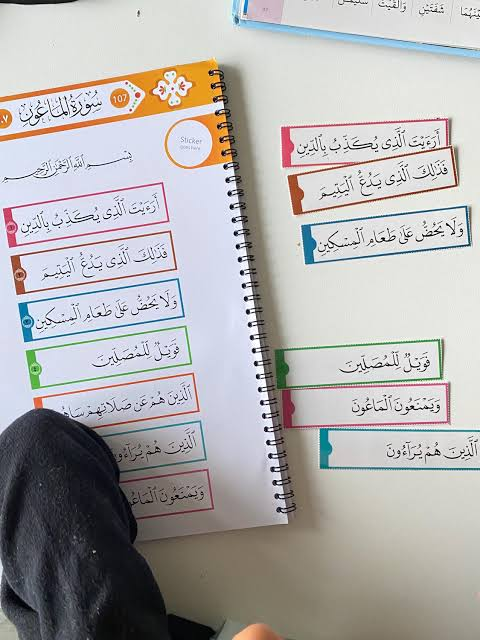
Completing even Surah Al-Fatiha in their own hand gives children a pride in the Quran that printed copies alone do not generate.
A Quick Reference Table of Islamic Crafts by Age
The table below maps craft ideas to each stage so you can pick the right activity:
| Craft | Best Age | Islamic Concept | Time Needed |
| Decorate a prayer mat | 5–10 | Salah, personal worship space | 30–45 minutes |
| Five Pillars tower | 4–9 | Core beliefs of Islam | 15–20 minutes |
| Sadaqah jar | 4–15 | Generosity, Zakah | 15 minutes setup |
| Mini handmade Quran book | 7–12 | Quran connection, Arabic writing | 30–60 minutes |
| Arabic letter collage | 5–9 | Arabic alphabet, letter recognition | 20–30 minutes |
| My name in Arabic art | 6–12 | Arabic identity, pride in language | 20–30 minutes |
| Cotton-ball Qurbani sheep | 4–8 | Eid ul-Adha, sacrifice, Prophet Ibrahim (AS) | 15–20 minutes |
Fun Islamic Activities for Kids Through Games That Make Learning Irresistible
Children in a game state are focused, motivated, and retaining information without resistance. The Prophet ﷺ explicitly encouraged healthy recreation — and structured Islamic games are exactly that: halal, purposeful, and deeply effective for building Islamic knowledge.
No special equipment needed. Most of the games below use only paper cards, a timer, and a willing family. Each one is ready in under five minutes and runs for as long as children stay engaged.
The Quran Word Hunt
Pick a short surah your child already knows — Surah Al-Ikhlas or Al-Kawthar work perfectly. Write it out and ask children to:
- Circle every appearance of the word “Allah”.
- Underline every letter “ب”.
This sharpens attention to the Quranic text and turns recitation time into active engagement rather than passive repetition.
Islamic Charades and Prophet Story Trivia
Write the names of Prophets, acts of worship, or Companions on small cards. Children take turns either:
- Acting out the card without speaking.
- Describing it without saying the word itself.
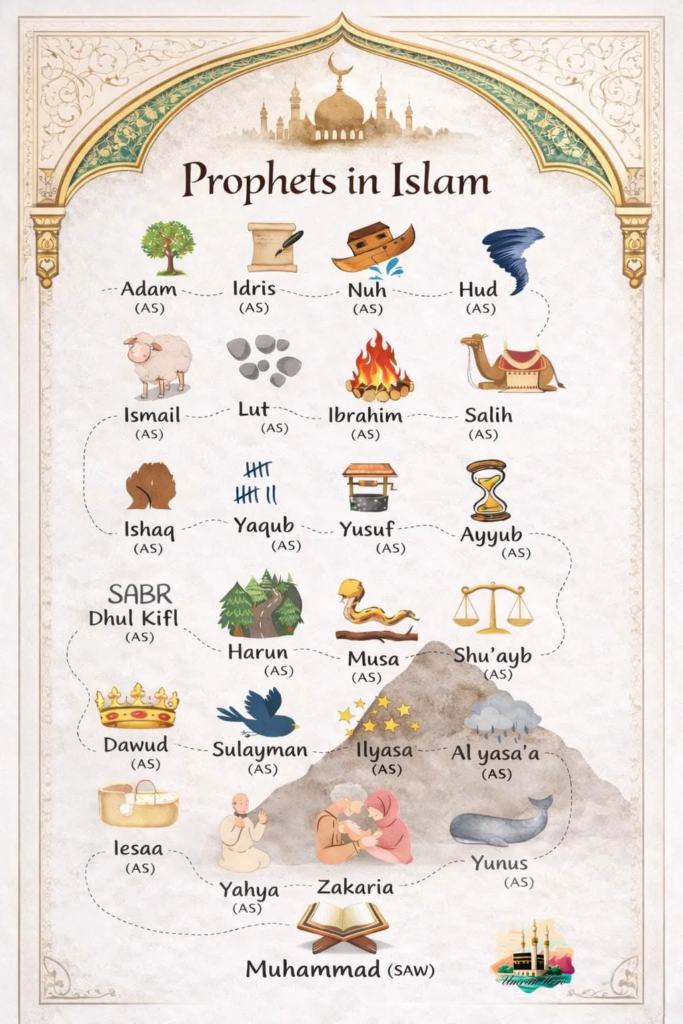
A question-and-answer quiz format works equally well for mixed ages and keeps everyone at the table competing cheerfully.
Hadith Fill-in-the-Game
Read a short hadith aloud and pause before a key word:
“The strong believer is better and more beloved to Allah than the _____ believer.”
Children call out the missing word. One hadith. Five minutes. Zero materials — and deep retention through the gap-fill method that language teachers have relied on for decades.
Sample Question Cards for an Islamic Quiz for Kids
Every quiz needs a starting point — here are several cards ready to use tonight:
| Question | Answer | Age Level |
| Do you know who served as Islam’s first Caliph following the death of the Prophet ﷺ? | Prophet Adam (AS) | Ages 5–7 |
| How many times do we pray daily? | Five times | Ages 5–7 |
| What are the Five Pillars of Islam? | Shahadah, Salah, Zakah, Sawm, Hajj | Ages 8–10 |
| Which chapter of the Quran is often referred to as its “heart”? | Surah Ya-Sin | Ages 10–12 |
| What does “Al-Amin” mean, and who was called this? | The Trustworthy; the Prophet ﷺ | Ages 10–12 |
| Who was the first Caliph after the Prophet ﷺ? | Abu Bakr As-Siddiq (RA) | Ages 12–15 |
Masjid Map Project
Children design a mini mosque layout on paper or cardboard and label the key areas:
- Mihrab (prayer niche).
- Minbar (pulpit).
- Wudu area.
- Main prayer hall.
This introduces mosque vocabulary, etiquette, and the concept of sacred space — all through the tactile pleasure of designing something themselves. Ages 8–12 find this particularly engaging when they can add architectural details like domes and minarets.
Making the Holiest Month Come Alive Through Ramadan Activities for Kids
The goal is not to pressure children into adult Ramadan practice. It is to give them joyful entry points that make Ramadan feel like theirs — something they actively participate in, anticipate, and remember for years.
The activities below work across ages 4–15 with simple adjustments in complexity. All can be prepared in an afternoon using basic supplies.
Ramadan Countdown Calendar
Create a 30-pocket calendar from cardboard envelopes or numbered small boxes. Fill each pocket with:
- A printed dua.
- A kind-deed challenge.
- A Ramadan fact suited to your child’s age.
- A small treat.
The key is making each pocket spiritually meaningful, not just sweet. A day-15 card might read: “Today’s challenge — do one kind thing for someone without telling anyone about it.”
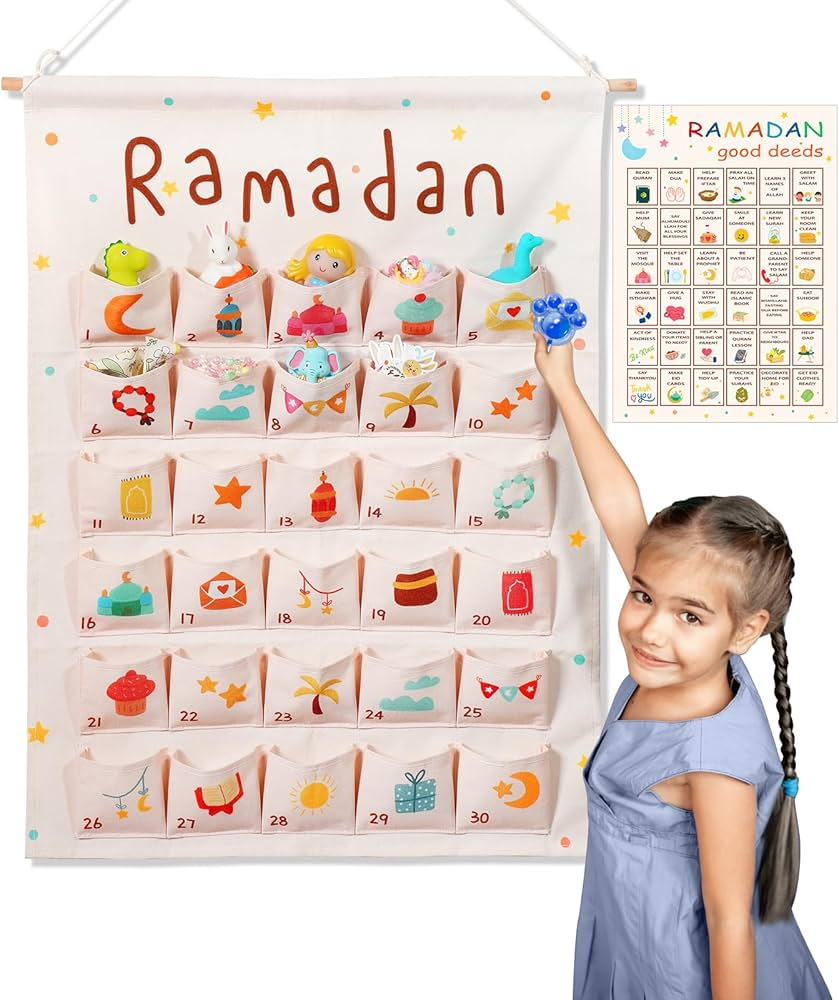
By Eid, the calendar has quietly delivered a 30-day character-building program through nothing more than small daily surprises.
Ramadan Trackers and Islamic Worksheets
Printed trackers make Ramadan progress visible — which is critical for keeping children engaged across a full month.
| Worksheet Type | What It Tracks | Best Age |
| Fasting tracker | Days fasted or supported | Ages 7–15 |
| Daily dua collection page | One new personal dua per day | Ages 6–12 |
| Surah completion chart | Surahs recited or memorized | Ages 6–15 |
| Kindness challenge chart | One good deed recorded daily | Ages 5–12 |
| Nightly Tarawih reflection | One sentence on what they felt | Ages 10–15 |
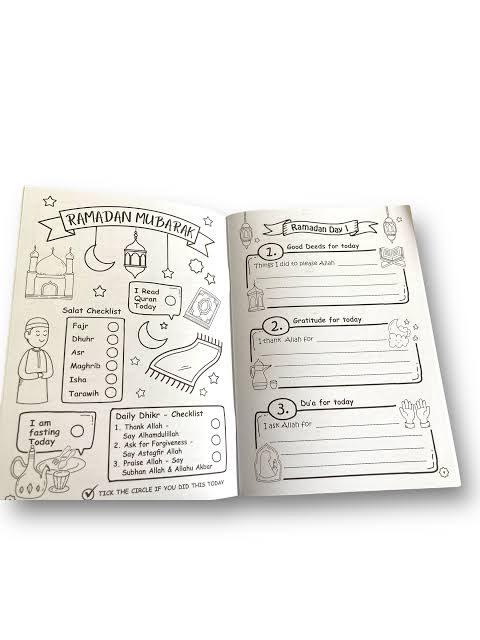
Gratitude Journal for Ramadan
Each evening during Ramadan, children write or draw one thing they are grateful to Allah for that day.
By Eid, they hold a 30-page collection of their own reflections — a keepsake that shows them, in their own words, how much they felt and grew through the month.
Building Joyful Islamic Memories Through Eid Activities for Kids
Children who associate Islam with creativity, laughter, and family celebration grow into teenagers and adults who return to that faith willingly — not ones who drift away the moment external pressure lifts. Every Eid craft and family tradition plants a root that holds.
Eid Decoration Making at Home
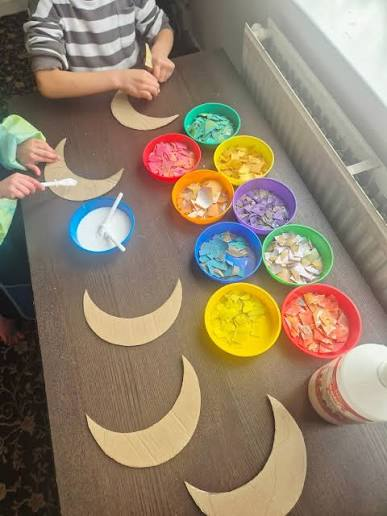
Start one to two weeks before Eid and assign by age:
- Ages 4–7 — paint crescent moons and stars with watercolors.
- Ages 8–12 — create handmade Eid greeting cards for relatives and neighbors.
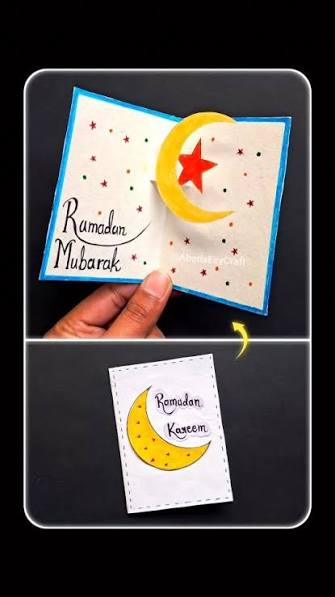
- Ages 13–15 — plan and lead the entire family decoration project, designing and assembling banners and centerpieces independently.
Giving teenagers ownership of the project builds responsibility alongside celebration.
Eid ul-Adha Qurbani Craft
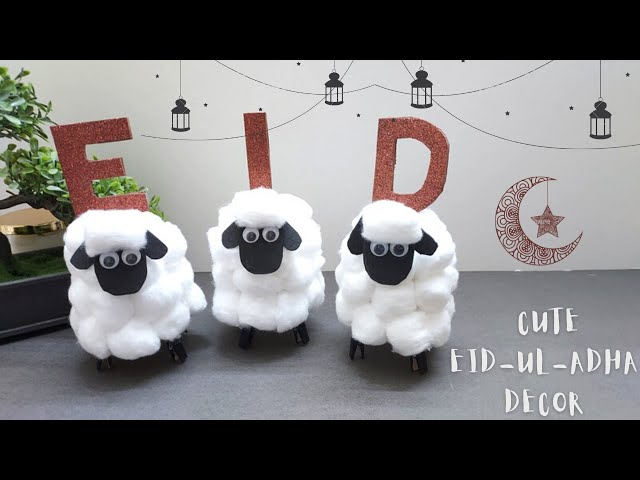
A cotton-ball sheep craft — using cotton balls, googly eyes, construction paper, and glue — teaches younger children about Qurbani in an age-appropriate, hands-on way. Making the craft opens a natural conversation about:
- Prophet Ibrahim (AS).
- The meaning of sacrifice.
- Why Muslims around the world observe Eid ul-Adha together.
Eid Gift-Giving Challenge
Instead of only receiving Eid gifts, each child chooses one person outside the immediate family to give a handmade card or small gift to — a neighbor, a school friend, or someone who might feel lonely on Eid.
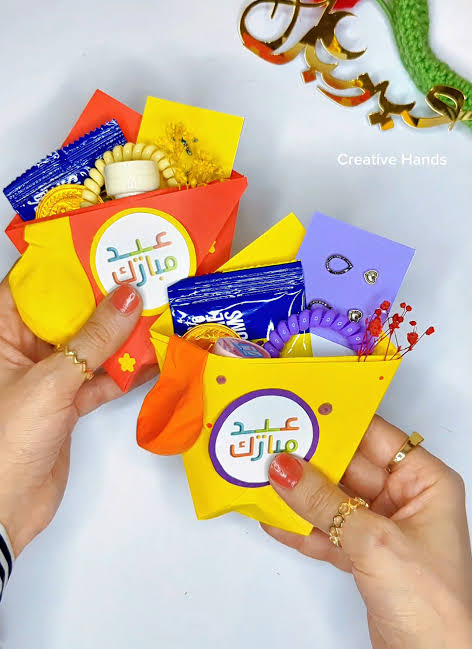
This practice teaches children that Eid joy is meant to move outward, not stay contained within the household.
Daily Quran Habits for Kids That Build a Deep Connection
The most common mistake parents make with Quran at home is treating it as a separate subject with its own dedicated session.
Children who hear Quran during breakfast, review a surah during a car ride, and add a sticker to their revision chart after Maghrib are building a Quran relationship across their whole day — and that relationship lasts.
Quran Listening Station
Play Quran recitation softly during:
- Breakfast
- Car rides
- Quiet play
Sheikh Mishary Rashid Al-Afasy is particularly accessible for young ears. For ages 8 and above, occasionally pause and ask: “Which surah do you recognize?” The approach fits seamlessly into daily life, helping children learn naturally while developing stronger listening skills.
Surah Reflection Tracker
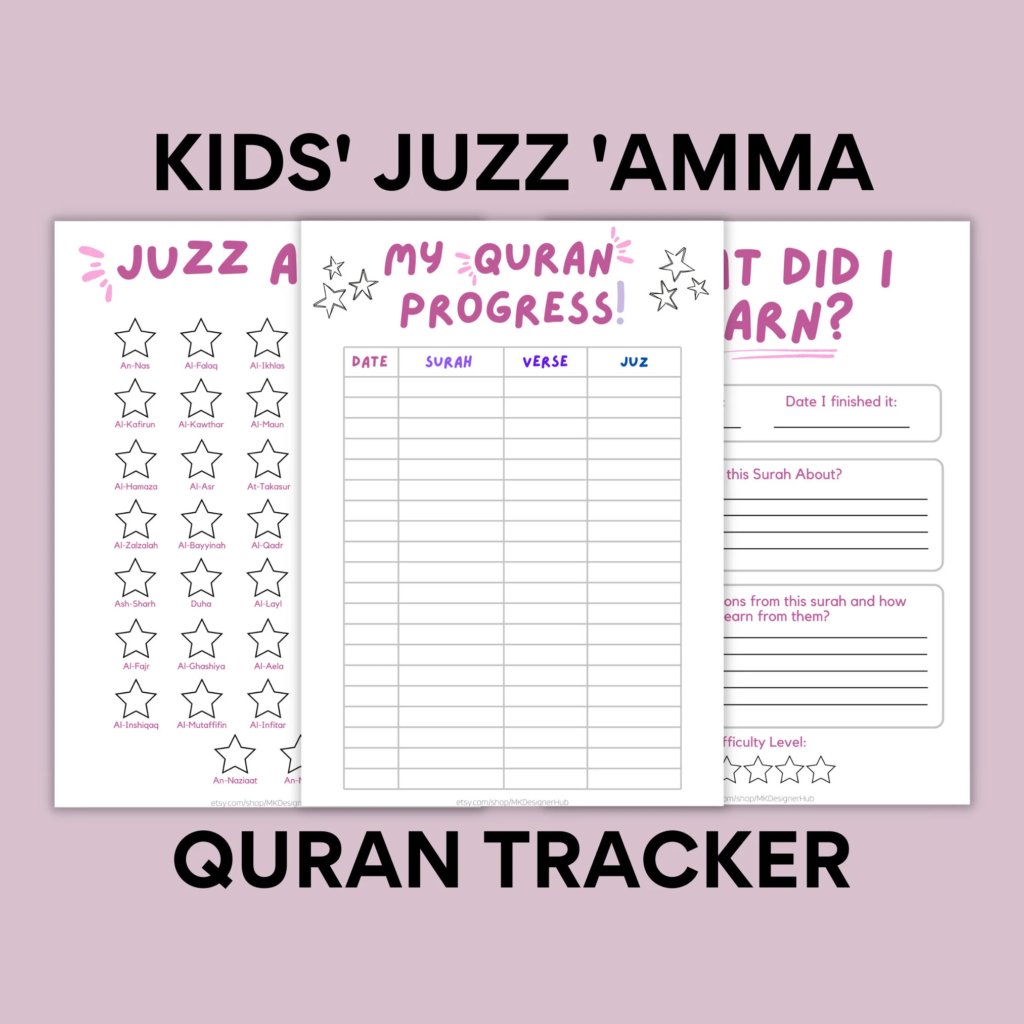
For each surah a child memorizes, they write one key message or lesson in a simple tracker notebook. One sentence per surah is enough.
Children who know why a surah matters remember it far longer than those who memorize sounds without comprehension.
Quran Revision Reward Chart
A visual chart where every completed revision session earns a sticker or stamp keeps children motivated through the difficult plateaus of memorization.
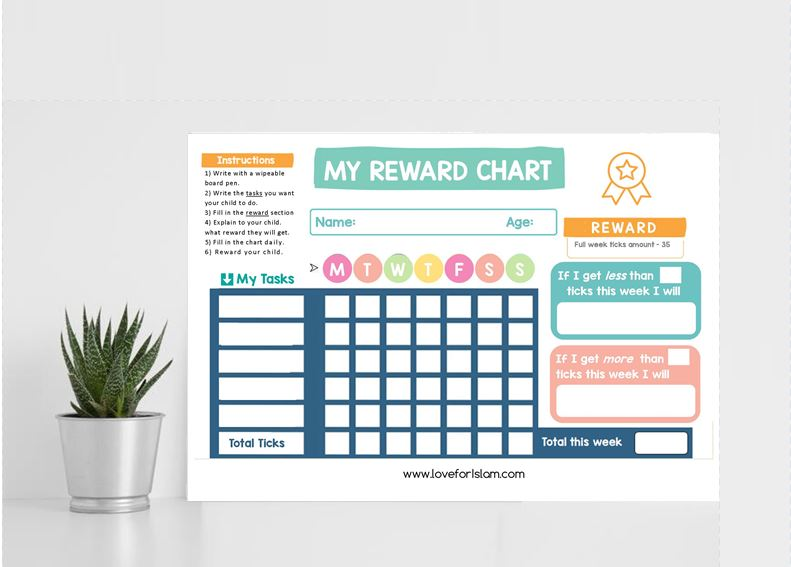
| Revisions Completed | Reward Type | Who Decides |
| 5 sessions | Small treat or extra story time | Parent chooses |
| 15 sessions | Favorite meal or family outing | Child chooses |
| 30 sessions | Special celebration or gift | Family decides together |
| 50 sessions | Major milestone — child presents achievement | Child leads |
Dua Jar Activity
Keep a small labeled jar in a visible spot at home. Each day, children write one personal dua on a slip of paper and drop it in. By the end of the month, they hold a growing collection of direct, heartfelt conversations with Allah. When a dua is answered:
- Mark it with a gold star.
- Celebrate together.
This shows children that Allah listens — and that dua works.
Watch a Sample Lesson from Our Academy
Get a firsthand look at how our students learn Islamic values, Quran, and essential knowledge through engaging and interactive online classes. See why families trust Islamic Studies for Kids Academy.
Fun & Engaging Islamic Classes for Kids
Start your child’s journey today with interactive lessons designed to make learning Islam loved and easy.
Get Your Child a Free TrialWeaving Faith Into Every Moment Through a Daily Islamic Routine
Islamic identity forms not in the dedicated lesson, but in the five-minute moments woven throughout ordinary days. These activities require no setup, no materials, and no preparation — only intention.
The framework that works best is what practitioners call “anchor habits” — attaching an Islamic activity to something the family already does:
- Quran plays during breakfast (already happening).
- A Prophet story replaces the last five minutes of screen time before bed (already happening).
- A dua is said before getting in the car (already happening).
Islam slots into existing structure rather than competing with it.
Read Also: Islamic Games for Kids
Prophet Story Bedtime Routine
A five-to-seven-minute Prophet story before bed is the single highest-return Islamic activity available to parents. Stories about Prophet Yunus (AS), Prophet Ibrahim (AS), Prophet Musa (AS), or the Companions teach:
- Patience
- Courage
- Trust in Allah
After the story, ask one question: “What would you have done in that situation?” Parents are often amazed by the thoughtful insights their children share.
Dhikr Jars Together
Children move beads or small pebbles from one jar to another while saying SubhanAllah, Alhamdulillah, or Allahu Akbar. Set a family goal of 33 counts after Salah:
- Ages 4–7 — love the physical movement and the satisfying sound of pebbles moving.
- Ages 8–12 — can track weekly totals in a notebook and set personal Dhikr goals they feel proud to achieve.
Read Also: Best Islamic Apps for Kids in 2026
Islamic Nasheed Sessions
Nasheeds dramatically accelerate memorization of:
- The 99 Names of Allah.
- Daily duas.
- Common Islamic phrases.
Children who learn Asma ul-Husna through a nasheed consistently memorize all 99 names faster than peers using traditional repetition alone.
Play nasheeds during morning routines and car journeys — by ages 8–10, children absorb comprehensive Islamic vocabulary without it ever feeling like study.
Read Also: Islamic Quotes for Kids
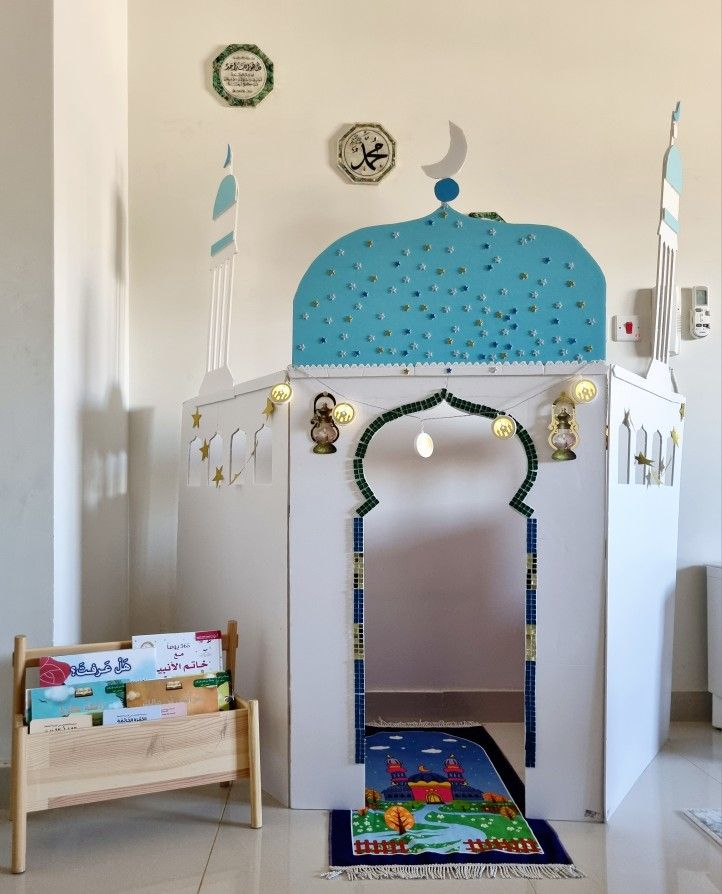
Worship Corner at Home
Designate a small space in your home with:
- A child-sized prayer mat.
- A tasbeeh (prayer beads).
- Illustrated dua booklets at child height.
- Decorated dua cards.
- A small shelf for their Quran.
Making this space visually appealing gives children a physical anchor for worship. Children who have their own dedicated worship corner develop a natural instinct to return to it — especially when they see their parents using the adult version nearby.
Activities Open the Door, Expert Teaching Builds What Comes After
Every craft, game, and daily habit in this article plants a seed. But seeds need the right environment to grow — and that environment is consistent, structured learning with someone who knows exactly how to take your child from “I made a Five Pillars tower” to “I understand why each pillar matters in my life.”
That’s the gap Islamic Studies for Kids Academy fills.
Islamic Stories Course for Kids
Every Prophet story your child hears at bedtime becomes ten times more powerful when they learn it in depth — the full account, the morals, the Quranic connection, and what it means for how they live today.
This course teaches children ages 4 to 15 authenticated Islamic moral stories from the Quran and Sunnah, delivered by Al-Azhar certified tutors trained in keeping young learners genuinely engaged.
From the craft table to the classroom — this is the natural next step.
Book Your Child’s Free Trial Class
Good Deeds for Kids Course Online
Your child just dropped coins in a sadaqah jar. Now imagine them understanding which deeds carry the greatest reward in Islam, why Allah commanded generosity, and how every small act connects to worship.
This course teaches children ages 4 to 15 that good deeds aren’t just being polite — they’re acts of faith with real weight before Allah.

Islamic Studies for Kids Course Online
For families ready to build the complete foundation — Aqeedah, Fiqh, Seerah, and Islamic manners — in one structured curriculum that grows with your child from ages 4 to 15. Private 1-on-1 sessions. English instruction. Al-Azhar certified tutors. No prior Arabic needed.
The first lesson is free!
Nurture Your Child’s Islamic Knowledge with Our Islamic Studies for Kids Academy
Help your child build a strong Islamic foundation through engaging, age-appropriate, and interactive lessons designed to inspire faith, good character, and a love for Islam. Our experienced teachers guide children step by step, making Islamic learning enjoyable, practical, and easy to understand. Whether your child is just beginning or looking to deepen their knowledge, our comprehensive courses provide the perfect learning journey.
Our Islamic Studies Courses Include:
- Islamic Studies for Kids
- Islam Basics for Kids (Beginners)
- 5 Pillars of Islam for Kids
- 6 Pillars of Iman (Faith) for Kids
- Salah (Prayer) for Kids
- Wudu for Kids
- Dua for Kids
- Ramadan for Kids
- Zakat & Sadaqah for Kids
- Hajj for Kids
- Aqeedah (Islamic Belief) for Kids
- Islamic Manners & Akhlaq for Kids
- Good Deeds for Kids
- Cleanliness (Taharah) in Islam for Kids
- Angels in Islam for Kids
- Islamic History for Kids
- Seerah (Prophet’s Life) for Kids
- Prophets Stories for Kids
- Islamic Stories & Morals for Kids
- Fiqh for Kids (Islamic Jurisprudence Basics)
- Hadith for Kids
- Quran Tafseer Course for Kids
- Islamic Holidays & Events for Kids
- Islamic Identity for Kids
- Intensive Islamic Course for Kids
Enroll today and give your child the knowledge, values, and confidence to grow as a practicing Muslim with a strong connection to Allah and His teachings.
Fun & Engaging Islamic Classes for Kids
Start your child’s journey today with interactive lessons designed to make learning Islam loved and easy.
Get Your Child a Free TrialConclusion
Islamic activities for kids work best when they match the child’s age, energy, and natural curiosity — and when they stay consistent rather than intense. Ten minutes of daily Islamic engagement through duas, dhikr, Quran listening, or a quick craft builds deeper roots than an occasional long session that leaves children exhausted and resistant.
Fun Islamic activities for kids — games, Islamic crafts, Ramadan activities, Eid activities, Quran activities, and daily routine moments — are not supplements to Islamic education. They are Islamic education at the ages when identity is forming and faith habits are being set. Islamic worksheets for kids, reward charts, and quiz cards make that learning visible and rewarding.
Every small moment adds up. Start with one activity this week, stay consistent, and watch your child’s connection to Islam grow naturally and joyfully, Insha’Allah.
Frequently Asked Questions
What are the best Islamic activities for kids at home?
The most effective home-based Islamic activities for kids are nightly Prophet story bedtimes, sadaqah jars, Quran listening during daily routines, Dhikr jars after Salah, and Five Pillars tower crafts.
Activities that fit existing routines build the most lasting habits — consistency matters far more than complexity or duration.
What are some fun Islamic crafts for kids?
The most popular fun Islamic crafts for kids include decorating a personal prayer mat with fabric markers, building a Five Pillars tower from labeled cups or blocks, making a sadaqah jar from any decorated container, and creating Arabic name art where children write and decorate their own names in Arabic script.
What Ramadan activities for kids work best?
Ramadan countdown calendars — with daily duas, kind-deed challenges, and Quran reflection cards in each pocket — are the single most effective Ramadan activity for kids.
Combined with nightly gratitude journals and visual fasting trackers (Islamic worksheets for kids), they give children an active, meaningful role in Ramadan rather than a passive one.
What Eid activities for kids are easy to do at home?
Making handmade Eid decorations, creating greeting cards for neighbors and relatives, and doing the Qurbani cotton-ball sheep craft for Eid ul-Adha are all easy, high-impact Eid activities for kids.
Starting two weeks before Eid gives children time to anticipate and enjoy the preparation, which builds positive emotional associations with the celebration itself.
What Islamic worksheets for kids are most useful?
The most useful Islamic worksheets for kids are surah reflection trackers, Quran revision reward charts, daily dua collection pages, kindness challenge charts, and Ramadan fasting trackers.
These tools make invisible progress visible — which is critical for keeping children motivated across weeks and months of learning.
How do Islamic games for kids help with learning?
Islamic games for kids — trivia cards, Quran word hunts, hadith fill-in-the-blank, and Islamic charades — activate the focused, motivated state that games naturally produce in children.
Kids in play mode retain information without resistance. A 10-minute Islamic quiz game before bed produces stronger long-term retention than a 30-minute formal review session at a desk.


Leave a Reply