 Islamic Studies

Your child looks up at the sky and asks, “Mama, who made the clouds?” — and suddenly you’re searching for the right words. Explaining who is Allah to kids is one of the most beautiful conversations a parent can have, but it can also feel surprisingly hard to get right.
This guide gives you clear, age-appropriate language, practical conversation starters, and proven approaches to help your child build a genuine understanding of — and love for — Allah from the very earliest years.
What you’ll learn in this article?
- Who Allah is, explained simply enough for young children to understand.
- The key attributes of Allah that are easiest for kids to grasp first.
- How to answer the tricky question “Who created Allah?” with confidence.
- What to say to a 4-year-old vs. a 5-year-old — and what not to say.
- Common mistakes parents make when explaining religion to a child.
Who Is Allah? Explaining to Kids in Simple Words
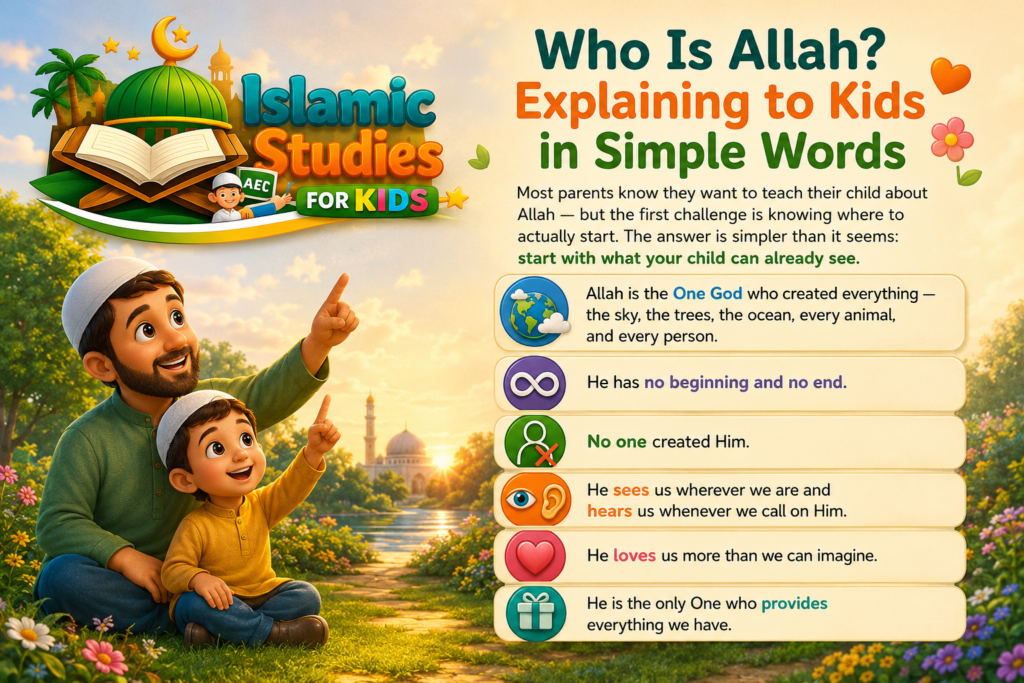
Most parents know they want to teach their child about Allah — but the first challenge is knowing where to actually start. The answer is simpler than it seems: start with what your child can already see.
Allah is the One God who created everything — the sky, the trees, the ocean, every animal, and every person.
- He has no beginning and no end.
- No one created Him.
- He sees us wherever we are and hears us whenever we call on Him.
- He loves us more than we can imagine.
- He is the only One who provides everything we have.
How to Explain Allah to a Child Starting With the Core Attributes?
When explaining who is Allah to kids, begin with the attributes children can emotionally connect to — not abstract theological concepts.
Islamic scholars and educators consistently agree that love, power, and presence are the three attributes that land most naturally in a young child’s heart.
Here is a simple table of the most important attributes to introduce first, with child-friendly language for each:
| Attribute (Name of Allah) | What It Means | What to Say to Your Child |
| Al-Khaliq (The Creator) | Allah made everything | “Allah made the sun, the animals, and you — because He loves us” |
| Ar-Rahman (The Most Merciful) | Allah is endlessly kind | “Even when we make mistakes, Allah still loves us and forgives us” |
| As-Sami’ (The All-Hearing) | Allah hears everything | “You can talk to Allah anytime, even in a whisper” |
| Al-Basir (The All-Seeing) | Allah sees everything | “Allah sees you everywhere — when you’re playing, sleeping, and being kind” |
| Al-Qadir (The All-Powerful) | Allah can do anything | “Nothing is too hard for Allah — He made the whole universe!” |
| Al-Wadud (The Loving) | Allah loves His creation | “Allah loves you more than anyone in the world loves you” |
Start with one or two attributes per week. Children remember deeply when they return to the same concept across different conversations, rather than trying to absorb six ideas at once.
Experience a Real Classroom
Curious about how we teach? This video offers a glimpse into a real class, showcasing our interactive approach, qualified teachers, and child-friendly learning experience.
Fun & Engaging Islamic Classes for Kids
Start your child’s journey today with interactive lessons designed to make learning Islam loved and easy.
Get Your Child a Free TrialHow to Explain God to a Child Through the World Around Them?
The natural world is the single most powerful teaching tool you have — and it costs nothing. Children at every age respond to things they can touch, see, and experience far better than to definitions and explanations. Before jumping into specific conversation starters, it helps to understand why this approach works so well with young minds.
Why the natural world is your best teaching tool
Young children think in pictures and experiences, not in abstractions. The most effective way to explain religion to a child is to point to the created world around them and ask simple questions that make them think.
The Quran itself uses this approach:
“أَفَلَا يَنظُرُونَ إِلَى الْإِبِلِ كَيْفَ خُلِقَتْ”
“Do they not look at the camels — how they are created?” (Surah Al-Ghashiyah, 88:17). This isn’t a coincidence — connecting belief to observable reality is how children form genuine understanding rather than surface-level repetition.
Everyday moments that open the conversation naturally
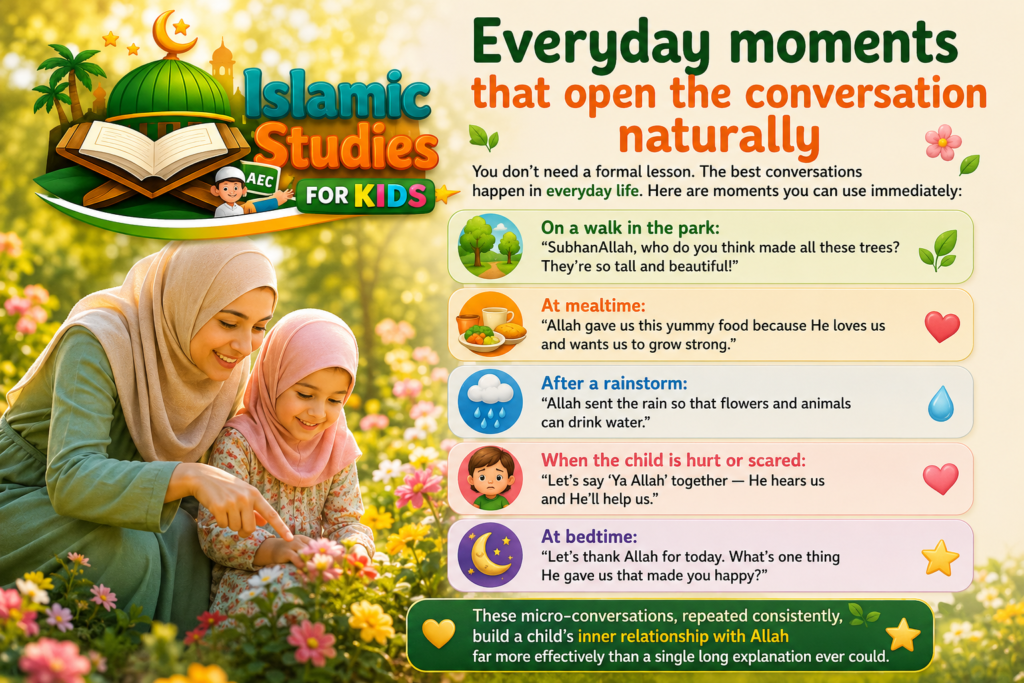
You don’t need a formal lesson. The best conversations happen in everyday life. Here are moments you can use immediately:
- On a walk in the park: “SubhanAllah, who do you think made all these trees? They’re so tall and beautiful!”
- At mealtime: “Allah gave us this yummy food because He loves us and wants us to grow strong.”
- After a rainstorm: “Allah sent the rain so that flowers and animals can drink water.”
- When the child is hurt or scared: “Let’s say ‘Ya Allah’ together — He hears us and He’ll help us.”
- At bedtime: “Let’s thank Allah for today. What’s one thing He gave us that made you happy?”
These micro-conversations, repeated consistently, build a child’s inner relationship with Allah far more effectively than a single long explanation ever could.
What Changes When Explaining Religion to a Child at Age 4 and 5?
Children at four and children at five are closer in age than they are in cognitive development. The gap between what a four-year-old can process and what a five-year-old is ready for is real — and knowing that gap saves parents from accidentally overloading a conversation that was going beautifully.
Here is how to calibrate what you say for each age.
How to explain religion to a 4-year-old
A four-year-old lives entirely in the world of feelings, stories, and simple cause-and-effect. At this age, the goal is not accuracy in every theological detail — it is warmth, repetition, and emotional connection.
Focus on three ideas only:
- Allah made me and loves me.
- Allah can hear me when I talk to Him.
- Allah wants me to be good and kind.
Keep every explanation short — one or two sentences at most. When your child asks a question, answer it and stop. Resist the urge to add more information. A four-year-old will ask again when they’re ready for more.
One practical method: when something good happens, say “Alhamdulillah — that’s a gift from Allah.” When something is beautiful, say “SubhanAllah — look what Allah made.” These short phrases anchor Allah’s presence in daily life without requiring a formal explanation.
How to explain religion to a 5-year-old
By age five, children can hold slightly more complex ideas. They understand that different people have different roles — and they can begin to understand that Allah has a role unlike anyone else’s.
At five, you can add:
- 4. Allah doesn’t get tired or sleep — He always watches over us.
- No one made Allah — He was always there and He always will be.
- We show we love Allah by being kind, saying our prayers, and being honest.
You can also begin introducing Surah Al-Ikhlas at age five — not just as a surah to memorize, but as a child-friendly explanation of who Allah is. Explain it one line at a time: “Allah is One. He doesn’t need anyone. He was never born. No one is like Him.”
Practitioner note: A common mistake at this stage is using fear as the primary motivator — emphasizing Allah’s anger or punishment before a child has formed genuine love and trust. Islamic educational scholars consistently advise introducing love and hope first, and gradually introducing the concept of accountability much later, when the child has a stable foundation of love for Allah.
How to Answer “Who Created Allah?” Without Panic
This question catches almost every parent off guard the first time they hear it — not because it’s threatening, but because it deserves a real answer and most parents haven’t prepared one.
Understanding why children ask it, and what the Prophet ﷺ himself told us about it, makes the whole conversation far easier to handle with calm and confidence.
Why children ask this question?
Every Muslim parent will hear this question eventually. It usually appears around ages 4–6, and it doesn’t mean your child is doubting — it means their mind is working correctly.
Children apply the logic they already know (“everything has a maker”) to everything, including Allah. It’s a sign of healthy development, not a crisis.
What to say when your child asks who made Allah?
The Prophet Muhammad ﷺ told us this question would come. In a hadith narrated by Abu Hurairah (may Allah be pleased with him), the Prophet ﷺ said:
«لَا يَزَالُ النَّاسُ يَتَسَاءَلُونَ حَتَّى يُقَالَ: هَذَا خَلَقَ اللَّهُ الْخَلْقَ، فَمَنْ خَلَقَ اللَّهَ؟ فَمَنْ وَجَدَ مِنْ ذَلِكَ شَيْئًا فَلْيَقُلْ: آمَنْتُ بِاللَّهِ»
(رواه مسلم)
“People will keep on asking until someone says: ‘Allah created creation — but who created Allah?’ Whoever finds that in themselves, let them say: ‘I believe in Allah.'” (Narrated by Muslim.)
What Response Parents Can Use For Children Ages 4–7?
Here is a step-by-step response parents can use for children ages 4–7:
1. Validate the question: “That’s a really smart question. Let’s think about it together.”
2. Introduce the difference between creators and created things: “Everything we can see — trees, animals, you, me — was made by someone. But Allah is different. He is the One who makes, and nothing makes Him.”
3. Use Surah Al-Ikhlas: “Allah told us about Himself in a special chapter of the Quran. He said: ‘He was not born and no one made Him. There is nothing like Him.”
4. Normalize the limit of human understanding: “Our minds are like our eyes — they can see a lot, but not everything. Allah is bigger than anything our minds can understand, and that’s okay.”
5. Close with confidence: “So when that question pops into your head, you can say: ‘I believe in Allah’ — and that is exactly what He wants from us.”
Do not panic, scold the child, or say “don’t ask that.” Shutting down the question does not make it go away — it teaches children that faith cannot handle hard questions.
Read Also: How to Teach Islam to Kids
Watch a Sample Lesson from Our Academy
Get a firsthand look at how our students learn Islamic values, Quran, and essential knowledge through engaging and interactive online classes. See why families trust Islamic Studies for Kids Academy.
Fun & Engaging Islamic Classes for Kids
Start your child’s journey today with interactive lessons designed to make learning Islam loved and easy.
Get Your Child a Free TrialThe Most Common Mistakes When Explaining Religion to a Child
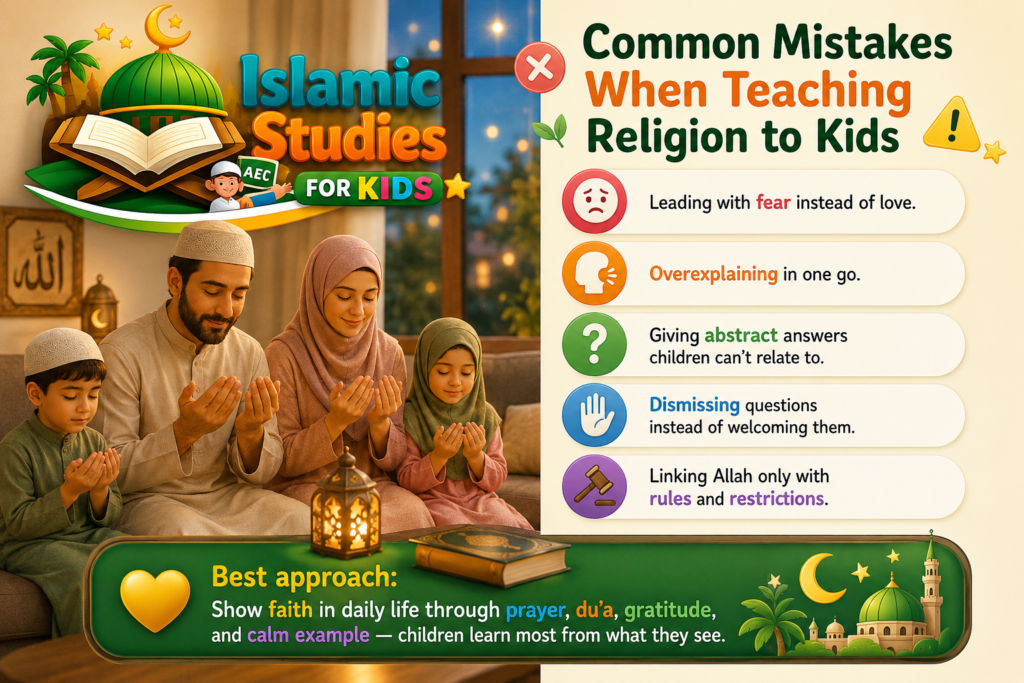
Many parents get the fundamentals right but stumble on delivery. Here are the mistakes that quietly undermine what you’re trying to build:
| Mistake | Why It Backfires | What to Do Instead |
| Introducing fear before love | Children associate Allah with anxiety rather than comfort | Lead with Allah’s love and mercy for years before introducing accountability |
| Over-explaining in one go | Children shut down when overloaded | One idea, one conversation, let them ask for more |
| Giving abstract answers | “Allah is omniscient” means nothing to a 5-year-old | Always anchor the idea to something the child can see or feel |
| Interrupting or dismissing their questions | Children stop asking when questions feel unwelcome | Receive every question warmly, even if you don’t have a perfect answer |
| Linking Allah’s name only to rules and prohibitions | Faith starts to feel like restriction, not relationship | Mention Allah in moments of gratitude, joy, and beauty — not only correction |
The most powerful thing you can do as a parent is let your child see you turning to Allah yourself — saying Bismillah, making du’a aloud, expressing gratitude naturally in daily life. Children absorb far more from observation than instruction.
Read Also: Wudu Steps for Kids
Help Your Child Know Allah — With a Teacher Who Speaks Their Language
Reading about how to explain Allah to your child is a powerful first step. The next step is giving them a structured space to grow that understanding every single week.
Islamic Studies for Kids Academy offers two courses built exactly around where your child is right now:
Islamic Studies for Kids Course Online
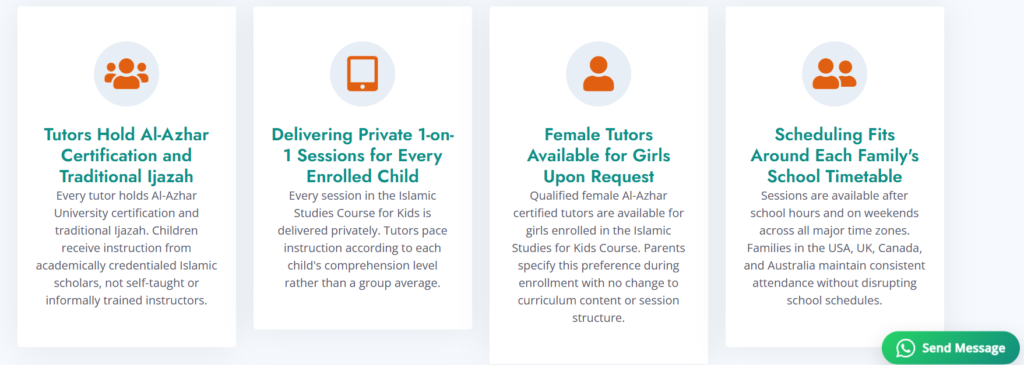
For children ages 4 to 15 — covering Aqeedah, Fiqh, Seerah, and Islamic manners in a structured, English-language curriculum. Your child learns who Allah is, why we worship Him, and how to live those values daily — guided by Al-Azhar certified tutors trained specifically for young learners.
- ✅ Private 1-on-1 sessions — paced to your child, not a group.
- ✅ Female tutors available for girls upon request.
- ✅ Flexible scheduling around school hours.
- ✅ No prior Arabic knowledge needed.
Read Also: Respecting Parents in Islam for Kids
Looking for Quran and Arabic Courses Too? Meet EQuran School
Islamic Studies for Kids Academy also offers a full Quran and Arabic learning experience through its dedicated EQuran School — designed for children and adults at every level.
Courses available include:
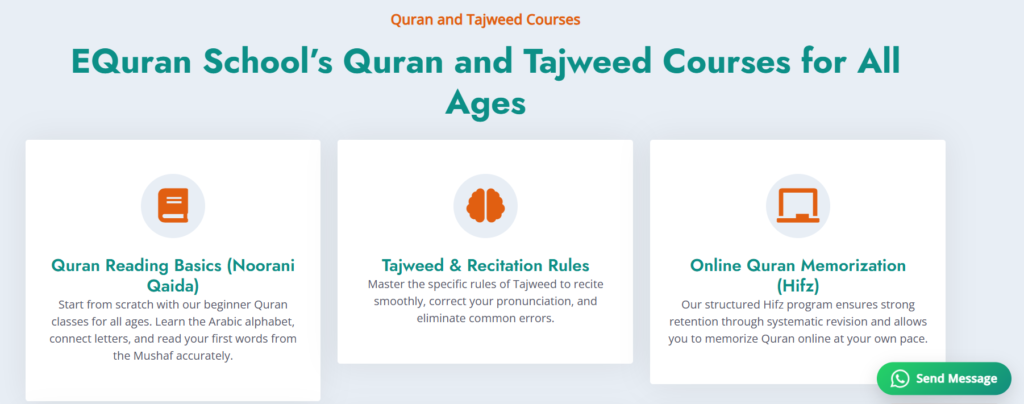
- Quran Reading Basics (Noorani Qaida) — Learn the Arabic alphabet and read your first words from the Mushaf accurately.
- Tajweed & Recitation Rules — Master pronunciation rules and eliminate common errors.
- Online Quran Memorization (Hifz) — A structured program with systematic revision at your own pace.
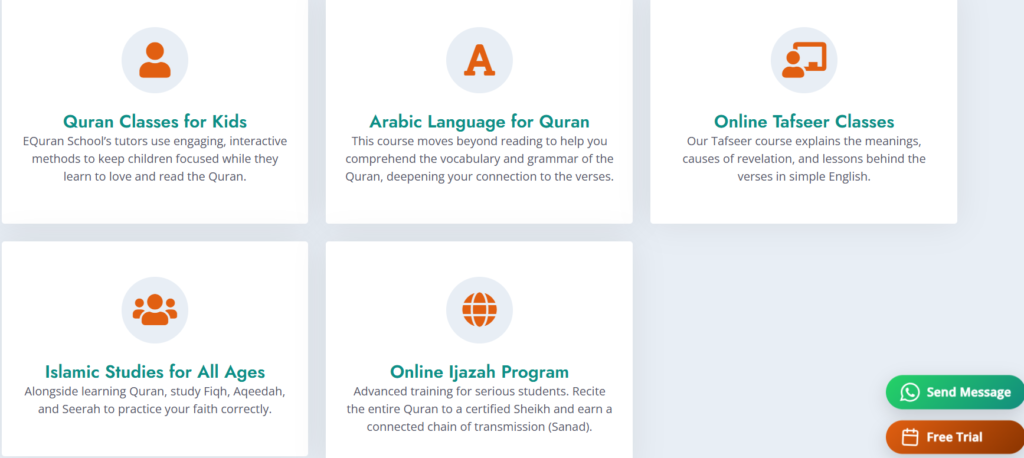
- Quran Classes for Kids — Interactive, engaging methods that help children love and read the Quran.
- Arabic Language for Quran — Go beyond reading to understand vocabulary and grammar of the Quran.
- Online Tafseer Classes — Meanings, causes of revelation, and lessons explained in simple English.
- Islamic Studies for All Ages — Fiqh, Aqeedah, and Seerah alongside your Quran journey.
- Online Ijazah Program — Advanced training with a certified Sheikh and a connected chain of transmission.
Our Islamic Studies Courses Include:
- Islamic Studies for Kids
- Islam Basics for Kids (Beginners)
- 5 Pillars of Islam for Kids
- 6 Pillars of Iman (Faith) for Kids
- Salah (Prayer) for Kids
- Wudu for Kids
- Dua for Kids
- Ramadan for Kids
- Zakat & Sadaqah for Kids
- Hajj for Kids
- Aqeedah (Islamic Belief) for Kids
- Islamic Manners & Akhlaq for Kids
- Good Deeds for Kids
- Cleanliness (Taharah) in Islam for Kids
- Angels in Islam for Kids
- Islamic History for Kids
- Seerah (Prophet’s Life) for Kids
- Prophets Stories for Kids
- Islamic Stories & Morals for Kids
- Fiqh for Kids (Islamic Jurisprudence Basics)
- Hadith for Kids
- Quran Tafseer Course for Kids
- Islamic Holidays & Events for Kids
- Islamic Identity for Kids
- Intensive Islamic Course for Kids
Enroll today and give your child the knowledge, values, and confidence to grow as a practicing Muslim with a strong connection to Allah and His teachings.
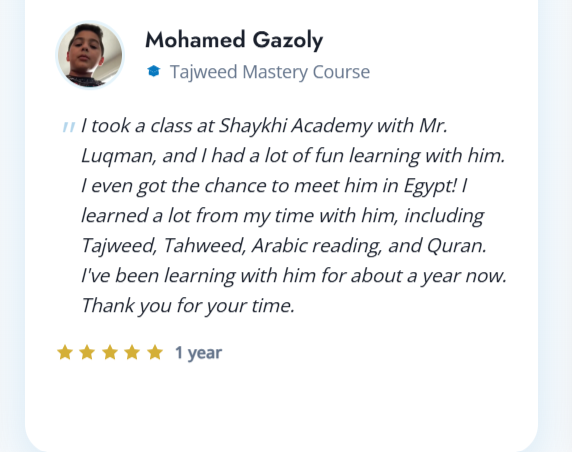
And don’t just take our word for it.
“Children enrolled in our courses show measurable gains in Aqeedah knowledge, Salah accuracy, and daily Adab — within the first semester.”
Want to hear it directly from the families themselves?
Watch Graduate Stories From Real Students
The first lesson is free — no commitment required.
Book Your Child’s Free Trial Class Today

Fun & Engaging Islamic Classes for Kids
Start your child’s journey today with interactive lessons designed to make learning Islam loved and easy.
Get Your Child a Free TrialConclusion
Explaining who is Allah to kids is not a single conversation — it’s a series of small, beautiful moments that add up over years. Start with love. Start with what your child can see. Answer their questions calmly and warmly, even the hard ones. Introduce Allah’s attributes one at a time, tied to everyday life.
And above all, let your child see your own connection to Allah — because nothing teaches faith like watching someone who truly lives it.
Who is Allah? He is the One who created everything, loves us unconditionally, hears every word we say, and is always — always — with us.
Frequently Asked Questions
When should I start explaining Allah to my child?
You can begin as early as age two or three, using the simplest language possible: “Allah made the sun,” “Allah gave us this food.” Formal explanations come later — but the emotional seeds can be planted from the very beginning.
How do I explain Allah to a child who asks why they can’t see Him?
Explain that our eyes can only see certain things — they can’t see air, but air is real. They can’t see love, but love is real. Allah is real even though our eyes can’t see Him now. In Jannah (paradise), Allah has promised believers will see Him, and that will be the greatest joy of all.
What if my child asks a question about Allah I can’t answer?
Say honestly: “That’s a wonderful question. I’m not sure of the full answer — let’s find out together.” This models intellectual humility and shows your child that faith and curiosity go hand in hand.
Is it okay to tell a 4-year-old about Allah’s rules and what is haram?
At age four, focus almost entirely on love, gratitude, and Allah’s beautiful qualities. Rules and boundaries can be introduced gently from around age six or seven — but only after the child has developed genuine love for Allah. Rules without relationship create resistance, not righteousness.
How do I teach my child to talk to Allah (make du’a)?
Start by making du’a aloud with your child in simple, natural language — not only in Arabic if they don’t understand it yet. “Ya Allah, thank you for today and please keep us safe tonight” is a perfect start. Children who hear parents speaking to Allah naturally begin to do the same.


Leave a Reply