 Quran
Quran
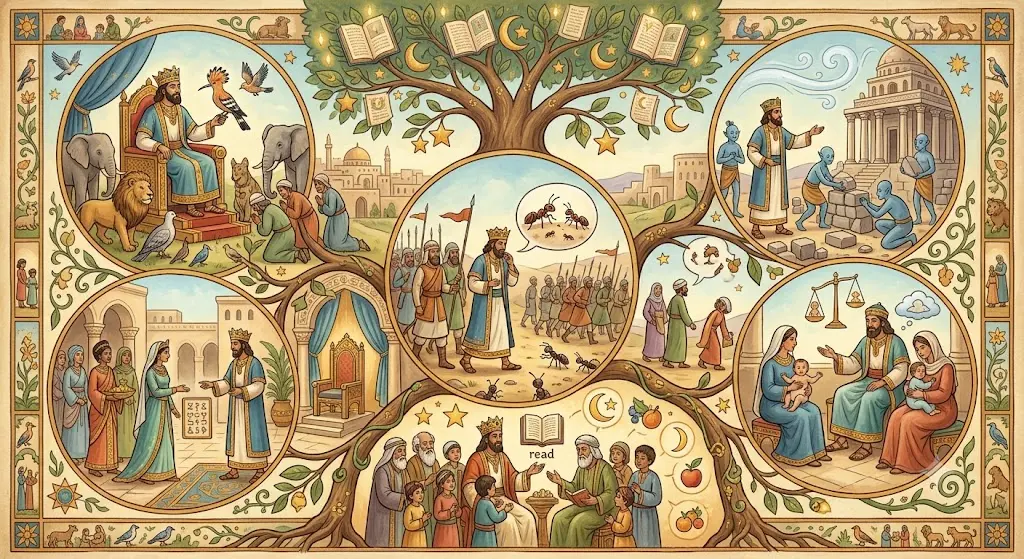
Every child deserves to fall asleep knowing that being good, being grateful, and being kind matters to Allah. The prophet Sulaiman’s story is one of the most magical in the entire Quran: a king who could talk to animals, command the wind, and guide a great queen to the truth, all while staying humble before Allah.
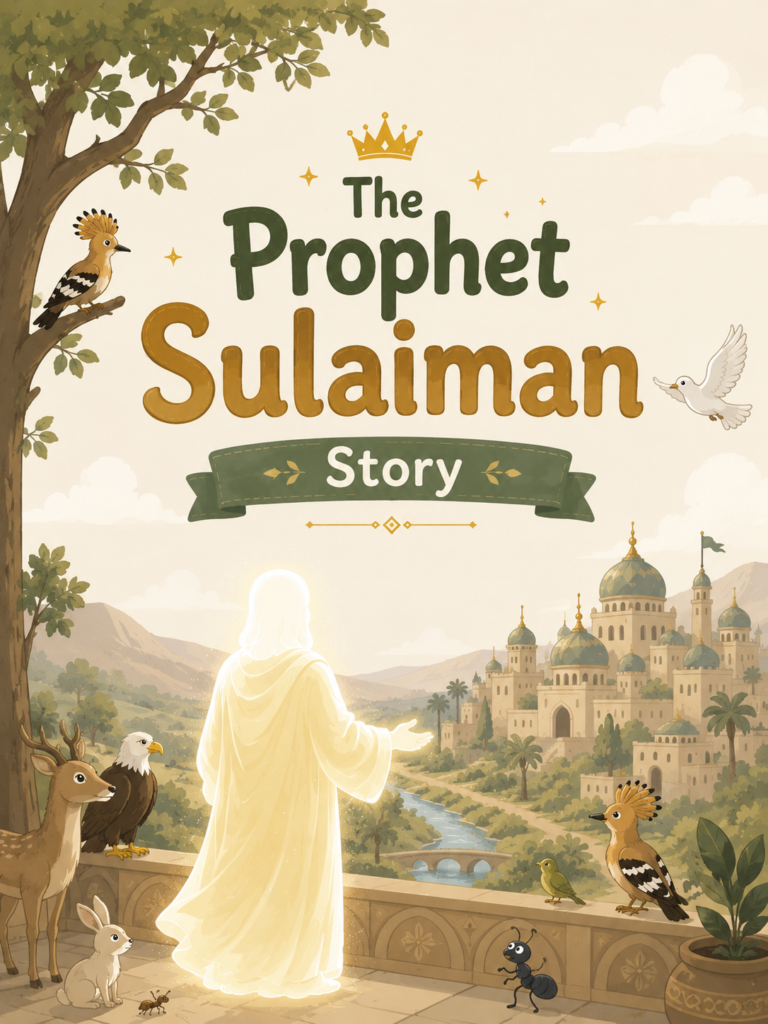
This article brings the Quranic narrative of the Prophet Solomon in Islam to life in simple, warm language. It also covers the remarkable Sulaiman miracles that Allah alone made possible. Explore our Prophets Stories Course for Kids to continue the journey with certified teachers who love what they do.
The story begins with a Son Who Inherited a Great Gift
Prophet Sulaiman (peace be upon him) was the son of Prophet Dawud (peace be upon him).
Prophet Dawud was a great king and a prophet of Allah. He was wise and just, and his people loved him.
When Prophet Dawud passed away, his son Sulaiman took his place.
Allah had chosen Sulaiman to be both a prophet and a king, just like his father.
Sulaiman was grateful for this gift. He always said, “All praise is for Allah, who has blessed us above so many of His servants.”
And then Allah gave Sulaiman Gifts Like No Other King
Allah gave Prophet Sulaiman something very special. He could understand the language of birds and animals.
Not just one animal. All of them.
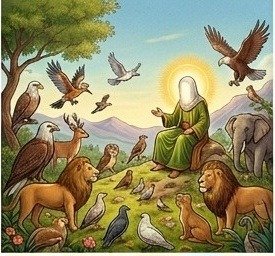
The birds, the insects, the creatures of the seaو Sulaiman could hear what they were saying and speak back to them.
Allah also gave him power over the wind. When Sulaiman needed to travel, the wind would carry him gently and quickly, far across the land.
And the jin, powerful beings made of fire, were put under his command. They worked for him, building great palaces and structures, diving deep into the sea, and carrying heavy loads.
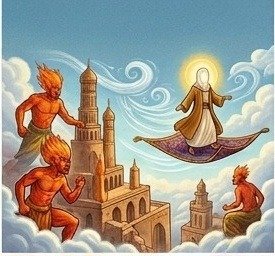
Sulaiman prayed to Allah for a kingdom unlike any other, and Allah gave him exactly that.
The story takes a turn in the Valley of the Ants
One day, Prophet Sulaiman set out with his great army.
Humans were marching together. There were jinn. Birds were flying above.
It was a magnificent sight.
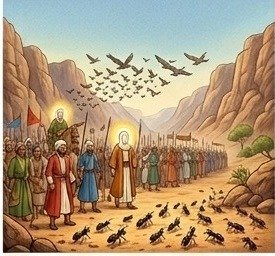
As they walked through a valley, a tiny ant spotted the army coming.
“O ants!” the ant called out. “Go into your homes quickly! Sulaiman and his army are coming; they might step on you without even knowing!”
Prophet Sulaiman heard the ant’s little voice.
He smiled.
He was so moved that this small creature was thinking of others, caring for her family, warning them of danger.
He turned his face to the sky and made a du’a.
“My Lord,” he said, “help me to be grateful for the blessings You have given me and my parents. And help me to do good deeds that please You.”
Even with all his power, Sulaiman never forgot to thank Allah.
Then came the moment of the Missing Bird
One morning, Prophet Sulaiman was inspecting his army of birds.
He looked for the Hudhud, the hoopoe bird.
But the Hudhud was gone.
“Where is the Hudhud?” Sulaiman asked. “I do not see him. I will punish him unless he brings me a good reason for being absent.”
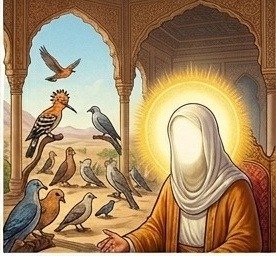
Soon, the Hudhud came flying back. He had been on a long journey.
“I have news,” the Hudhud said. “I have seen something you do not know about. I have visited a land called Saba. A queen rules there. Her name is Bilqis. She has a great throne and great power. But her people worship the sun instead of Allah.”
Prophet Sulaiman listened carefully.
He decided to send the Hudhud back with a letter.
It was a message of peace. It began with the words every Muslim knows: Bismillah ir-Rahman ir-Raheem, In the name of Allah, the Most Merciful.
It invited Bilqis and her people to leave the worship of the sun and come to the worship of Allah alone.
Here is how the Queen of Sheba Received the Letter
The Hudhud flew back to the land of Saba.
He dropped the letter before Queen Bilqis.
She picked it up and read it.
“A letter has come to me,” she told her chiefs. “It is from Sulaiman. It begins with the name of Allah. And it invites us to come to him in peace.”
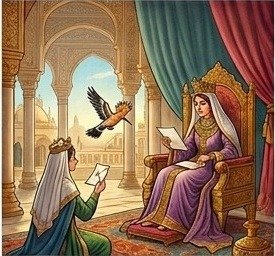
Her chiefs were proud. “We have a strong army,” they said. “We can fight if you command us.”
But Bilqis was wise.
“When kings march into a land with force,” she said, “they destroy it. I will not rush into war.”
She decided to send Sulaiman gifts, beautiful, expensive presents, to see how he would respond.
Read also: Noah’s Ark Story for Muslims Kids – the Great Flood
Experience a Real Classroom
Curious about how we teach? This video offers a glimpse into a real class, showcasing our interactive approach, qualified teachers, and child-friendly learning experience.
Fun & Engaging Islamic Classes for Kids
Start your child’s journey today with interactive lessons designed to make learning Islam loved and easy.
Get Your Child a Free TrialThe story moves forward as the Gifts Are Sent Back
When the messengers arrived with their gifts, Prophet Sulaiman looked at them.
He shook his head gently.
“Allah has given me more than you have brought me,” he said. “Go back and tell your queen: I do not want gifts. I want her to come to me, and to come as one who submits to Allah.”
The messengers returned to Bilqis with their answer.
She understood then. This was not a king who wanted gold. This was a prophet of Allah.
Bilqis decided she would go and meet him herself.
And then the throne was moved by the Power of Allah
When Sulaiman heard that Bilqis was on her way, he asked his assembly a question.
“Which of you can bring me her throne before she arrives?”
A powerful jinn stepped forward. “I can bring it before you even stand up from your seat.”
But before Sulaiman could reply, someone else spoke.
A man who had knowledge from the Book of Allah said, “I can bring it to you before you even blink.”
And in the blink of an eye, the throne of Bilqis was there. Right in front of Sulaiman.
Sulaiman looked at it and immediately turned to Allah in gratitude.
“This is from the favor of my Lord,” he said. “He is testing me, will I be grateful or ungrateful? Whoever is grateful, the blessing is for them. And Allah is far above any need.”
The story reaches its heart as Bilqis enters the Palace
When Bilqis arrived, Sulaiman welcomed her.
He had arranged something to help her see the truth.
His palace had a floor made of pure glass. It was so clear and smooth that it looked exactly like water.
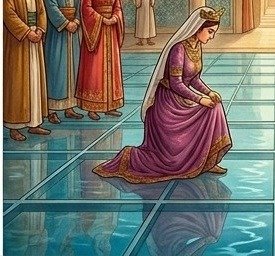
When Bilqis walked toward him, she saw the floor and thought it was a pool.
She lifted the hem of her robe so it would not get wet.
Sulaiman said gently, “Do not worry. It is not water. It is a floor of polished glass.”
Bilqis stopped.
She looked around at the palace. She thought about the letter. The throne. The floor. The wisdom of this prophet.
And she said the most beautiful words.
“My Lord, I have wronged myself. And now I submit with Sulaiman to Allah, Lord of all the worlds.”
She had found the truth.
The story closes with a Lesson Written in the Earth
Prophet Sulaiman continued to rule with wisdom and justice for many years.
The jinn kept building. His army of humans and birds kept serving. The wind carried him where he needed to go.
And then, one day, it was time for Sulaiman to return to Allah.
He passed away quietly, leaning on his staff.
He remained standing for a long while, so long that the jinn kept working, not knowing their king was gone.
It was only when a small creature, a tiny worm, slowly ate through his staff that it gave way.
Only then did everyone realize: the great king was gone.
And the lesson was clear: only Allah knows what is hidden. The jinn, with all their power, did not know the unseen. No one does, except Allah.
Comprehension Questions
1. Who was Prophet Sulaiman’s father, and what did he inherit from him?
2. What special gifts did Allah give to Prophet Sulaiman that no other king had?
3. What did the ant say when she saw Sulaiman’s army coming? How did Sulaiman respond?
4. Why did Prophet Sulaiman send the gifts back to Queen Bilqis?
5. What happened when Bilqis walked into Sulaiman’s glass palace, and what did she say?
6. What do you think we can learn from the way Sulaiman always thanked Allah after every miracle?
Moral of The Prophet Sulaiman Story
The Prophet Sulaiman’s story teaches us that true greatness is not about how much power you have; it is about how grateful you are to Allah for it.
Sulaiman had armies, miracles, and a kingdom like no other king in history, yet his first response to every blessing was always, “This is from the favor of my Lord.” Our children can carry this same lesson every single day: when something good happens, say Alhamdulillah, and use that blessing to do good.
Read also: Islamic Gifts for Kids — Best Ideas for Parents
Watch a Sample Lesson from Our Academy
Get a firsthand look at how our students learn Islamic values, Quran, and essential knowledge through engaging and interactive online classes. See why families trust Islamic Studies for Kids Academy.
Start Your Child’s Islamic Learning Journey Today
The Prophet Sulaiman’s story is just one chapter in a rich library of Prophets’ stories waiting for your child to discover. Islamic Studies for Kids Academy offers structured, English-language Islamic education delivered by Al-Azhar-certified tutors trained specifically in teaching children aged 4–15 in Western, non-Arabic-speaking households.
- Al-Azhar certified tutors with specialized child instruction training
- All sessions in English, no Arabic background needed
- 1-on-1 and small-group options with immediate, personalized feedback
- Flexible scheduling for families in the US, UK, Australia, and beyond
- Courses in Prophets’ stories, Aqeedah, Quran, Seerah, and more
Start Your Free Trial Now and let your child meet Prophet Sulaiman and many more Prophets with a tutor who makes Islamic learning feel like story time.
Start your FREE trial of our Prophets’ Stories Course for Kids today!
Our Islamic Studies Courses Include:
- Islamic Studies for Kids
- Islam Basics for Kids (Beginners)
- 5 Pillars of Islam for Kids
- 6 Pillars of Iman (Faith) for Kids
- Salah (Prayer) for Kids
- Wudu for Kids
- Dua for Kids
- Ramadan for Kids
- Zakat & Sadaqah for Kids
- Hajj for Kids
- Aqeedah (Islamic Belief) for Kids
- Islamic Manners & Akhlaq for Kids
- Good Deeds for Kids
- Cleanliness (Taharah) in Islam for Kids
- Angels in Islam for Kids
- Islamic History for Kids
- Seerah (Prophet’s Life) for Kids
- Prophets Stories for Kids
- Islamic Stories & Morals for Kids
- Fiqh for Kids (Islamic Jurisprudence Basics)
- Hadith for Kids
- Quran Tafseer Course for Kids
- Islamic Holidays & Events for Kids
- Islamic Identity for Kids
- Intensive Islamic Course for Kids
Enroll today and give your child the knowledge, values, and confidence to grow as a practicing Muslim with a strong connection to Allah and His teachings.
Fun & Engaging Islamic Classes for Kids
Start your child’s journey today with interactive lessons designed to make learning Islam loved and easy.
Get Your Child a Free TrialConclusion
The Prophet Sulaiman’s story is one of the most beautiful and complete in the Quran, a story of gratitude, wisdom, humility, and the power of calling people to Allah with kindness rather than force. From the tiny ant in the valley to the great queen who found her way to faith, every part of the story shows us that Allah’s miracles always have a purpose.
Share this story at bedtime, ask your child the comprehension questions, and watch the lessons take root. If you’d like your child to explore more Sulaiman miracles and Prophets’ stories with expert guidance, Islamic Studies for Kids Academy‘s Prophets Stories Course for Kids is the perfect next step.
Frequently Asked Questions (FAQs)
Who is Prophet Sulaiman in Islam?
Prophet Sulaiman in Islam is a noble prophet and king who was the son of Prophet Dawud. The Quran describes him as a man of exceptional wisdom, gratitude, and faith, who was granted miraculous gifts, including the ability to speak to animals, command the wind, and rule over the jinn, to help him establish justice and call people to the worship of Allah alone.
What are the miracles of Prophet Sulaiman mentioned in the Quran?
The Sulaiman miracles mentioned in the Quran include the ability to understand and speak the language of birds and animals (Surah An-Naml 27:16), control over the wind for travel (Surah Al-Anbiya 21:81), authority over the jinn who served as builders and workers (Surah Saba 34:12), and the miraculous transportation of the Queen of Sheba’s throne in an instant (Surah An-Naml 27:40). Each of these miracles served a purpose, always pointing to Allah’s power, never Sulaiman’s own.
At what age is the Prophet Sulaiman’s story appropriate for children?
The Prophet Sulaiman’s story is appropriate for children from around age 4 and up, making it one of the most accessible Prophets’ stories for young learners. The themes of kindness to animals, gratitude to Allah, and using wisdom over force are easy for even young children to understand. The story works beautifully as a bedtime read-aloud for ages 4–7 and as independent reading for ages 8–12.
What is the main lesson of the Prophet Sulaiman’s story for kids?
The main lesson of the Prophet Sulaiman’s story is gratitude. Prophet Solomon in Islam had more power than any king before or after him, yet every time Allah blessed him, his response was, “This is from the favor of my Lord.” Children learn that real strength comes from being thankful, humble, and kind, even to a tiny ant.
What Surahs in the Quran tell the story of Prophet Sulaiman?
The story of the Prophet Solomon in Islam is spread across several chapters of the Quran. The most detailed account appears in Surah An-Naml (Chapter 27), which covers his gifts, the ant story, the Hudhud bird, and the Queen of Sheba. Additional references appear in Surah Saba (Chapter 34), Surah Al-Anbiya (Chapter 21), and Surah Sad (Chapter 38).
Is the story of Solomon (Sulaiman) in the Quran the same as in the Bible?
Prophet Solomon in Islam and the biblical Solomon share the same figure, but the Quranic account differs in important ways. The Quran presents Sulaiman as a humble, monotheistic prophet who never worshipped idols, any association with idol worship attributed to him in other traditions is not part of the authentic Quranic narrative.
The Sulaiman miracles described in the Quran, control over wind, jinn, and animals, are unique to the Islamic account and serve a clear theological purpose: demonstrating Allah’s power and sovereignty.


Leave a Reply