 Islamic Studies
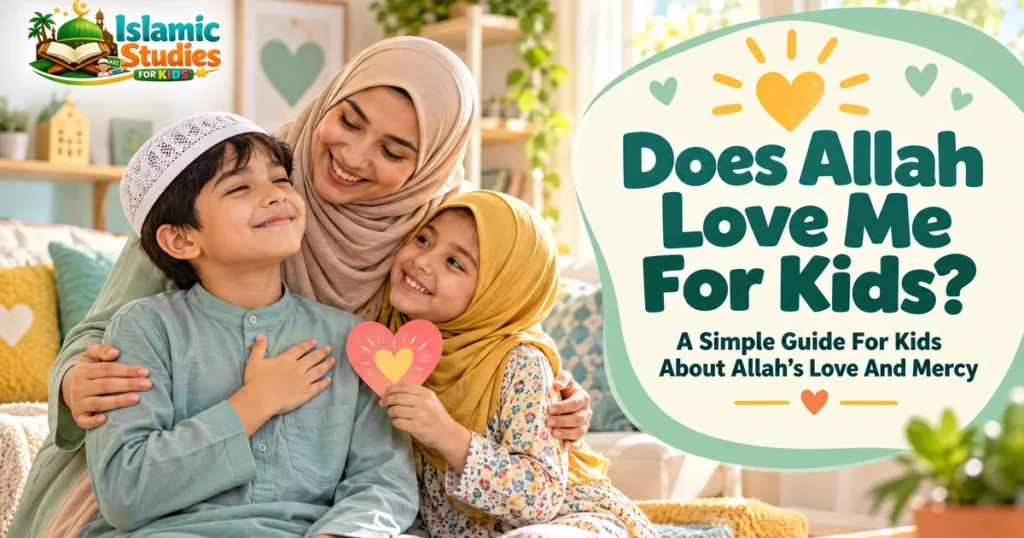
“Does Allah love me? for kids” is one of the most beautiful questions a child can ask. It shows a heart that wants to know Allah and feel close to Him. The happy answer is yes: Allah loves His servants who believe in Him, try to do good, and turn back to Him when they make mistakes.
Many children also wonder whether Allah still loves them after they do something wrong, or when they feel sad or scared. This guide answers those questions using the Quran and authentic Hadith, explained in simple words that kids, new Muslims, and parents can understand together.
In this article, your child will learn what Allah’s love and mercy mean, how Allah loves children, which actions Allah loves, and a special dua from the Prophet Muhammad ﷺ for asking Allah’s love.
Key Takeaways: What You Will Learn
- Allah is Al-Wadud: one of Allah’s names means the Most Loving, and He loves those who believe and do good.
- Mistakes do not close the door: Allah loves those who repent, and He forgives sins when we turn back to Him sincerely.
- Allah’s mercy is huge: the Prophet ﷺ taught that Allah is more merciful to His servants than a mother is to her child.
- Good deeds bring us closer: prayer, honesty, kindness to parents, and cleanliness are actions Allah loves.
- A dua for Allah’s love: kids can ask Allah for His love using words taught by the Prophet ﷺ.
Does Allah Love Me? The Simple Answer for Kids
Yes, Allah loves His believing servants, including children who believe in Him and try to do good. Allah’s love in Islam means His care, mercy, guidance, and reward for the people He loves. Allah created every child, gives every child food and family, and wants good for them in this life and the next.
Allah tells us in the Quran that one of His beautiful names is Al-Wadud (الودود). Al-Wadud means “the Most Loving” or “the Affectionate.” This name teaches kids that Allah’s love is real, and that He loves His righteous servants and makes them loved by others.
وَهُوَ الْغَفُورُ الْوَدُودُ
“And He is the Forgiving, the Affectionate.”
Surah Al-Buruj (85:14) connects two of Allah’s names: Al-Ghafur, the Forgiving, and Al-Wadud, the Most Loving. For children, this verse carries a simple message: Allah forgives, and Allah loves. These two names belong together, so a Muslim child never needs to feel that Allah is far away.
Allah’s Names That Teach Kids About His Love and Mercy
Allah’s Beautiful Names, known as Al-Asma’ Al-Husna (الأسماء الحسنى), help children learn about Allah’s greatness and understand His perfect qualities. Each name carries a special meaning that teaches kids more about who Allah is and how He cares for His creation.
Some of these names highlight His mercy, love, forgiveness, and kindness, helping children develop a stronger connection with Him. Learning these names also encourages children to remember Allah, make du’a, and trust in His mercy.
The following table introduces five of Allah’s Beautiful Names with simple English meanings that children can easily understand and remember.
| Arabic Name | Transliteration | Simple Meaning for Kids |
|---|---|---|
| الرحمن | Ar-Rahman | The Most Merciful, whose mercy reaches all of creation |
| الرحيم | Ar-Raheem | The Especially Merciful, who shows special mercy to the believers |
| الودود | Al-Wadud | The Most Loving, who loves His good servants |
| الغفور | Al-Ghafur | The Forgiving, who forgives our mistakes |
| التواب | At-Tawwab | The Accepter of Repentance, who accepts us when we say sorry |
Watch a Sample Lesson from Our Academy
Get a firsthand look at how our students learn Islamic values, Quran, and essential knowledge through engaging and interactive online classes. See why families trust Islamic Studies for Kids Academy.
Fun & Engaging Islamic Classes for Kids
Start your child’s journey today with interactive lessons designed to make learning Islam loved and easy.
Get Your Child a Free TrialHow Allah Loves Children: Signs Kids Can See Every Day
Children can recognize signs of Allah’s love and mercy in their everyday lives. These signs do not mean that life will always be easy or free from challenges. Instead, they remind children that Allah, the Creator, always cares for them, provides for their needs, and guides them, even when they do not notice His blessings around them.
From the food they eat and the air they breathe to the love of their families, the kindness of others, and the beautiful world around them, there are countless blessings that show Allah’s care. Allah gives children the ability to learn, play, grow, and discover new things every day. Even when they face difficulties, they can turn to Him through dua and ask for His help and guidance.
By noticing these blessings and thinking about where they come from, children can learn to thank Allah, appreciate what they have, and develop a stronger connection with Him.
Explore our guide to Good Deeds in Islam to help your child build positive habits and practice kindness every day.

1. Allah Gives Kids Countless Blessings
Allah’s blessings, called ni‘am (نِعَم) in Arabic, are all the good things He gives us. A child’s eyes, healthy body, warm home, tasty food, cool water, parents, friends, and toys are all blessings from Allah. The Quran teaches that these blessings are too many to count.
وَإِن تَعُدُّوا نِعْمَتَ اللَّهِ لَا تُحْصُوهَا
“And if you should count the favor of Allah, you could not enumerate them.”
2. Allah Hears Every Dua a Child Makes
Dua (دعاء) is talking to Allah and asking Him for what we need. Allah hears every dua, whether a child whispers it in bed or says it after prayer. Allah tells us in the Quran that He is near to His servants and answers those who call on Him.
وَإِذَا سَأَلَكَ عِبَادِي عَنِّي فَإِنِّي قَرِيبٌ ۖ أُجِيبُ دَعْوَةَ الدَّاعِ إِذَا دَعَانِ
“And when My servants ask you, [O Muhammad], concerning Me – indeed I am near. I respond to the invocation of the supplicant when he calls upon Me.”
Many kids ask where Allah is when they cannot see Him. Allah sees everything and hears everything, and His knowledge is with us wherever we are. Parents can explain this idea gently with our guide on where is Allah for kids, written in simple language.
3. Allah’s Mercy Is Greater Than a Mother’s Love
A mother’s love for her child is one of the strongest kinds of love a child can feel. The Prophet Muhammad ﷺ used this love to teach his Companions how great Allah’s mercy is. He saw a mother hugging and feeding her baby after searching for it, and he described Allah’s mercy in comparison.
لَلَّهُ أَرْحَمُ بِعِبَادِهِ مِنْ هَذِهِ بِوَلَدِهَا
“Allah is more merciful to His slaves than this lady to her son.”
This authentic Hadith in Sahih al-Bukhari teaches kids a powerful lesson about Allah’s mercy. If a child knows how much their mother loves them, they can remember that Allah’s mercy toward His servants is even greater than that.
4. Allah Guides Kids to Love Good Deeds
Feeling happy when doing good deeds is one of the beautiful blessings Allah gives us. When a child enjoys praying, loves listening to the Quran, tells the truth, or helps a friend, these actions can be signs of Allah’s guidance, known as hidayah (هداية).
Allah guides His servants toward what is good and helps them recognize the difference between right and wrong. This guidance encourages children to make better choices, develop good manners, and treat others with kindness and respect. Scholars explain that being guided to good deeds is one of the signs of Allah’s care for a person.
Allah’s Mercy for Kids: How Big Is Allah’s Mercy?
Allah’s mercy, known as rahmah (رحمة) in Arabic, refers to His kindness, care, forgiveness, and compassion toward all His creation. It is one of the greatest blessings Allah gives to people, animals, and every living thing.
The Prophet Muhammad ﷺ explained that all the kindness and mercy we see in the world come from only one part of Allah’s mercy, while He has kept ninety-nine parts with Him. This means that every act of love, care, and compassion we experience is only a small example of how great Allah’s mercy is.
Understanding this helps children realize that Allah is always merciful, that they can turn to Him whenever they need help, and that His forgiveness is always something to hope for.
جَعَلَ اللَّهُ الرَّحْمَةَ مِائَةَ جُزْءٍ، فَأَمْسَكَ عِنْدَهُ تِسْعَةً وَتِسْعِينَ جُزْءًا، وَأَنْزَلَ فِي الأَرْضِ جُزْءًا وَاحِدًا، فَمِنْ ذَلِكَ الْجُزْءِ يَتَرَاحَمُ الْخَلْقُ، حَتَّى تَرْفَعَ الْفَرَسُ حَافِرَهَا عَنْ وَلَدِهَا خَشْيَةَ أَنْ تُصِيبَهُ
“Allah divided Mercy into one hundred parts. He kept ninety-nine parts with Him and sent down one part to the earth, and because of that, its one single part, His creations are merciful to each other, so that even the mare lifts up its hoofs away from its baby animal, lest it should trample on it.”
Does Allah Still Love Me When I Make a Mistake?
Yes, a child can always return to Allah after a mistake. Every human makes mistakes, and Islam teaches that the best people are those who say sorry to Allah and try to do better. Turning back to Allah is called tawbah (توبة), which means sincere repentance.
Allah tells us in the Quran that He loves those who repent. This means a mistake is not the end of the story. When a child feels sorry and asks Allah for forgiveness, they become one of the people Allah loves.
إِنَّ اللَّهَ يُحِبُّ التَّوَّابِينَ وَيُحِبُّ الْمُتَطَهِّرِينَ
“Indeed, Allah loves those who are constantly repentant and loves those who purify themselves.”
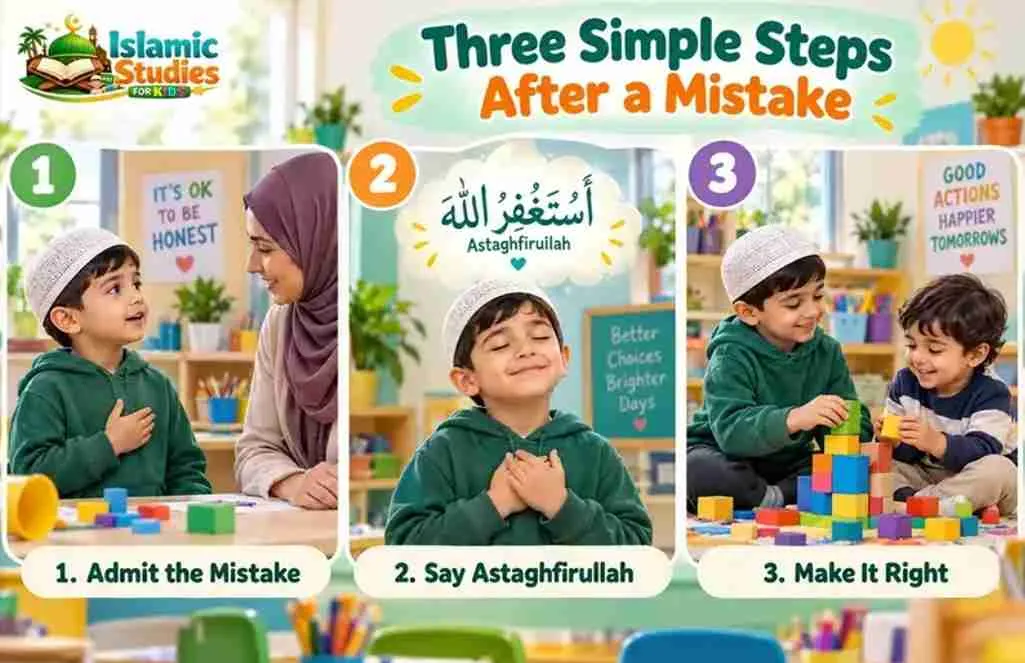
Three Simple Steps When a Child Makes a Mistake
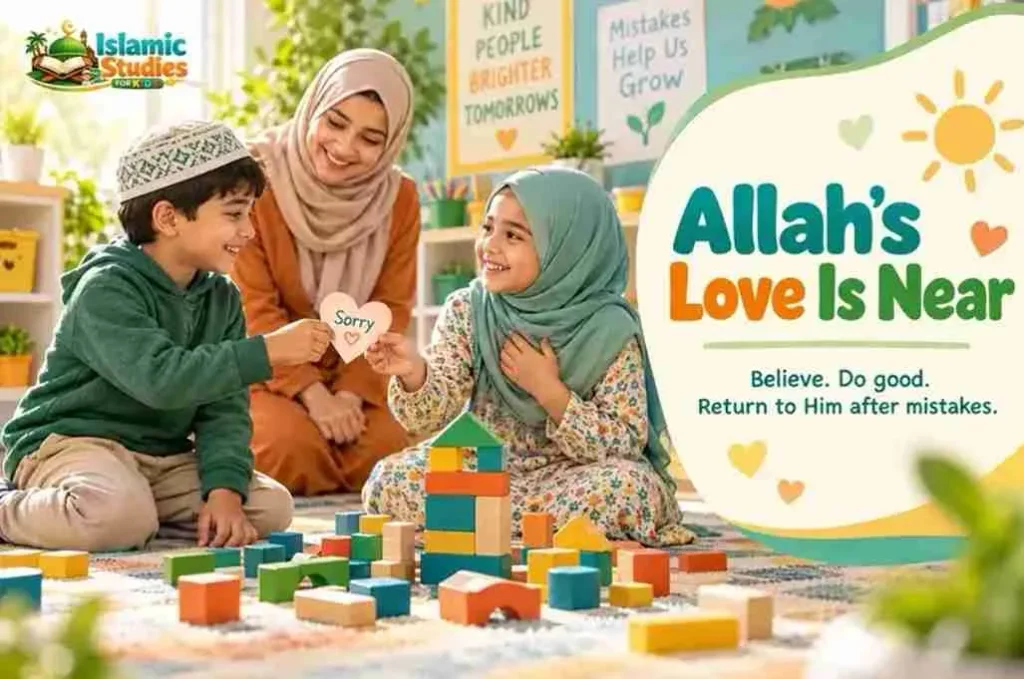
If a child argues with a sibling, tells a lie, or does not listen to their parents, they should not lose hope in Allah’s love or think that one mistake makes them a bad person. Everyone makes mistakes, and what matters is learning from them and trying to do better.
Instead of feeling ashamed or giving up, children can turn to Allah, ask for His forgiveness, and make a sincere effort to correct their behavior. To help children understand how to respond when they make a mistake, they can follow three simple steps:
- Admit the mistake: be honest about what happened without making excuses.
- Say Astaghfirullah: ask Allah for forgiveness and ask Him for help not to repeat it.
- Make it right: say sorry to the person you hurt and try to fix what you did.
Allah Forgives All Sins for Those Who Return to Him
Allah’s door of forgiveness stays open for anyone who turns back to Him sincerely. In Surah Az-Zumar, Allah tells His servants never to despair of His mercy, no matter what mistakes they have made.
قُلْ يَا عِبَادِيَ الَّذِينَ أَسْرَفُوا عَلَىٰ أَنفُسِهِمْ لَا تَقْنَطُوا مِن رَّحْمَةِ اللَّهِ ۚ إِنَّ اللَّهَ يَغْفِرُ الذُّنُوبَ جَمِيعًا ۚ إِنَّهُ هُوَ الْغَفُورُ الرَّحِيمُ
“Say, ‘O My servants who have transgressed against themselves [by sinning], do not despair of the mercy of Allah. Indeed, Allah forgives all sins. Indeed, it is He who is the Forgiving, the Merciful.’”
The Quran also tells us that Prophet Adam (peace be upon him) made a mistake, felt sorry, and turned to Allah, and Allah accepted his repentance. Kids can discover more true stories like this in our Islamic history lessons for kids, which bring the lives of the prophets to life.
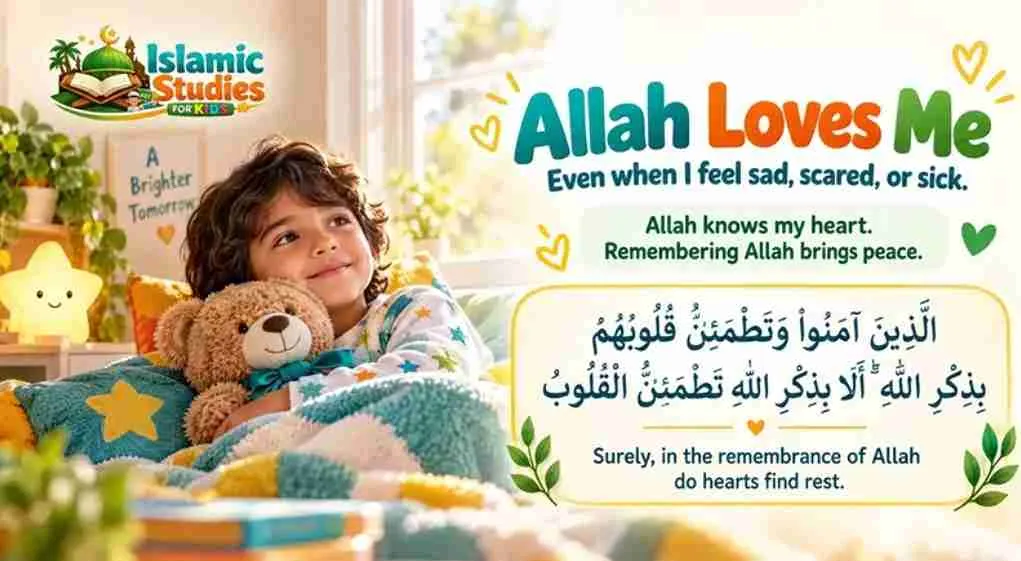
Does Allah Love Me When I Feel Sad, Scared, or Sick?
Yes, feeling sad, scared, or sick does not mean that Allah does not love you. Allah knows exactly how every child feels, even when they cannot explain their feelings in words. Hard days happen to everyone, including the prophets, and they are not a sign that Allah is angry.
When a child feels afraid of the dark, lonely at school, or sad because a friend did not play with them, they can remember Allah. Remembering Allah, called dhikr (ذكر), brings calm and peace to the heart, as Allah tells us in the Quran.
الَّذِينَ آمَنُوا وَتَطْمَئِنُّ قُلُوبُهُم بِذِكْرِ اللَّهِ ۗ أَلَا بِذِكْرِ اللَّهِ تَطْمَئِنُّ الْقُلُوبُ
“Those who have believed and whose hearts are assured by the remembrance of Allah. Unquestionably, by the remembrance of Allah hearts are assured.”
Experience a Real Classroom
Curious about how we teach? This video offers a glimpse into a real class, showcasing our interactive approach, qualified teachers, and child-friendly learning experience.
Fun & Engaging Islamic Classes for Kids
Start your child’s journey today with interactive lessons designed to make learning Islam loved and easy.
Get Your Child a Free TrialGood Deeds That Help Kids Earn Allah’s Love
Allah loves certain actions and qualities, and the Quran teaches us about different kinds of people who earn His love. These include those who sincerely repent after making mistakes, those who keep themselves clean, those who do good deeds, and those who remain patient during difficult times.
This teaches children that earning Allah’s love is not only about performing big acts of worship; even small, everyday actions can bring them closer to Him. Saying the truth, helping someone in need, sharing with others, keeping clean, and treating people kindly are all meaningful ways to practice goodness.
By making these habits part of their daily lives, children can develop strong Islamic manners and build a closer relationship with Allah.
1. Praying Salah on Time
Salah (صلاة) is the five daily prayers that every Muslim performs to worship Allah. Prayer is the way a Muslim talks to Allah and thanks Him every day. Children can start learning the names and times of the prayers with our simple guide to the 5 daily prayers for kids.
Once kids know the prayer times, the next step is learning how each prayer is performed. Fajr, Dhuhr, Asr, Maghrib, and Isha each have a set number of units, called rak‘at. Parents can review this together using our explainer on how many rakats are in each salah.
2. Staying Clean and Making Wudu
Cleanliness, called taharah (طهارة), is an important part of Islam. In Surah Al-Baqarah (2:222), Allah says He loves those who purify themselves. Making wudu before prayer and keeping our bodies and clothes clean are acts that please Allah.
Kids learn wudu best step by step, with practice and repetition. Our Islamic fiqh lessons for kids teach wudu, prayer, and other daily acts of worship in a way that is clear and easy to follow.

3. Being Kind and Respectful to Parents
Kindness to parents, known as birr al-walidayn (بر الوالدين), is one of the most important good deeds in Islam and a quality that Allah loves. Children can practice it through simple actions every day, such as helping their mother with household tasks, listening to their father, speaking politely to both parents, and showing them respect and appreciation.
Even small gestures, like saying kind words, offering help without being asked, or making dua for their parents, can make a difference. Islam teaches children to treat their parents with love, patience, and gratitude because parents work hard to care for them.
4. Telling the Truth and Keeping Promises
Honesty, known as sidq (صدق) in Arabic, means telling the truth even when it is difficult or when a child is afraid of getting into trouble. Islam teaches children to be truthful in their words and actions, keep their promises, and respect other people’s belongings by never taking anything without permission.
Being honest also means admitting mistakes instead of hiding them or blaming others. When children practice honesty, they build trust with their parents, teachers, and friends.
5. Showing Mercy to People and Animals
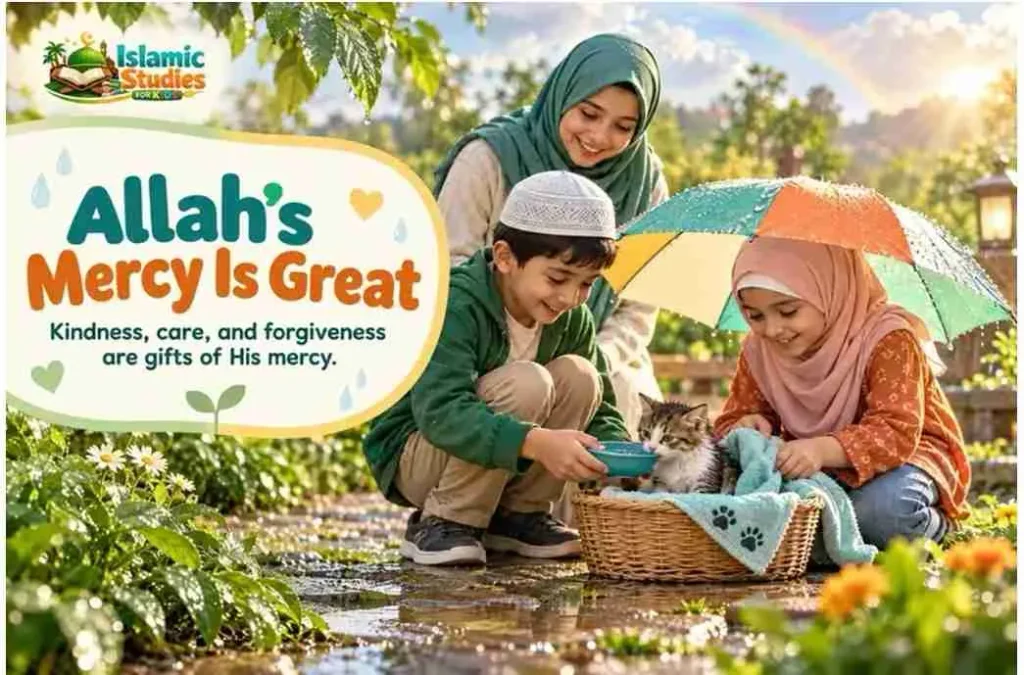
Islam teaches children to show mercy and kindness to all living creatures, including people and animals. Simple actions, such as feeding a hungry cat, giving water to a thirsty bird, sharing toys with siblings, or helping a classmate who is struggling, are beautiful examples of mercy.
Children can also show compassion by speaking gently, comforting someone who feels sad, and avoiding actions that may hurt others. These small acts teach them to care about the feelings and needs of those around them.
Help Your Child Truly Know Allah Our Aqeedah lessons teach kids Allah’s Beautiful Names, His love, and His mercy through stories and activities made just for young learners.
Explore Aqeedah for Kids

How Parents Can Teach Kids About Allah’s Love and Mercy
Parents play an important role in shaping how their children understand Allah and develop a relationship with Him. Introducing Allah’s love and mercy from an early age helps children build their faith on hope, trust, gratitude, and love rather than fear alone.
When parents explain Allah’s beautiful names, talk about His countless blessings, and remind children that they can always turn to Him, they help them feel connected to their Creator.
This balanced approach helps children grow up with a healthy understanding of their faith, knowing that Allah is Merciful and Forgiving while learning to take responsibility for their choices.
- Start with love and mercy: talk about Allah’s blessings and His names Ar-Rahman and Al-Wadud before rules and warnings.
- Use daily moments: point out rain, food, and family time as gifts from Allah.
- Make dua together: let your child hear you ask Allah for help and thank Him out loud.
- Handle mistakes gently: teach tawbah as a fresh start, not as a reason for shame.
Fun & Engaging Islamic Classes for Kids
Start your child’s journey today with interactive lessons designed to make learning Islam loved and easy.
Get Your Child a Free TrialHelp Your Child Grow Up Loving Allah With Islamic Studies for Kids
At Islamic Studies for Kids, children learn about Allah, the Quran, the Prophet ﷺ, and good manners through live, interactive online classes. Caring teachers explain Allah’s love and mercy in simple words, so kids feel close to Allah and excited to learn more about their faith.
Give your child the opportunity to explore Islam in a fun and supportive learning environment. Book a free trial lesson today and let your child experience the classes firsthand!
Our Islamic Studies Courses Include:
- Islamic Studies Course for Kids
- Islam Basics Course for Kids
- 5 Pillars of Islam Course for Kids
- 6 Pillars of Iman (Faith) Course for Kids
- Salah (Prayer) Course for Kids
- Wudu Course for Kids
- Dua Course for Kids
- Ramadan Course for Kids
- Zakat & Sadaqah Course for Kids
- Hajj Course for Kids
Conclusion
So, does Allah love me? Yes! Allah is Al-Wadud, the Most Loving, and Ar-Rahman, the Most Merciful. He loves those who believe in Him, do good deeds, keep themselves clean, remain patient, and turn back to Him whenever they make mistakes. His love encourages us to become better people and grow closer to Him every day.
Allah’s mercy is greater than a mother’s love for her child, and His door of forgiveness is always open to those who sincerely repent. Children can strengthen their relationship with Allah through prayer, honesty, kindness to their parents, showing mercy to people and animals, and making the dua that the Prophet Muhammad ﷺ taught us to ask Allah for His love.
Remember, you can always turn to Allah, ask Him for help, and thank Him for His countless blessings. May Allah fill every child’s heart with love for Him and guide them to everything that pleases Him.
Frequently Asked Questions About Allah’s Love for Kids
Does Allah love me if I don’t always pray?
Allah’s door of repentance is always open, so missing prayers should lead a child back to Allah, not away from Him. Children can start praying again, learn how to pray correctly, and ask Allah to help them pray on time.
Does Allah love children?
Yes, Allah is merciful to children and wants good for them. The Prophet ﷺ taught that Allah is more merciful to His servants than a mother is to her child, as narrated in Sahih al-Bukhari 5999.
Does being sick mean Allah doesn’t love me?
No, illness does not mean Allah does not love a person. Hardships happen to everyone, including the prophets. Allah knows our pain, and patience during difficulty is rewarded by Him.
What is the meaning of Al-Wadud for kids?
Al-Wadud is one of Allah’s Beautiful Names, meaning “the Most Loving.” It appears in Surah Al-Buruj (85:14) and teaches kids that Allah loves His good servants.
How do I know Allah is pleased with me?
A Muslim keeps obeying Allah, repents after mistakes, and is kind to others, while hoping for Allah’s mercy. Good or hard events alone do not prove Allah’s pleasure, so kids should keep doing good and keep making dua.


Leave a Reply