 For Parents
Every Muslim parent living in the West has felt it — that quiet worry when your child comes home asking why they can’t eat the birthday cake at school, or why their friends don’t fast during Ramadan. Raising a Muslim child in a non-Muslim country is one of the most meaningful challenges a parent can take on, and it’s one millions of families navigate every day.
The good news is that Muslim identity doesn’t require a Muslim-majority environment to thrive. It requires intention, consistency, and the right foundations at home. This guide gives you exactly that — practical, grounded steps for raising Muslim kids in the West, drawn from Islamic scholarship and the real experience of Muslim families abroad.
1. Raising a Muslim Child in a Non-Muslim Country Is Possible
The first thing many parents need to address is the fear itself. Mufti Hussain Kamani, imam of Masjid An-Nur in Brookfield and professor of Islamic studies in Texas, spoke about his own anxiety in the early years of immigration — worrying that his children would grow up never hearing the adhan outside their windows.
His teacher’s response was direct: the thought of leaving a non-Muslim land to protect your children is a trap that prevents Islam from spreading to every corner of the world.
The prophetic precedent is even more grounding. The Prophet ﷺ raised his children in Mecca — the center of polytheism and persecution. Musa (عليه السلام) grew up in the house of Pharaoh. Ibrahim (عليه السلام) lived among idol worshippers. In each case, what protected the child was not the environment — it was the family’s resolve and presence.
The challenge is real. But it has never been a reason to fail.
2. Building a Home That Anchors Islamic Identity for Children
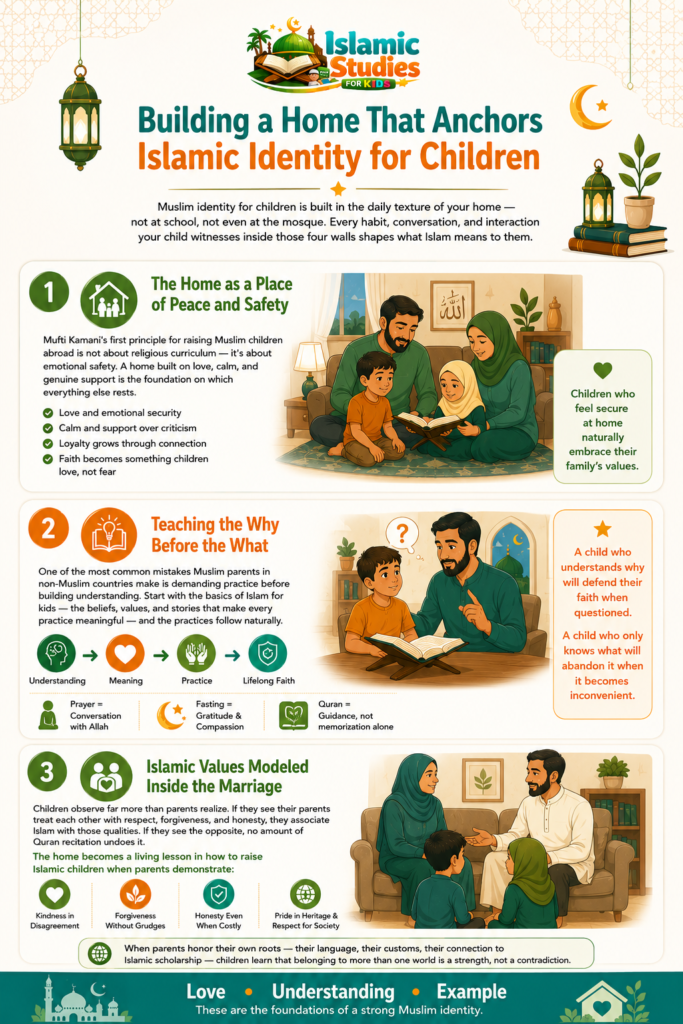
Muslim identity for children is built in the daily texture of your home — not at school, not even at the mosque. Every habit, conversation, and interaction your child witnesses inside those four walls shapes what Islam means to them.
The Home as a Place of Peace and Safety
Mufti Kamani’s first principle for raising Muslim children abroad is not about religious curriculum — it’s about emotional safety. A home built on love, calm, and genuine support is the foundation on which everything else rests.
When children feel secure at home, they develop loyalty to their family’s values naturally. That loyalty is what makes them want to pray because their parents pray, not because they’ve been told they must. Children who feel criticized, compared to others, or emotionally unsafe at home do not become more religious — they become more resistant.
Teaching the Why Before the What
One of the most common mistakes Muslim parents in non-Muslim countries make is demanding practice before building understanding. Telling a seven-year-old to memorize Surah Al-Mulk without explaining what it means treats the Quran as a performance exercise rather than a living message.
Before asking your child to pray, explain what prayer is — a direct conversation with Allah, five times a day, regardless of where in the world you are. Before asking them to fast, explain what hunger teaches us about gratitude and solidarity. Start with the basics of Islam for kids — the beliefs, values, and stories that make every practice meaningful — and the practices follow naturally.
A child who understands why will defend their faith when questioned. A child who only knows what will abandon it when it becomes inconvenient.
Islamic Values Modeled Inside the Marriage
Children observe far more than parents realize. If they see their parents treat each other with respect, forgiveness, and honesty, they associate Islam with those qualities. If they see the opposite, no amount of Quran recitation undoes it.
The home becomes a living lesson in how to raise Islamic children when parents demonstrate:
- Kindness in disagreement
- Forgiveness without grudges
- Honesty even when it’s costly
- Respect for both their heritage and their host country’s culture
That last point matters more than most parents realize. When parents honor their own roots — their language, their customs, their connection to Islamic scholarship — children learn that belonging to more than one world is a strength, not a contradiction.
3. Teaching Islamic Studies to Children in a Non-Muslim Context
Children in secular Western schools spend six or seven hours a day in an environment that is largely indifferent — or quietly hostile — to Islamic values. That exposure requires active, intentional counter-investment at home.
Prophet Stories as the First Classroom
Prophet stories are among the most effective tools available to Muslim parents raising Islamic children in the West. Children who grow up knowing the story of Musa (عليه السلام) standing before Pharaoh, or Ibrahim (عليه السلام) refusing to bow to idols, have internal reference points for their own moments of pressure. Those stories answer the question every child eventually faces: What do I do when everyone around me believes something different?
A structured Islamic studies curriculum for kids designed for children in non-Muslim environments takes this approach — teaching the prophets not as distant historical figures but as practical models for the challenges children actually face today.
The Five Pillars as a Daily Rhythm, Not a Checklist
The Five Pillars of Islam — Shahada, Salah, Zakat, Sawm, and Hajj — are not a list to memorize and move on from. They are a rhythm that structures a Muslim’s entire day, year, and life. Teaching children to understand Salah as five anchor points across the day gives prayer a function children can actually feel, rather than a rule they simply follow because they’re told to.
When Ramadan comes, children who already understand why fasting matters participate with excitement rather than reluctance. And when they encounter peers who question their Islamic identity, they have real answers — not just inherited habits.
Early Conversations on Difficult Topics
How to keep Islamic identity for kids strong through adolescence starts well before adolescence arrives. Drug culture, romantic relationships in mixed schools, alcohol at social events — these are realities your child will encounter in a non-Muslim country, often earlier than you expect.
A child who has never heard these topics discussed at home is not protected from them. They are simply unprepared for them. Address these conversations early, clearly, and without panic, framing each through Islamic guidance rather than cultural shame. The goal is a child who can make their own reasoned Islamic choice — not one who simply hasn’t been exposed yet.
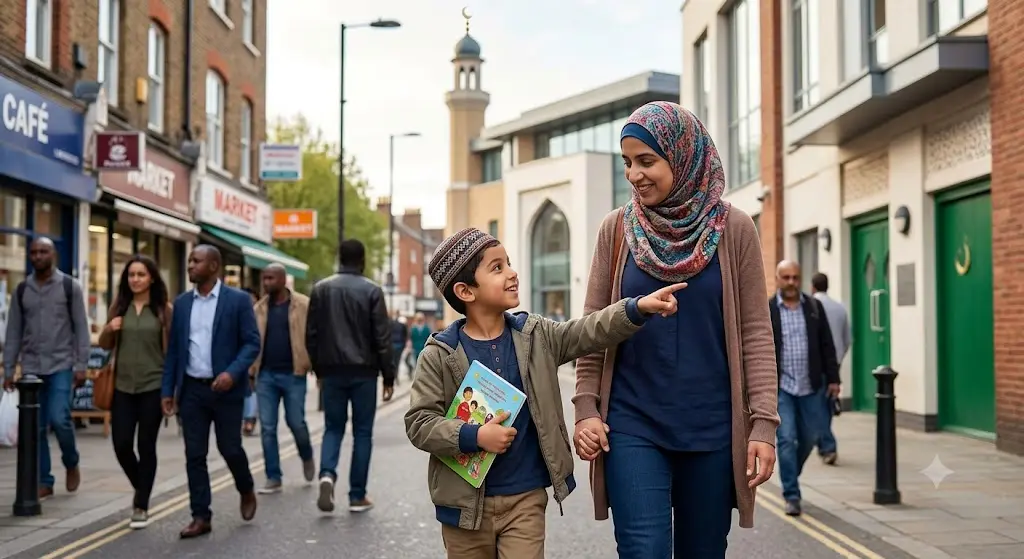
The Arabic proverb holds across cultures: raising a child requires a village. When raising Muslim kids in the West, you have to build that village deliberately.
4. The Mosque as a Community Anchor
The local mosque is the single most important community resource for Muslim families abroad. Beyond Friday prayer, most mosques offer weekend Islamic schools, youth programs, and community events that put your child in regular contact with Muslim peers who share their values.
If your mosque does not have a strong children’s program, advocate for one — or connect with other Muslim families to create informal study circles and social gatherings. The goal is consistent, recurring contact with a peer group that reinforces your child’s Muslim identity, not occasional events that feel like obligations.
Read also: Fun Ways to Teach Islam to Kids at Home (That Actually Stick)
Experience a Real Classroom
Curious about how we teach? This video offers a glimpse into a real class, showcasing our interactive approach, qualified teachers, and child-friendly learning experience.
Fun & Engaging Islamic Classes for Kids
Start your child’s journey today with interactive lessons designed to make learning Islam loved and easy.
Get Your Child a Free Trial5. Righteous Companionship Without Isolation
Children build values through their peer group as much as through their parents. A Muslim child who spends all their social time with peers who actively discourage Islamic practice will face significantly harder choices at every turn.
This does not mean isolating your child from non-Muslim friends — it means ensuring they also have Muslim friends who reinforce their identity. The difference is between a child who is the only Muslim in every room and a child who has a peer group that shares their values, even partially. Community involvement in both Muslim and broader civic spaces helps children feel they genuinely belong in both worlds — which is the Muslim identity outcome you are working toward.
6. Protecting Muslim Identity Through the Teenage Years
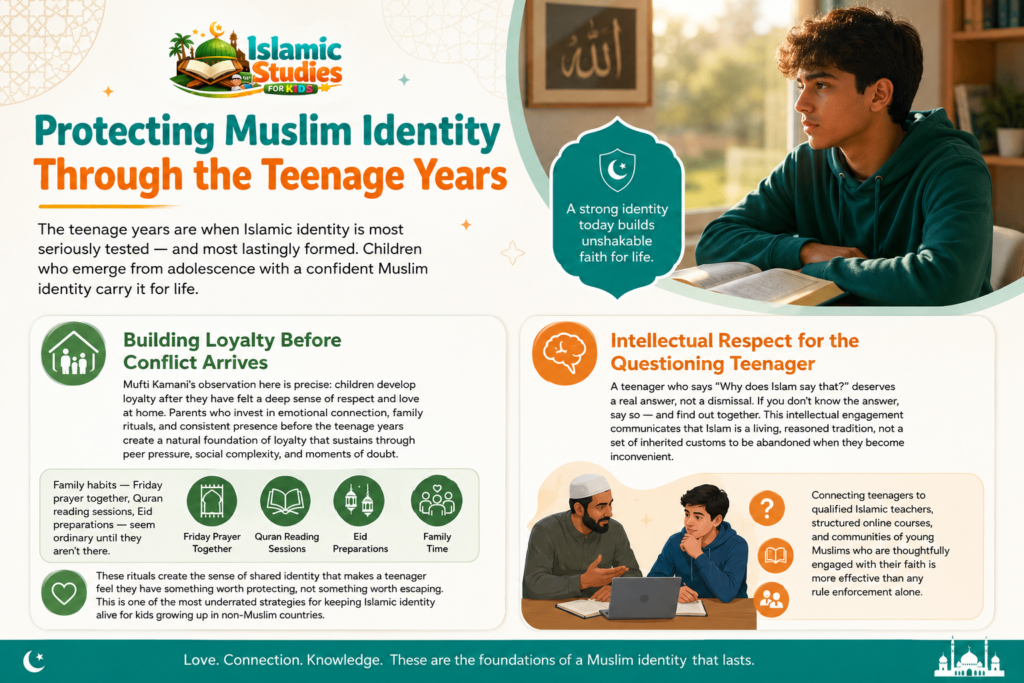
The teenage years are when Islamic identity is most seriously tested — and most lastingly formed. Children who emerge from adolescence with a confident Muslim identity carry it for life.
Building Loyalty Before Conflict Arrives
Mufti Kamani’s observation here is precise: children develop loyalty after they have felt a deep sense of respect and love at home. Parents who invest in emotional connection, family rituals, and consistent presence before the teenage years create a natural foundation of loyalty that sustains through peer pressure, social complexity, and moments of doubt.
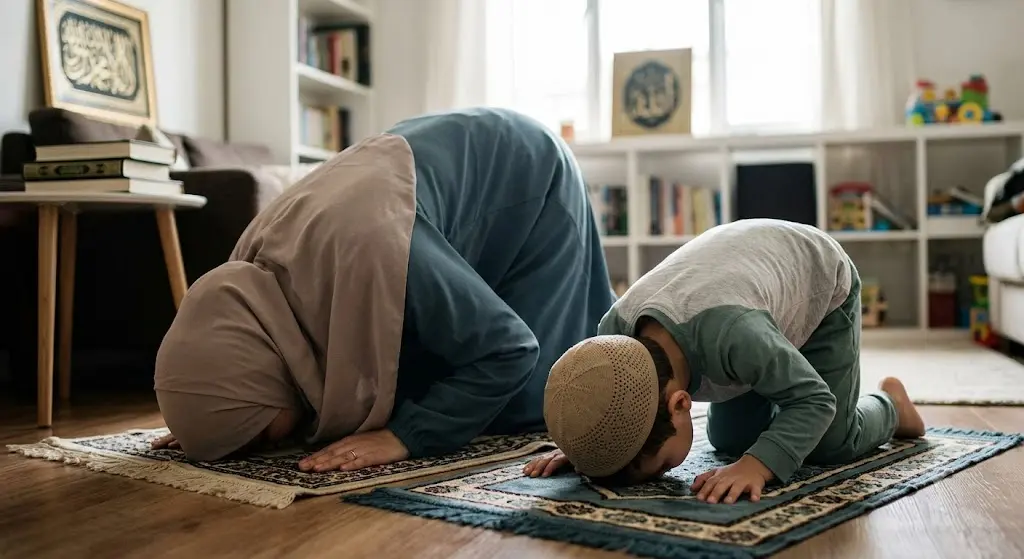
Family habits — Friday prayer together, Quran reading sessions, Eid preparations — seem ordinary until they aren’t there. These rituals create the sense of shared identity that makes a teenager feel they have something worth protecting, not something worth escaping. This is one of the most underrated strategies for keeping Islamic identity alive for kids growing up in non-Muslim countries.
Intellectual Respect for the Questioning Teenager
A teenager who says “Why does Islam say that?” deserves a real answer, not a dismissal. If you don’t know the answer, say so — and find out together. This intellectual engagement communicates that Islam is a living, reasoned tradition, not a set of inherited customs to be abandoned when they become inconvenient.
Connecting teenagers to qualified Islamic teachers, structured online courses, and communities of young Muslims who are thoughtfully engaged with their faith is more effective than any rule enforcement alone.
Watch a Sample Lesson from Our Academy
Get a firsthand look at how our students learn Islamic values, Quran, and essential knowledge through engaging and interactive online classes. See why families trust Islamic Studies for Kids Academy.
Read also: How To Teach Your Child To Pray (Salah)?
Give Your Child a Structured Islamic Education That Supports Their Identity
Home conversations plant the seeds of Islamic identity for children — but structured learning helps those seeds grow with real depth and clarity. Children in non-Muslim countries especially benefit from a learning environment where their questions are welcomed, their identity is affirmed, and Islamic knowledge is taught by qualified scholars.
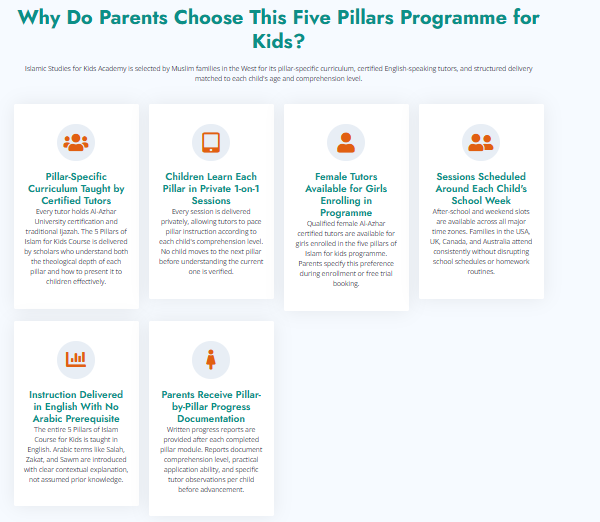
Whether your child is just beginning to learn the basics of Islam or is ready for Quran memorization and deeper study, expert guidance makes an enormous difference. Islamic Studies for Kids offers exactly that — a structured, faith-centered curriculum designed specifically for Muslim children growing up outside Muslim-majority countries.

Our Islamic Studies Courses
- Islamic Studies for Kids in UK
- Islamic Studies for Kids in USA
- Islamic Studies for Kids in UAE
- Islamic Studies for Kids in Saudi Arabia
- Islamic Studies for Kids in Netherlands
- Islamic Studies for Kids in Germany
- Islamic Studies for Kids in Canada
- Islamic Studies for Kids in New Zealand
- Islamic Studies for Kids in Ireland
Join today and help your child grow with authentic Islamic knowledge, strong moral values, and confidence in their faith.
Fun & Engaging Islamic Classes for Kids
Start your child’s journey today with interactive lessons designed to make learning Islam loved and easy.
Get Your Child a Free TrialConclusion
Raising a Muslim child in a non-Muslim country is a double commitment: to your child’s faith, and to your child themselves. The families who succeed are not those who found a perfect environment — they are the ones who built one, inside their own walls, with patience and intention.
The foundational steps are clear: build a home of safety and love, teach the why before the what, introduce the Five Pillars and Islamic basics as a way of life rather than a checklist, create family rituals that build loyalty, find community, and have honest conversations early. None of these require living in a Muslim-majority country. All of them require being present.
Muslim identity for children in the West is not something that survives by accident. It is something that grows — when it is planted with care, watered consistently, and protected with wisdom.
Frequently Asked Questions
The Most Important Factor in Raising Muslim Children Abroad
The home environment is the single most important factor. Children who grow up in a home of emotional safety, visible Islamic values, and open communication about faith develop strong, lasting Muslim identity — regardless of the surrounding culture.
The Right Age to Start Teaching Children About Islam
Islamic education can begin as early as age 3–4 through simple duas, prophet stories, and watching parents pray. Formal teaching of the Five Pillars and Quran reading typically begins around age 5–7, though the most important education — living Islamic values at home — starts from birth.
Preparing Your Child for Questions About Islam at School
Prepare your child in advance with simple, confident answers to common questions — “I don’t eat pork because it’s part of my faith,” “I pray five times a day because it keeps me connected to God.” Role-playing these conversations at home removes the panic when they happen in real life.
Finding a Muslim Community for Your Family Abroad
Start with the nearest mosque and ask about family programs, weekend Islamic schools, and community events. Muslim community organizations in most Western cities also maintain directories of local families. Online Islamic studies platforms can supplement local connections, especially for children who need structured Islamic education alongside peers.
Muslim Children Having Non-Muslim Friends
Non-Muslim friendships are not harmful — and attempting to prevent them creates unnecessary isolation. The goal is ensuring your child also has Muslim friends who reinforce their values, not that all their friends share their faith. Children who can navigate both communities with confidence develop stronger, more resilient Islamic identities than those who are kept separate.
Talking to Teenagers About Dating and Alcohol Without Pushing Them Away
Address these topics before they arise, calmly and without shame. Frame each conversation around Islamic reasoning — what the guidance is and why — rather than cultural prohibition alone. A teenager who understands the wisdom behind Islamic boundaries is far more likely to respect them than one who only knows the rule.


Leave a Reply