 Islamic Studies
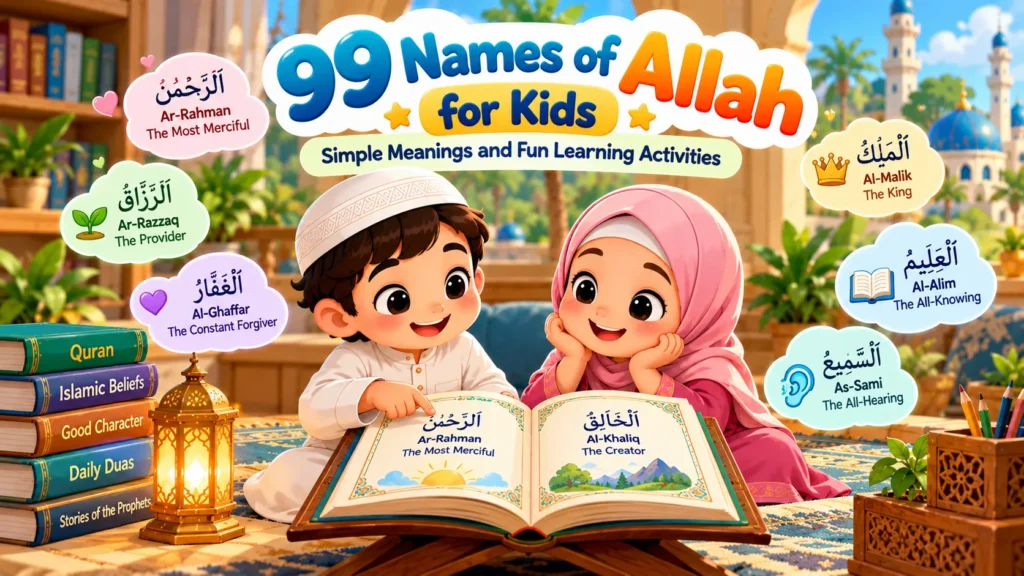
Teaching the 99 names of Allah for kids is a beautiful way to help children understand who Allah is, recognize His blessings, and develop a loving connection with their Creator.
But where should parents begin? Should children memorize all 99 names, or is understanding their meanings more important?
The good news is that learning Asma ul Husna for kids doesn’t have to be complicated. With simple explanations, short stories, and enjoyable activities, even young children can begin exploring Allah’s beautiful names.
In this guide, you’ll discover all 99 names with their meanings, Quranic references, an authentic Hadith, and practical teaching ideas you can use at home or in the classroom.
What Are the 99 Names of Allah for Kids?
The 99 Names of Allah, known in Arabic as Al-Asma ul Husna, describe Allah’s perfect attributes, including His mercy, knowledge, wisdom, and power.
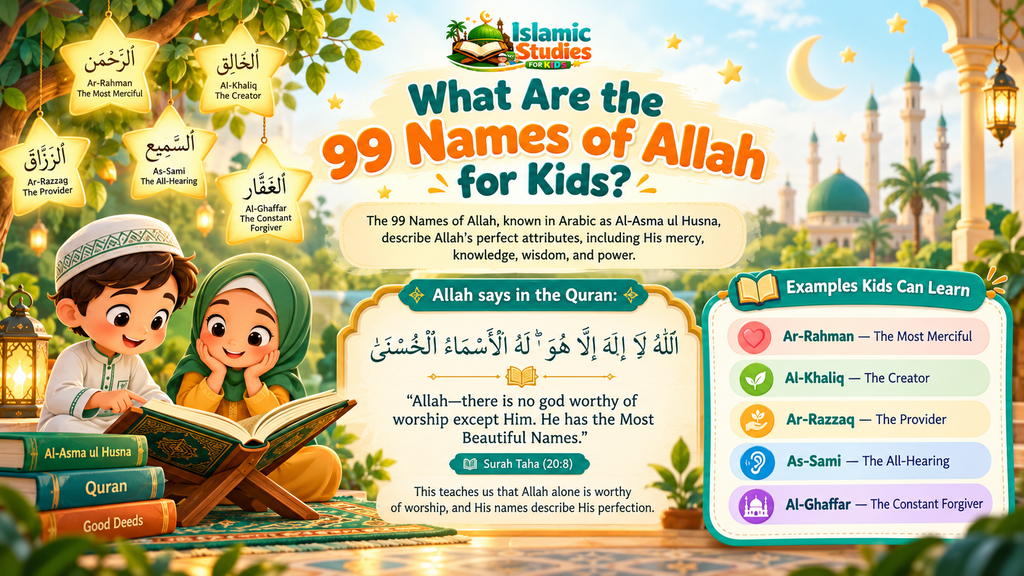
The Quran establishes the importance of these beautiful names. Allah Almighty says:
اللَّهُ لَا إِلَٰهَ إِلَّا هُوَ ۖ لَهُ الْأَسْمَاءُ الْحُسْنَىٰ
“Allah—there is no god worthy of worship except Him. He has the Most Beautiful Names.”
This verse introduces two essential Islamic beliefs: Allah is the only One worthy of worship, and His names describe His perfection.
Parents can begin with familiar examples:
- Ar-Rahman: Allah is the Most Merciful.
- Al-Khaliq: Allah is the Creator.
- Ar-Razzaq: Allah is the Provider.
- As-Sami: Allah is the All-Hearing.
- Al-Ghaffar: Allah is the Constant Forgiver.
These explanations help children understand Allah’s attributes without overwhelming them with difficult terminology.
Why Is Learning the Names of Allah Important?
Learning the beautiful names of Allah for kids is more than an exercise in Arabic vocabulary. It helps children connect Islamic beliefs with everyday life.
Developing Love and Trust in Allah
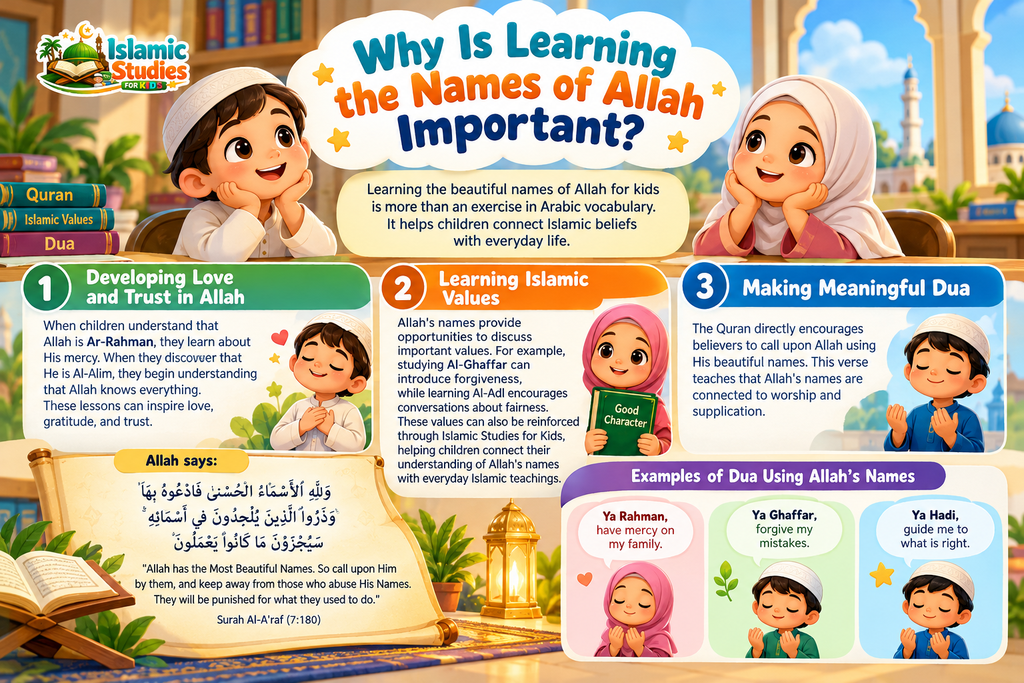
When children understand that Allah is Ar-Rahman, they learn about His mercy. When they discover that He is Al-Alim, they begin understanding that Allah knows everything These lessons can inspire love, gratitude, and trust.
Learning Islamic Values
Allah’s names provide opportunities to discuss important values. For example, studying Al-Ghaffar can introduce forgiveness, while learning Al-Adl encourages conversations about fairness.
These values can also be reinforced through Islamic Studies for Kids, helping children connect their understanding of Allah’s names with everyday Islamic teachings.

Making Meaningful Dua
The Quran directly encourages believers to call upon Allah using His beautiful names. Allah says:
وَلِلَّهِ الْأَسْمَاءُ الْحُسْنَىٰ فَادْعُوهُ بِهَا ۖ وَذَرُوا الَّذِينَ يُلْحِدُونَ فِي أَسْمَائِهِ ۚ سَيُجْزَوْنَ مَا كَانُوا يَعْمَلُونَ
“Allah has the Most Beautiful Names. So call upon Him by them, and keep away from those who abuse His Names. They will be punished for what they used to do.”
This verse teaches that Allah’s names are connected to worship and supplication.
Children can practice saying:
- “Ya Rahman, have mercy on my family.”
- “Ya Ghaffar, forgive my mistakes.”
- “Ya Hadi, guide me to what is right.”
This helps children understand how Allah’s names can become part of their daily prayers.
What Did Prophet Muhammad ﷺ Say About Allah’s 99 Names?
The importance of learning Allah’s beautiful names is also established in the authentic Sunnah.
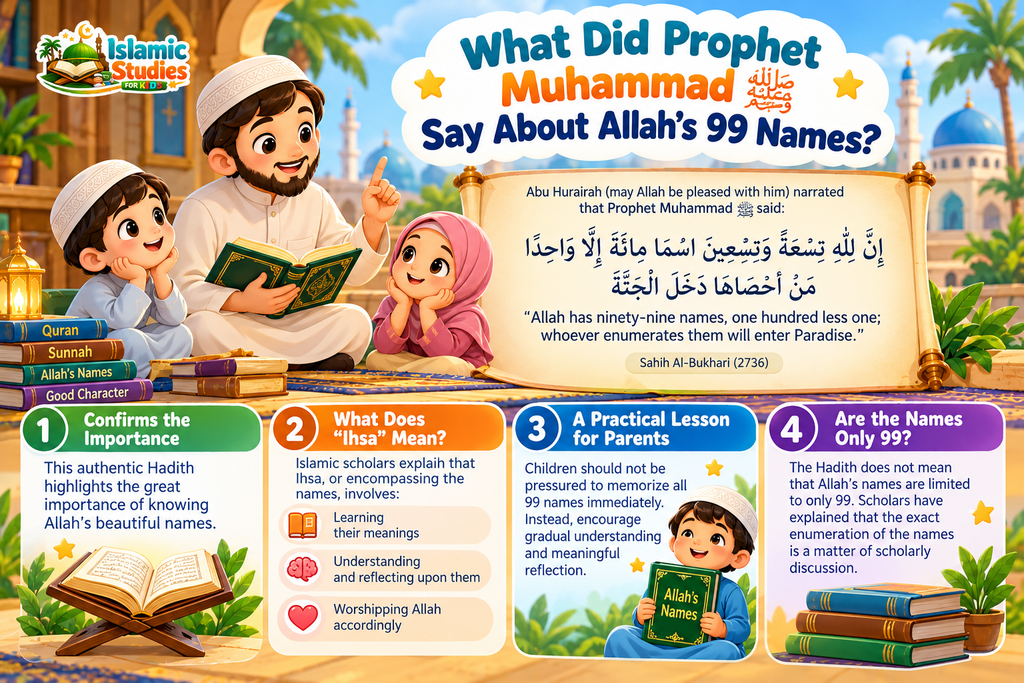
Abu Hurairah (may Allah be pleased with him) narrated that Prophet Muhammad ﷺ said:
إِنَّ لِلَّهِ تِسْعَةً وَتِسْعِينَ اسْمًا مِائَةً إِلَّا وَاحِدًا مَنْ أَحْصَاهَا دَخَلَ الْجَنَّةَ
“Allah has ninety-nine names, one hundred less one; whoever enumerates them will enter Paradise.”
This authentic Hadith highlights the importance of knowing Allah’s names Islamic scholars explain that Ihsa, or encompassing the names, involves learning, understanding, and reflecting upon their meanings, alongside worshipping Allah accordingly.
For parents, this provides an important lesson: children should not be pressured to memorize all 99 names immediately Instead, encourage gradual understanding and meaningful reflection.
The Hadith also does not mean that Allah’s names are limited to only 99. Scholars have explained that the exact enumeration of the names is a matter of scholarly discussion.
Experience a Real Classroom
Curious about how we teach? This video offers a glimpse into a real class, showcasing our interactive approach, qualified teachers, and child-friendly learning experience.
Fun & Engaging Islamic Classes for Kids
Start your child’s journey today with interactive lessons designed to make learning Islam loved and easy.
Get Your Child a Free TrialComplete List of 99 Names of Allah for Kids With Meanings
Below is a widely taught traditional list of Allah names for children, presented with Arabic names, English transliterations, and simple meanings.
The list follows a familiar teaching arrangement. It is not presented as an undisputed enumeration agreed upon by all scholars.
| # | Arabic Name | Transliteration | Meaning |
| 1 | الرحمن | Ar-Rahman | The Most Merciful |
| 2 | الرحيم | Ar-Rahim | The Especially Merciful |
| 3 | الملك | Al-Malik | The King |
| 4 | القدوس | Al-Quddus | The Absolutely Pure |
| 5 | السلام | As-Salam | The Source of Peace |
| 6 | المؤمن | Al-Mu’min | The Giver of Security |
| 7 | المهيمن | Al-Muhaymin | The Guardian |
| 8 | العزيز | Al-Aziz | The Almighty |
| 9 | الجبار | Al-Jabbar | The Compeller |
| 10 | المتكبر | Al-Mutakabbir | The Supreme |
| 11 | الخالق | Al-Khaliq | The Creator |
| 12 | البارئ | Al-Bari | The Originator |
| 13 | المصور | Al-Musawwir | The Fashioner |
| 14 | الغفار | Al-Ghaffar | The Constant Forgiver |
| 15 | القهار | Al-Qahhar | The Subduer |
| 16 | الوهاب | Al-Wahhab | The Bestower |
| 17 | الرزاق | Ar-Razzaq | The Provider |
| 18 | الفتاح | Al-Fattah | The Opener |
| 19 | العليم | Al-Alim | The All-Knowing |
| 20 | القابض | Al-Qabid | The Withholder |
| 21 | الباسط | Al-Basit | The Expander |
| 22 | الخافض | Al-Khafid | The One Who Lowers |
| 23 | الرافع | Ar-Rafi | The Exalter |
| 24 | المعز | Al-Mu’izz | The Giver of Honor |
| 25 | المذل | Al-Mudhill | The One Who Humbles |
| 26 | السميع | As-Sami | The All-Hearing |
| 27 | البصير | Al-Basir | The All-Seeing |
| 28 | الحكم | Al-Hakam | The Judge |
| 29 | العدل | Al-Adl | The Just |
| 30 | اللطيف | Al-Latif | The Most Gentle |
| 31 | الخبير | Al-Khabir | The All-Aware |
| 32 | الحليم | Al-Halim | The Forbearing |
| 33 | العظيم | Al-Azim | The Magnificent |
| 34 | الغفور | Al-Ghafur | The All-Forgiving |
| 35 | الشكور | Ash-Shakur | The Appreciative |
| 36 | العلي | Al-Ali | The Most High |
| 37 | الكبير | Al-Kabir | The Most Great |
| 38 | الحفيظ | Al-Hafiz | The Preserver |
| 39 | المقيت | Al-Muqit | The Sustainer |
| 40 | الحسيب | Al-Hasib | The Reckoner |
| 41 | الجليل | Al-Jalil | The Majestic |
| 42 | الكريم | Al-Karim | The Generous |
| 43 | الرقيب | Ar-Raqib | The Watchful |
| 44 | المجيب | Al-Mujib | The Responsive |
| 45 | الواسع | Al-Wasi | The All-Encompassing |
| 46 | الحكيم | Al-Hakim | The All-Wise |
| 47 | الودود | Al-Wadud | The Most Loving |
| 48 | المجيد | Al-Majid | The Glorious |
| 49 | الباعث | Al-Ba’ith | The Resurrector |
| 50 | الشهيد | Ash-Shahid | The Witness |
| 51 | الحق | Al-Haqq | The Absolute Truth |
| 52 | الوكيل | Al-Wakil | The Trustee |
| 53 | القوي | Al-Qawiyy | The All-Strong |
| 54 | المتين | Al-Matin | The Firm |
| 55 | الولي | Al-Waliyy | The Protecting Friend |
| 56 | الحميد | Al-Hamid | The Praiseworthy |
| 57 | المحصي | Al-Muhsi | The Enumerator |
| 58 | المبدئ | Al-Mubdi | The Originator |
| 59 | المعيد | Al-Mu’id | The Restorer |
| 60 | المحيي | Al-Muhyi | The Giver of Life |
| 61 | المميت | Al-Mumit | The Bringer of Death |
| 62 | الحي | Al-Hayy | The Ever-Living |
| 63 | القيوم | Al-Qayyum | The Self-Sustaining |
| 64 | الواجد | Al-Wajid | The One Who Lacks Nothing |
| 65 | الماجد | Al-Maajid | The Noble |
| 66 | الواحد | Al-Wahid | The One |
| 67 | الأحد | Al-Ahad | The Unique |
| 68 | الصمد | As-Samad | The One All Depend Upon |
| 69 | القادر | Al-Qadir | The All-Able |
| 70 | المقتدر | Al-Muqtadir | The All-Powerful |
| 71 | المقدم | Al-Muqaddim | The One Who Brings Forward |
| 72 | المؤخر | Al-Mu’akhkhir | The One Who Delays |
| 73 | الأول | Al-Awwal | The First |
| 74 | الآخر | Al-Akhir | The Last |
| 75 | الظاهر | Az-Zahir | The Manifest |
| 76 | الباطن | Al-Batin | The Hidden |
| 77 | الوالي | Al-Wali | The Governor |
| 78 | المتعالي | Al-Muta’ali | The Most Exalted |
| 79 | البر | Al-Barr | The Source of Goodness |
| 80 | التواب | At-Tawwab | The Accepter of Repentance |
| 81 | المنتقم | Al-Muntaqim | The Avenger |
| 82 | العفو | Al-Afuww | The Pardoner |
| 83 | الرؤوف | Ar-Ra’uf | The Most Kind |
| 84 | مالك الملك | Malik-ul-Mulk | Master of the Kingdom |
| 85 | ذو الجلال والإكرام | Dhul-Jalali wal-Ikram | Possessor of Glory and Honor |
| 86 | المقسط | Al-Muqsit | The Just One |
| 87 | الجامع | Al-Jami | The Gatherer |
| 88 | الغني | Al-Ghaniyy | The Self-Sufficient |
| 89 | المغني | Al-Mughni | The Enricher |
| 90 | المانع | Al-Mani | The Withholder |
| 91 | الضار | Ad-Darr | The One Who Can Allow Harm |
| 92 | النافع | An-Nafi | The Benefactor |
| 93 | النور | An-Nur | The Light |
| 94 | الهادي | Al-Hadi | The Guide |
| 95 | البديع | Al-Badi | The Incomparable Originator |
| 96 | الباقي | Al-Baqi | The Everlasting |
| 97 | الوارث | Al-Warith | The Inheritor |
| 98 | الرشيد | Ar-Rashid | The Guide to the Right Path |
| 99 | الصبور | As-Sabur | The Patient |
5 Easy Names of Allah to Teach Young Children First
Introducing the 99 names of Allah for kids through simple explanations and everyday activities helps children understand their meanings and develop a stronger connection with Allah. Here are five beautiful names to begin with.
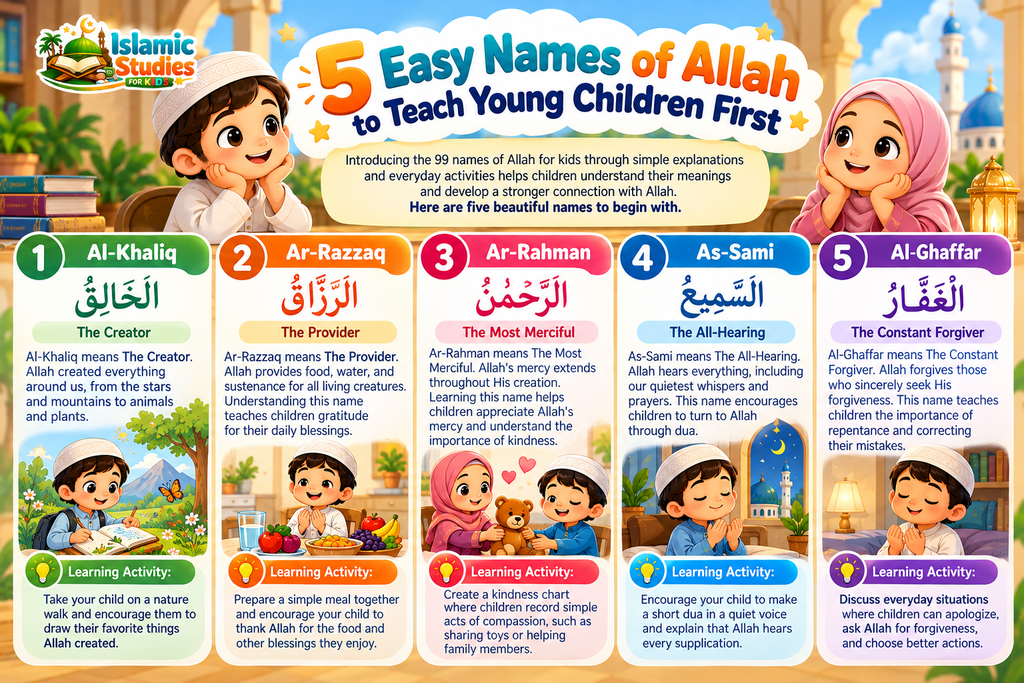
1. Al-Khaliq (الْخَالِقُ) – The Creator
Al-Khaliq means The Creator. Allah created everything around us, from the stars and mountains to animals and plants. Children can explore this name by observing the beauty of nature.
Learning Activity: Take your child on a nature walk and encourage them to draw their favorite things Allah created.
2. Ar-Razzaq (الرَّزَّاقُ) – The Provider
Ar-Razzaq means The Provider. Allah provides food, water, and sustenance for all living creatures. Understanding this name teaches children gratitude for their daily blessings.
Learning Activity: Prepare a simple meal together and encourage your child to thank Allah for the food and other blessings they enjoy.
3. Ar-Rahman (الرَّحْمَٰنُ) – The Most Merciful
Ar-Rahman means The Most Merciful. Allah’s mercy extends throughout His creation. Learning this name helps children appreciate Allah’s mercy and understand the importance of kindness.
Learning Activity: Create a kindness chart where children record simple acts of compassion, such as sharing toys or helping family members.
4. As-Sami (السَّمِيعُ) – The All-Hearing
As-Sami means The All-Hearing. Allah hears everything, including our quietest whispers and prayers. This name encourages children to turn to Allah through dua.
Learning Activity: Encourage your child to make a short dua in a quiet voice and explain that Allah hears every supplication.
5. Al-Ghaffar (الْغَفَّارُ) – The Constant Forgiver
Al-Ghaffar means The Constant Forgiver. Allah forgives those who sincerely seek His forgiveness. This name teaches children the importance of repentance and correcting their mistakes.
Learning Activity: Discuss everyday situations where children can apologize, ask Allah for forgiveness, and choose better actions.
By connecting these beautiful names of Allah for kids with practical activities, parents can make learning Asma ul Husna an enjoyable and meaningful part of their children’s Islamic education.
How to Teach Asma ul Husna for Kids at Home?
An effective learning routine doesn’t require expensive materials or lengthy lessons. Parents can introduce the 99 Names of Allah through simple explanations, everyday experiences, and short activities that make learning meaningful and enjoyable.
Teach One Name at a Time
Choose one name and explain its meaning in one or two sentences. Young children might spend several days exploring that name before moving to another.
Use colorful flashcards or repeat the name together each day to help children remember it. Encourage them to explain its meaning in their own words before introducing a new name.
Connect Names to Everyday Life
Use ordinary moments as learning opportunities. At mealtime, discuss Ar-Razzaq. During a nature walk, discuss Al-Khaliq. Before bedtime, introduce As-Sami through dua.
These simple connections help children understand that the Names of Allah are meaningful beyond memorization. Parents can ask questions such as, “Who provides our food?” or “Who created the beautiful trees?” to encourage reflection.
Use Stories and Quranic Examples
Quranic stories help children understand Islamic concepts. For example, the story of Prophet Yunus (AS) provides an opportunity to discuss supplication and turning to Allah during difficulties.
Choose short, age-appropriate stories and discuss what children can learn about Allah’s mercy, wisdom, and power. Asking simple questions after each story helps reinforce their understanding.
Parents can combine these discussions with a structured online Quran course for kids to support children’s understanding of Quranic teachings.

Encourage Questions
Allow children to ask questions freely. If a child asks whether Allah can hear them whisper, explain that Allah’s hearing is perfect and unlike human hearing. Use short, reassuring explanations without inventing details about Allah.
Listen patiently and answer using simple language supported by Quranic teachings. When a question is difficult, parents can explore reliable Islamic resources together rather than giving uncertain explanations.
Fun Activities to Learn 99 Names of Allah for Kids
Learning the 99 names of Allah for kids through creative activities makes Islamic education more enjoyable and helps children understand and remember Allah’s beautiful names.
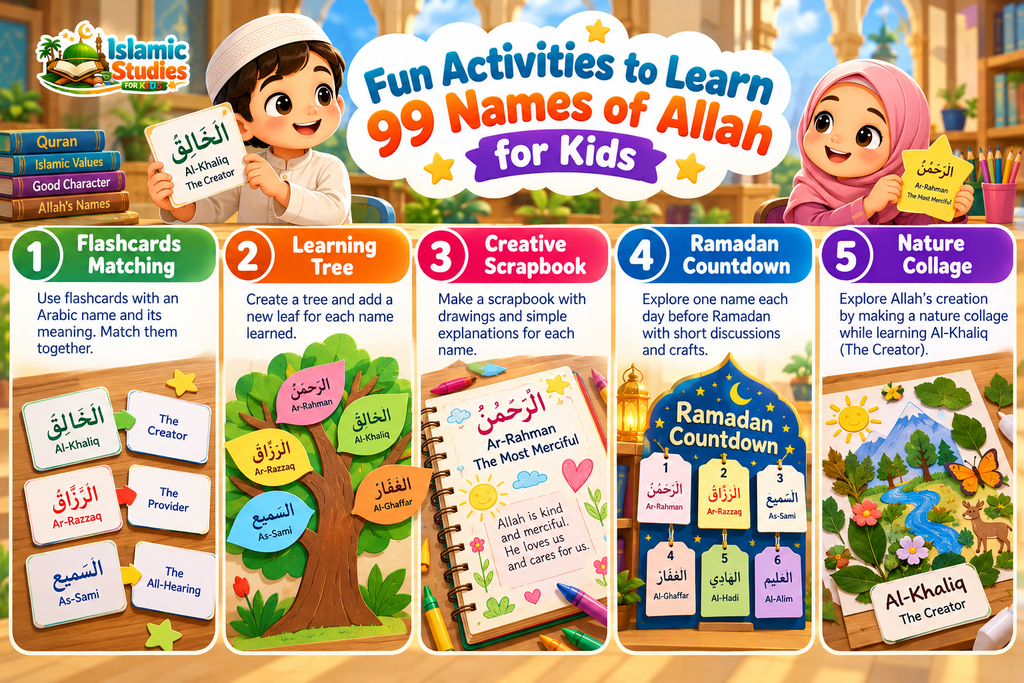
1. Use Flashcards to Match Allah’s Names With Their Meanings
Create flashcards with an Arabic name on one side and its English meaning on the other. Encourage children to match names with their meanings and review what they have learned.
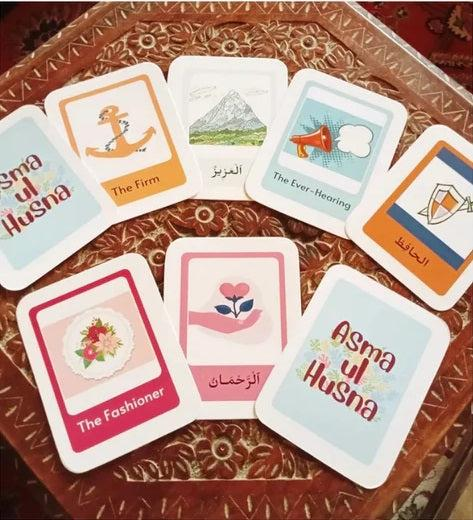
Start with five familiar names, such as Ar-Rahman, Ar-Raheem, Al-Khaliq, Ar-Razzaq, and As-Sami. Turn the activity into a simple matching game to make memorization more engaging.
2. Create a Learning Tree for the 99 Names of Allah
Draw a large tree and add a colorful paper leaf for each new name your child learns. Write the name and its meaning on every leaf to track their progress.
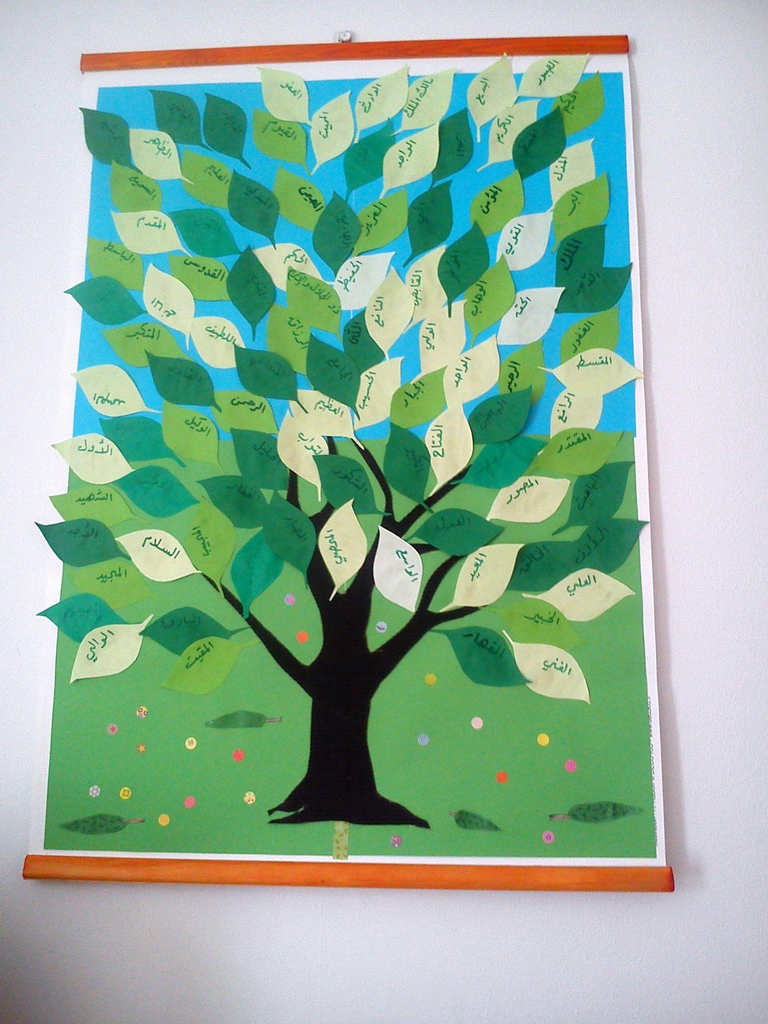
Display the tree in your child’s room and encourage them to review previously learned names before adding new leaves. This creates a visual reminder of their learning journey.
3. Make a Creative Scrapbook of Allah’s Beautiful Names
Help children create a scrapbook with a dedicated page for each name. Include drawings, simple explanations, and activities that illustrate its meaning.
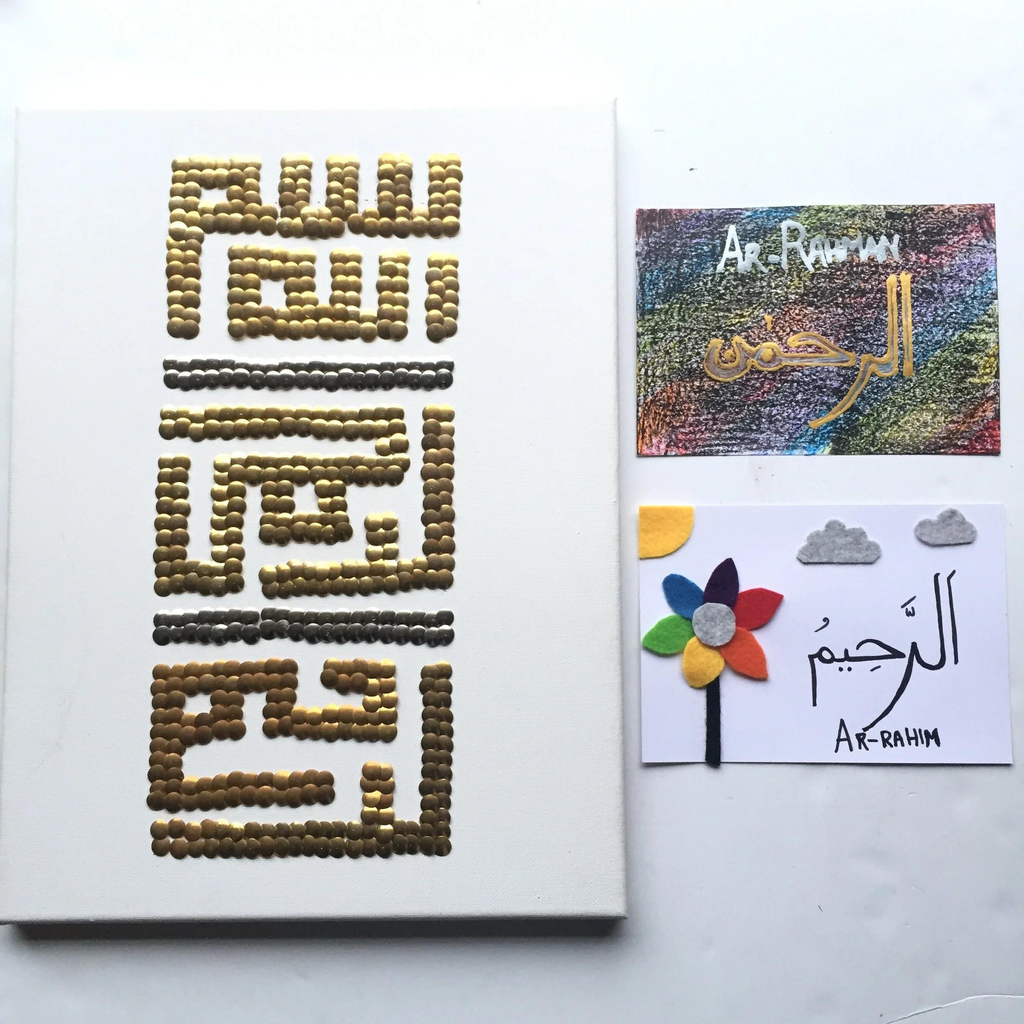
For example, children can draw flowers and trees when learning about Al-Khaliq (The Creator). Encourage them to write one short sentence explaining what each name teaches them about Allah.
4. Start a Ramadan Countdown With One Name of Allah Each Day
Make the days leading up to Ramadan meaningful by exploring one name daily through short discussions, stories, and creative crafts.
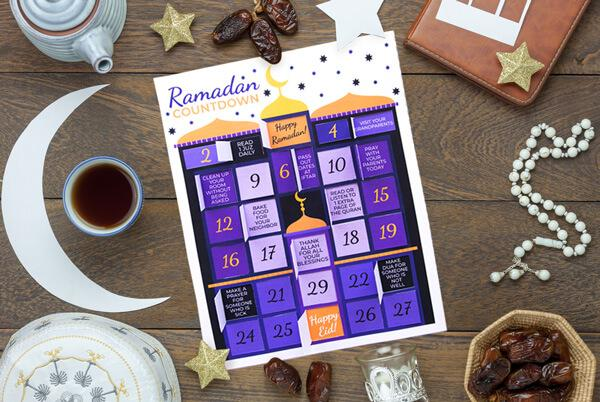
Prepare small envelopes or numbered cards containing a different name and its meaning. Children can open one each day and discuss how that name connects to their daily lives.
5. Explore Allah’s Creation Through a Nature Collage
Collect fallen leaves and draw flowers, trees, and animals to create a nature collage while learning about Al-Khaliq (The Creator).
Ask children to identify different things Allah has created and explain what makes each one special. This activity encourages observation, gratitude, and reflection on Allah’s greatness.
These activities help children connect Asma ul Husna for kids with everyday experiences, making learning more meaningful than memorization alone.
A Simple 7-Day Learning Plan
Parents can use this beginner-friendly weekly schedule.
| Day | Name | Activity |
| Monday | Ar-Rahman | Make a kindness chart |
| Tuesday | Al-Khaliq | Explore nature |
| Wednesday | Ar-Razzaq | Discuss food blessings |
| Thursday | As-Sami | Practice dua |
| Friday | Al-Ghaffar | Talk about forgiveness |
| Saturday | Al-Wadud | Create a kindness card |
| Sunday | Review | Play a matching game |
Keep sessions short, typically five to ten minutes for preschool children.
If your child needs more time, repeat a name rather than moving forward simply to complete the schedule.
How to Teach Allah’s Names According to Your Child’s Age?
Teaching the 99 names of Allah for kids should match each child’s age, understanding, and learning abilities. Choosing age-appropriate activities makes learning Asma ul Husna more engaging and meaningful.
| Age Group | Teaching Approach | Recommended Activities |
| Ages 2–4 | Introduce simple names using familiar words and everyday examples. | Pictures, repetition, and coloring activities. |
| Ages 5–7 | Explain basic meanings and encourage children to remember a few names at a time. | Flashcards, crafts, and matching games. |
| Ages 8–10 | Explore deeper meanings and connect Allah’s names to Quranic teachings and Islamic values. | Quranic stories, discussions, and learning journals. |
| Ages 11+ | Encourage reflection on Allah’s attributes and their connection to faith and worship. | Quran study, authentic Hadith, and guided reflection. |
Families seeking additional guidance, including those looking for online Islamic Studies classes for children in New Zealand, can complement age-appropriate home activities with guided lessons.

Common Mistakes Parents Should Avoid When Teaching Allah’s Names
Teaching the 99 names of Allah for kids should be a positive and meaningful experience.
To help children develop a deeper understanding of Asma ul Husna, parents should avoid these common mistakes:
Rushing Through All 99 Names
Trying to teach too many names at once can overwhelm children. Focus on a few names at a time and allow enough time for understanding and review.
Parents can introduce one or two names each week and revisit them through short conversations or activities. This gradual approach helps children remember the names and understand their meanings.
Focusing Only on Memorization
Memorizing names without understanding their meanings limits the learning experience. Use simple explanations and everyday examples to help children connect with each name.
For example, when teaching Ar-Razzaq (The Provider), discuss how Allah provides food and other blessings. Connecting names to familiar experiences makes learning more meaningful.
Using Complicated Explanations
Young children may struggle with abstract theological concepts. Choose age-appropriate language while ensuring explanations remain accurate and respectful of Islamic teachings.
Start with short definitions and simple Quranic examples. As children grow older, parents can gradually introduce deeper explanations that match their understanding.
Treating Activities as Complete Explanations
Crafts and games are useful learning tools, but they cannot fully represent Allah’s perfect attributes. Explain that these activities are reminders of the meanings, not representations of Allah.
For example, drawing a beautiful garden can help children reflect on Allah as Al-Khaliq (The Creator). However, remind them that Allah is unlike anything in His creation.
Pressuring Children to Remember Every Name
Forgetting is a natural part of learning. Encourage regular revision, celebrate progress, and avoid making children feel discouraged when they make mistakes.
Keep learning sessions short and enjoyable, and praise children for their efforts rather than expecting perfect memorization. A patient approach helps build confidence and encourages a lasting interest in learning Allah’s beautiful names.
By avoiding these mistakes, parents can create a supportive learning environment that encourages children to understand, appreciate, and remember Allah’s beautiful names.
Watch a Sample Lesson from Our Academy
Get a firsthand look at how our students learn Islamic values, Quran, and essential knowledge through engaging and interactive online classes. See why families trust Islamic Studies for Kids Academy.
Fun & Engaging Islamic Classes for Kids
Start your child’s journey today with interactive lessons designed to make learning Islam loved and easy.
Get Your Child a Free TrialHelp Your Child Build a Stronger Connection With Allah
Learning the 99 Names of Allah is just the beginning of your child’s Islamic education journey. At Islamic Studies for Kids Academy, we help children develop a deeper understanding of their faith through engaging, age-appropriate Islamic education.
Our academy focuses on nurturing children’s love for Allah while helping them understand the Quran, Islamic beliefs, Seerah, and essential Islamic values.
With experienced teachers, personalized guidance, and a supportive learning environment, children can strengthen their Islamic knowledge and practice their faith with confidence.
Give your child a strong foundation in Islam. Explore Islamic Studies for Kids Academy and take the first step toward a meaningful Islamic learning journey.
Our Islamic Studies Courses Include:
- Islamic Studies Course for Kids
- Islam Basics Course for Kids
- 5 Pillars of Islam Course for Kids
- 6 Pillars of Iman (Faith) Course for Kids
- Salah (Prayer) Course for Kids
- Wudu Course for Kids

Conclusion
Teaching the 99 names of Allah for kids is an opportunity to nurture Islamic understanding, gratitude, and love for Allah from an early age.
Whether children learn through Quranic stories, flashcards, family discussions, or creative crafts, the most valuable lessons are those that help them understand and remember Allah in everyday life.
Begin with one name, explain its meaning, and allow your child to learn gradually With consistency, patience, and meaningful activities, learning Asma ul Husna can become a rewarding part of your family’s Islamic education journey.
Frequently Asked Questions
What are the 99 Names of Allah for kids?
They are a traditionally taught collection of Allah’s beautiful names describing His perfect attributes, including mercy, knowledge, wisdom, and power.
What is the easiest way to memorize Allah’s names?
Begin with a few names, explain their meanings, and review them regularly using flashcards, stories, and everyday examples.
Should children memorize all 99 names?
Children can gradually work toward memorization, but parents should also emphasize understanding and reflection rather than rushing through the list.
What age should children start learning Asma ul Husna?
Children can begin hearing simple names during their preschool years. More detailed learning can develop gradually as they grow.
Can children learn Allah’s names before Ramadan?
Yes. A Ramadan countdown can be a helpful family project, but children do not need to finish all 99 names before Ramadan begins.
How can I explain the names of Allah to a toddler?
Use familiar examples, such as food when teaching Ar-Razzaq or flowers when introducing Al-Khaliq. Keep explanations brief and repeat them naturally.




Leave a Reply