 Books
Books
Finding arabic kids books that actually hold a child’s attention is harder than it sounds. Many Arabic children’s titles either read like outdated textbooks or skip the cultural depth that makes a story memorable. The right book does both: it teaches vocabulary naturally through plot, and it gives children a real connection to Arabic heritage, values, and storytelling traditions.
This list pulls together some of the strongest arabic books for kids available today — picture books, rhyming stories, translated classics, and modern releases — chosen for what they actually teach, not just how they look on a shelf.
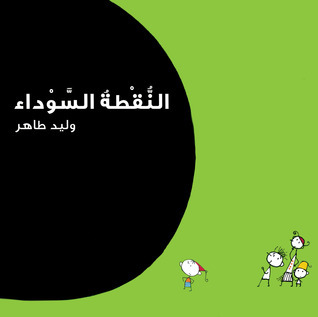
1- The Black Spot
The Black Spot Book follows a group of friends who play daily in an empty lot until a black spot appears and slowly swallows their space. The children try everything to remove it and fail, until one boy, Marwan, refuses to accept the smaller playing area and convinces his friends to break the spot apart together.
The story works on two levels at once. Younger readers follow a simple, visual plot; older readers pick up the underlying message about persistence and refusing to settle for less than what’s needed. The author closes with a line worth remembering: it doesn’t matter whether a solution is easy or hard — what matters is that one exists.
Read Also: Best Quran Learning Tools for Kids
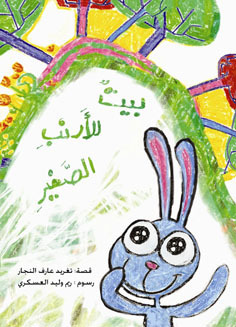
2- House for the Little Bunny
Written entirely in rhyme, The House for the Little Bunny book follows a young bunny who leaves home to escape a noisy elephant neighbor and search for a quieter place to live. Along the way he meets a wide range of animals, each with a different habitat and way of life.
The rhyming structure matters more than it might seem. Rhyme helps children predict upcoming words, which builds reading fluency faster than flat prose, a technique used across early literacy programs in multiple languages, not just Arabic. The book also comes with an interactive CD containing songs, games, and printable activities.
3- The Frowning Town
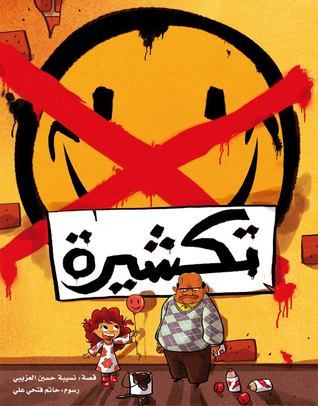
Taksheera imagines a village where frowning is mandatory and smiling is banned in schools and public spaces — even the children’s balloons are printed with frowns instead of smiles. The town holds an annual frowning competition, and the reigning champion has a baby daughter, Jamila, who does nothing but laugh.
Her father tries to train the frown out of her and fails. Her laughter spreads first to her classmates, then to the whole village, eventually changing Taksheera’s name and culture for good.
The book’s real lesson sits underneath the humor: one person’s refusal to conform can shift an entire community. It’s a sharper take on individuality than most picture books attempt, delivered through bright, expressive illustration rather than direct statement.
4- One Year in Qena
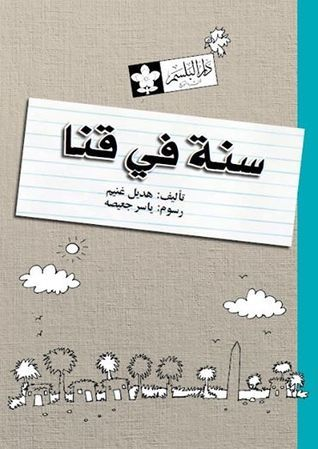
The One Year in Qena book is written as the diary of a 13-year-old Egyptian boy sent to live with his sick grandmother in Qena, Upper Egypt, for a year. Through his entries, readers encounter shamsy sun-baked bread, farm work, a traditional moulid festival, and the months of the Coptic calendar alongside the proverbs tied to each one.
What separates this from a typical “fish out of water” story is specificity. The boy doesn’t just visit a generic village — he learns named foods, named festivals, and a named calendar system tied to a real region of Egypt. That level of detail is what teaches culture, not just vocabulary.
The diary format also makes it a natural model for journaling exercises, useful for parents trying to get reluctant writers to practice Arabic composition.
5- Kalila and Dimna
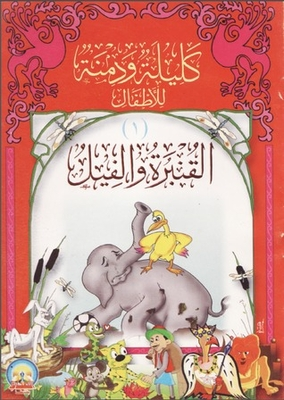
Kalila wa Dimna has one of the longest histories of any book on this list. Originally composed in Sanskrit around the third century BC, it was translated into Persian during the Abbasid era and rendered into Arabic by Abdullah Ibn al-Muqaffa’ around 750 AD. Simplified editions for children are widely available today.
The fables use animals — a lion king, a clever jackal, and a cast of forest creatures — as stand-ins for human rulers and subjects. Each story critiques unjust leadership and rewards fairness, making it less a bedtime story and more an early lesson in ethics and governance, dressed as animal fiction.
If your child enjoys the moral-lesson format of Kalila wa Dimna, a structured Hadith course for kids online builds on that same instinct — learning values through short, memorable narratives, but grounded directly in Islamic tradition rather than allegory.
Read Also:Information About Quran For Kids
6- Ahlam’s Victory
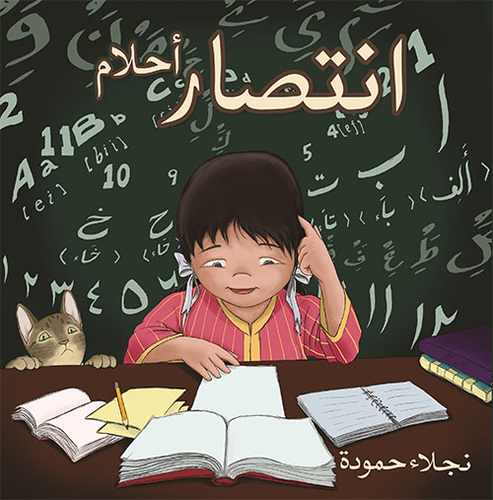
Ahlam’s Victory follows a girl who fails an important exam, struggles with the frustration that follows, and works her way back to success through persistence rather than talent.
The book avoids the trap many “resilience” stories fall into — making success feel automatic — by spending real page time on the discomfort of failure before the turnaround.
This is a useful book for late-elementary readers who are starting to face real academic pressure for the first time. It models the internal process of recovering from a setback, not just the outcome.
Experience a Real Classroom
Curious about how we teach? This video offers a glimpse into a real class, showcasing our interactive approach, qualified teachers, and child-friendly learning experience.
Fun & Engaging Islamic Classes for Kids
Start your child’s journey today with interactive lessons designed to make learning Islam loved and easy.
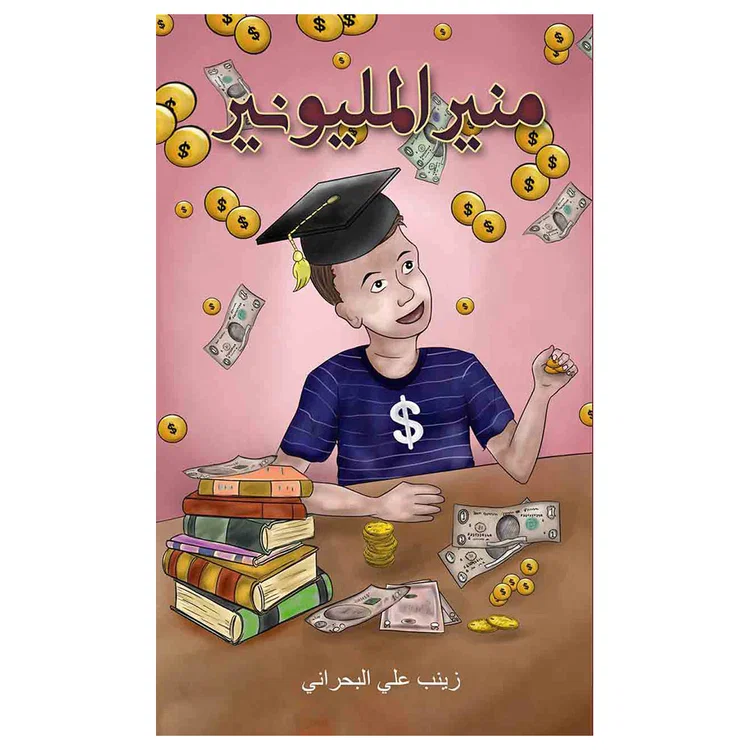
Get Your Child a Free Trial7- Munir the Millionaire
Munir is an observant, curious boy who notices how wealth and money actually work around him and decides, deliberately, to understand it.
The Munir the Millionaire book frames financial literacy as a skill built through observation and patience, not luck — a distinction many children’s books about money skip entirely.
It works well as a discussion-starter book: most of its value comes from the questions a parent can ask afterward (“What did Munir notice that other kids didn’t?”) rather than the plot alone.
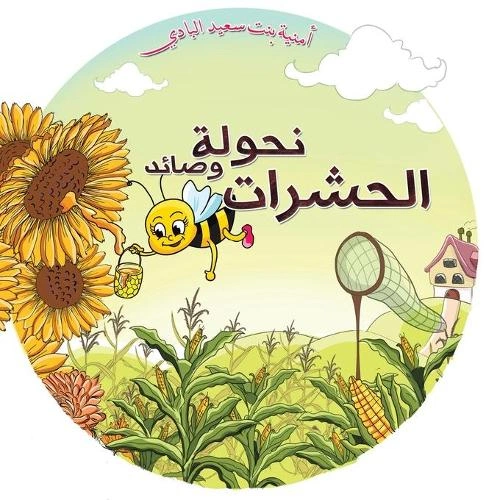
8- Nahola and the Insect Hunter
Nahola is a bee whose daily routine of collecting honey is disrupted when an insect hunter threatens her hive.
The story shifts from a repetitive, comforting rhythm into sudden danger, then resolution — a pacing technique that keeps younger readers engaged without becoming frightening.
In Nahola and the Insect Hunter, it’s a solid entry point for teaching children how to respond to an unfamiliar threat calmly, using teamwork rather than panic, which is the book’s stated teaching purpose.
How to Choose the Right Arabic Book for Your Child?
The biggest mistake parents make when picking Arabic books for kids is matching the book to the child’s age instead of their actual reading level.
A 7-year-old in a full Arabic immersion school and a 7-year-old hearing spoken Arabic at home only need very different books, even with the same birth year.
A simpler filter works better: pick rhyming, repetitive books (like Beit Lel A’rnab El Sagheer) for children still building vocabulary recognition, and reserve longer narrative formats (like Sana Fi Qena or Ahlam’s Victory) for children who can already follow a multi-page plot without losing the thread.
Reading builds vocabulary and cultural fluency, but it doesn’t teach a child to read the Quran with correct pronunciation — that requires dedicated instruction.
Pairing storytime with a Quranic Arabic course for kids online from Islamic Studies for Kids Academy gives children the grammar foundation that storybooks alone can’t provide, since picture books are written in simplified Modern Standard Arabic rather than classical Quranic structure.
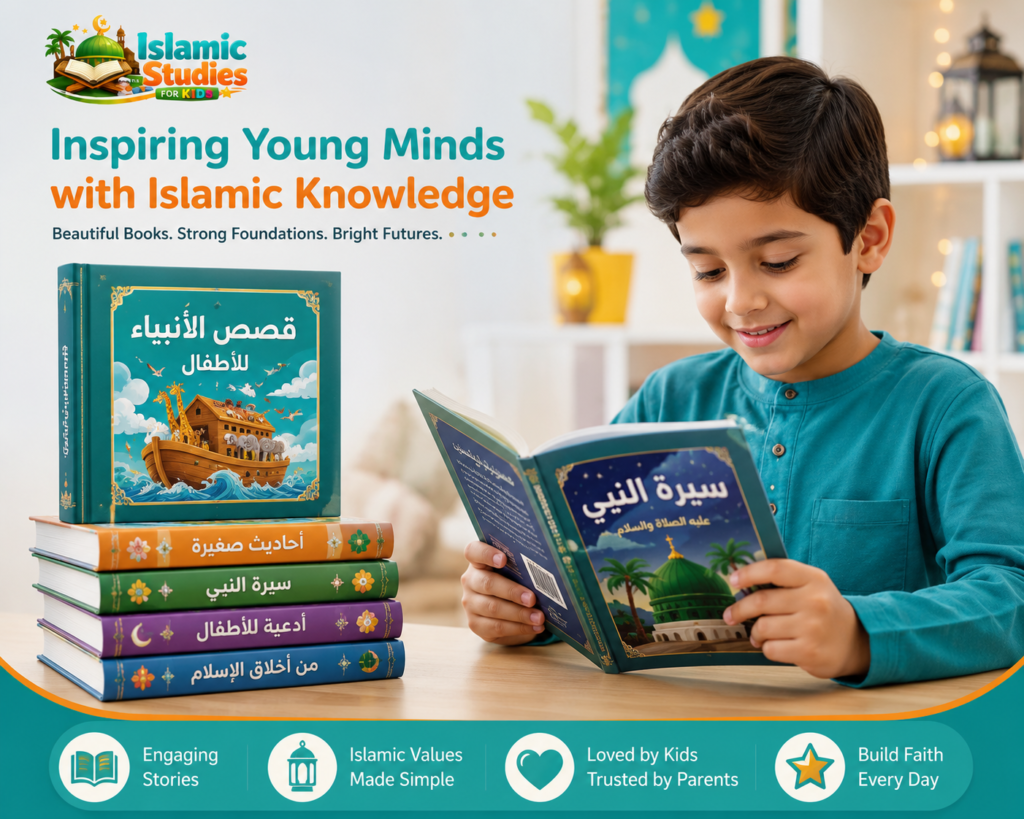
Reading builds vocabulary and cultural fluency, but it doesn’t teach a child to read the Quran with correct pronunciation that requires dedicated instruction.
Pairing storytime with a Quranic Arabic course for kids online gives children the grammar foundation that storybooks alone can’t provide, since picture books are written in simplified Modern Standard Arabic rather than classical Quranic structure.
Watch a Sample Lesson from Our Academy
Get a firsthand look at how our students learn Islamic values, Quran, and essential knowledge through engaging and interactive online classes. See why families trust Islamic Studies for Kids Academy.
Fun & Engaging Islamic Classes for Kids
Start your child’s journey today with interactive lessons designed to make learning Islam loved and easy.
Get Your Child a Free TrialBuild on Reading With Structured Quran and Arabic Learning
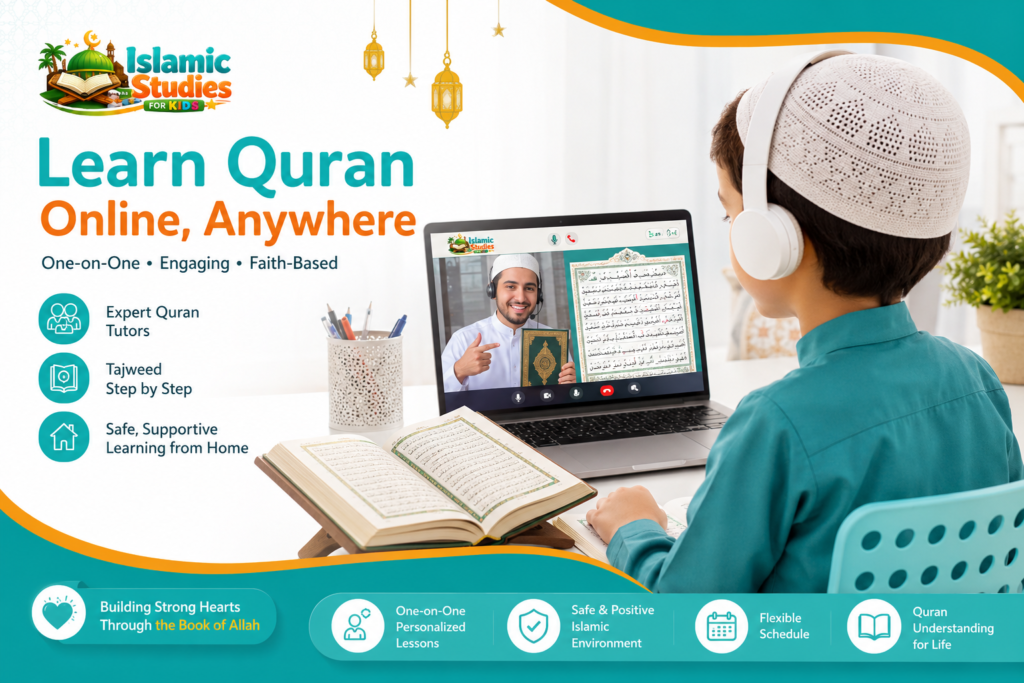
Books open the door to the Arabic language. A structured course from Islamic Studies for Kids Academy walks a child the rest of the way through it — correct letter sounds, recitation rules, and real comprehension of the Quran itself.
Give your child both. Start a Quran Recitation Course for Kids Online and pair storytime at home with guided, one-on-one instruction designed specifically for young learners.
Here is where your child can begin:
- Noorani Qaida Course for Kids Online: teaches the Arabic alphabet and basic letter sounds.
- Quran Recitation Course for Kids Online: builds fluent, accurate recitation of full Surahs.
- Quranic Arabic Course for Kids Online: teaches the grammar used in the Quran itself, beyond storybook Arabic.
Conclusion
The best arabic kids books do more than teach new words — they hand children a working relationship with their language and culture.
From the prize-winning El No’ta El Sawdaa’ to the centuries-old fables of Kalila wa Dimna, each title on this list earns its place by teaching something specific: persistence, ethics, cultural memory, or emotional resilience.
Pick books that match your child’s actual reading level rather than their age, and treat reading as the first half of a fuller Arabic education — one that, ideally, continues into structured study of Tajweed and Fiqh with Islamic Studies for Kids Academy as your child grows.
Frequently Asked Questions
Choosing the right Arabic book can raise a few practical questions, especially for parents balancing reading at home with structured learning. Here are quick, direct answers to the ones that come up most.
1. What age should children start reading Arabic books?
Children can start with simple, rhyming Arabic books from around age 3, once they recognize basic vocabulary from speech. Books with repetitive structure, like Beit Lel A’rnab El Sagheer, work well at this stage because predictable rhyme supports early word recognition.
2. Are these arabic kids books suitable for non-native Arabic speakers?
Yes, most titles on this list use Modern Standard Arabic written specifically for children, which is more accessible than classical or regional dialects. Picture books with strong illustrations, like Taksheera and El No’ta El Sawdaa’, help non-native readers follow the plot visually while building vocabulary.
3. Where can I find these arabic books for kids if they’re out of print?
Several titles, including Kalila wa Dimna and Beit Lel A’rnab El Sagheer, have digitized or public-domain versions browsable through Archive.org. Library catalogs like WorldCat also list physical copies available through interlibrary loan.
4. Do Arabic storybooks help with learning Quranic Arabic?
Arabic storybooks build general vocabulary and reading fluency, but Quranic Arabic uses a more formal grammatical structure that storybooks don’t typically cover. A dedicated Quranic Arabic course for kids online bridges that gap directly.
5. How many Arabic books should a child read per year to improve fluency?
There’s no fixed number, since fluency depends more on consistency than volume — reading even one book repeatedly builds more vocabulary retention than skimming many books once. A realistic target for a beginner is one new book every two to three weeks, alongside repeated re-reading of favorites.


Leave a Reply